
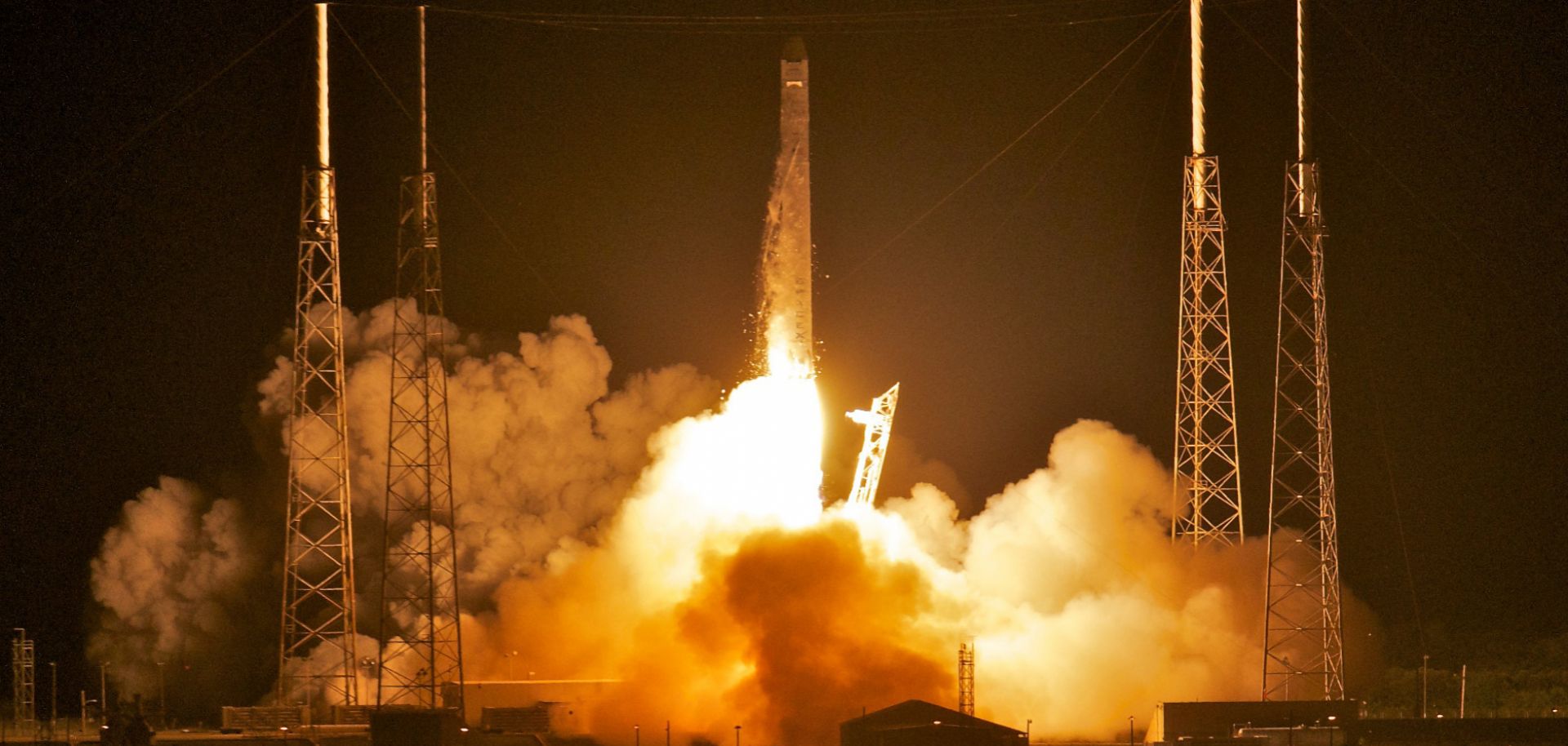
SpaceX's Dragon spacecraft atop rocket Falcon 9 lifts off from Pad 40 of the Cape Canaveral Air Force Station in Florida. Russia has emerged as the world's leader in commercial payload launches. While it dominates the global space industry, competition from private U.S. companies will force it to reform.
International Launch Services, a U.S.-Russian joint venture, is expected to launch a Russian Proton-M rocket from the Baikonur Cosmodrome in Kazakhstan in late September or early October, making it the first Proton-M rocket to be launched since one exploded shortly after liftoff in July. The rocket had been scheduled for a launch in mid-September was postponed due to a technical issue. While a successful launch would not remove all concerns surrounding the reliability of the Proton-M and other Russian rockets, another failure could be disastrous. Over the past few years, Russia's space industry has been plagued by launch failures and other problems due to an overreliance on outdated Soviet technology and quality control shortfalls. Despite this, Russia has emerged as the world's leader in commercial payload launches — accounting for nearly half of all launches — and taken over manned missions for NASA to the International Space Station.
