
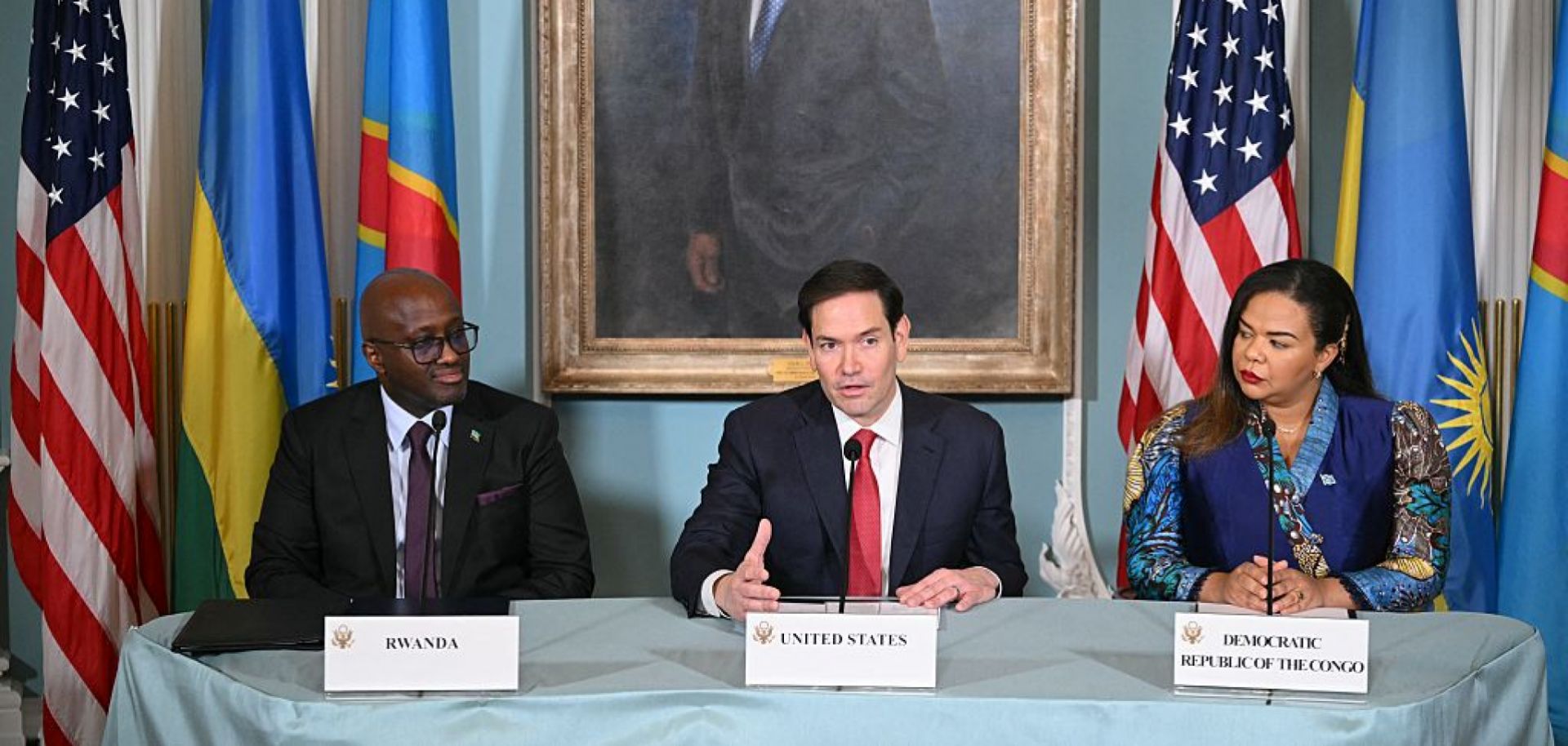
The Congo-Rwanda peace agreement has significant economic upsides for both countries, but full implementation of the deal risks stalling due to disagreements over its interpretation and will likely require progress towards a separate peace agreement between the Congolese government and the Rwandan-backed M23. On June 27, the foreign affairs ministers of the Democratic Republic of the Congo and Rwanda signed a bilateral peace agreement in Washington in the presence of U.S. Secretary of State Marco Rubio. The agreement commits both countries to respecting each other's territorial integrity, including through the disengagement of Rwandan forces from eastern Congo and Congo's neutralization of the radical Hutu group Democratic Forces for the Liberation of Rwanda, or FDLR, many of whose members were involved in the 1994 Rwandan genocide .
