
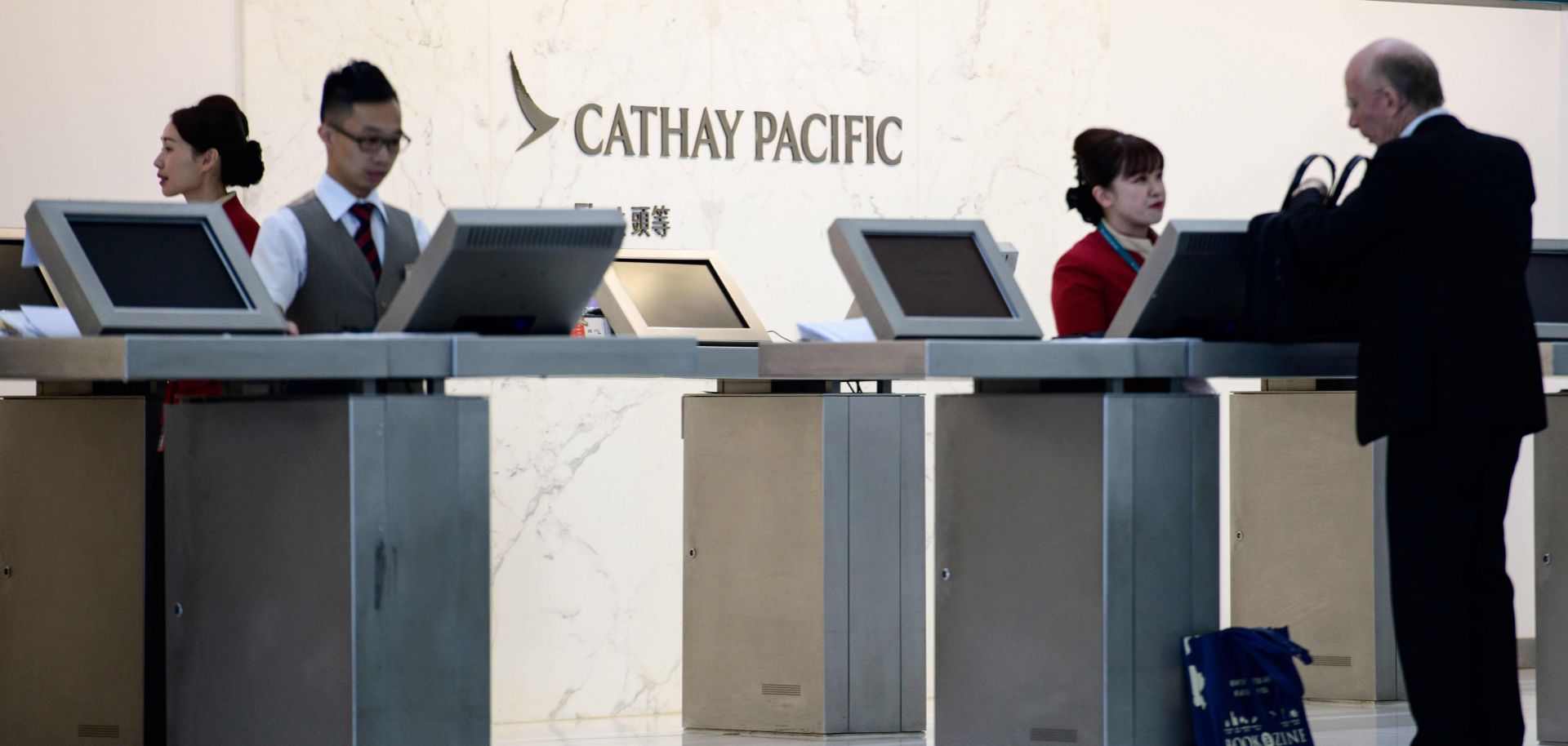
An employee of Cathay Pacific Airways helps a customer at Hong Kong's international airport on Aug. 7, 2018. The airline was hit by a cyberattack that compromised personal information on up to 9.4 million passengers.
Hackers constantly probe computer networks worldwide for vulnerabilities, seeming to pull off a major cyberattack almost weekly. In the past three weeks alone, HSBC Bank of London reported that its U.S.-based accounts were illegally accessed; hackers compromised an Australian military shipbuilder's personnel files; and Hong Kong airline Cathay Pacific confirmed a breach that affected up to 9.4 million passengers. The intrusions by criminal and state-backed hacker groups are aimed at obtaining personal information such as names, phone numbers, addresses, national identification numbers, and credit card and banking information. The groups can either sell the data to others who exploit it for financial gain or use it to conduct more targeted attacks – presenting a national security as well as a corporate concern. Now, governments in Europe and North America are pushing companies harder to shore up their network defenses and are fining those that are lax.
