
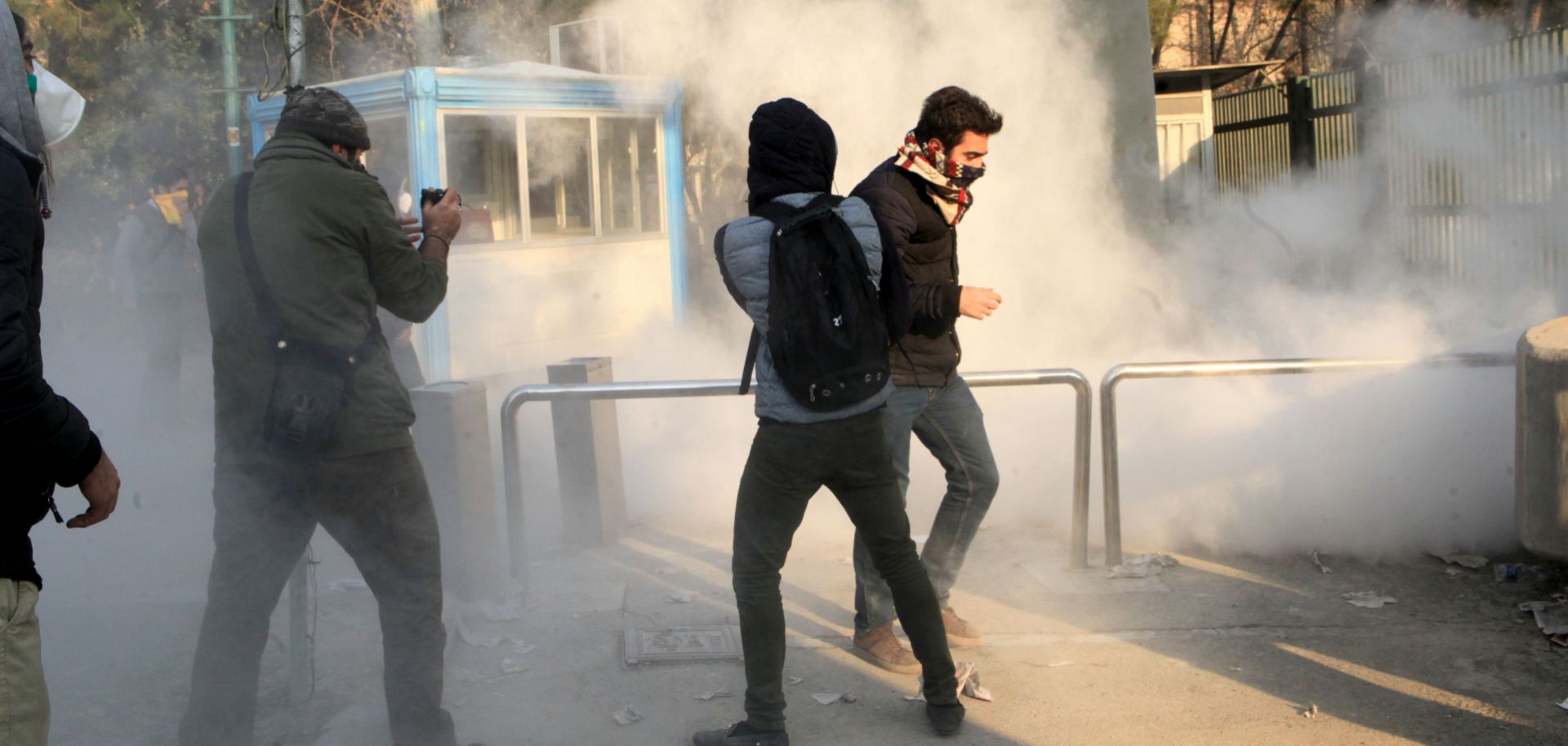
Iranian students run for cover from tear gas at the University of Tehran during a demonstration driven by anger over economic problems, in the capital Tehran on Dec. 30, 2017. Students protested in a third day of demonstrations, videos on social media showed, but they were outnumbered by counterdemonstrators.
Almost four decades after the toppling of Shah Mohammad Reza Pahlavi, a revolutionary ideology continues to underpin the Iranian state. As the years have passed, the relevance of its governing philosophy risks being lost on the country's younger generations, and the internal and external challenges to its government continue to mount. The recent spate of demonstrations that quickly spread across the country highlighted one of the revolutionary state's largest shortcomings: It is a 40-year-old revolution that has not arrived at a sustainable economic model. The protests marked the largest and most widespread demonstrations expressing popular dissatisfaction with Iran's leaders since the 2009 Green Movement, which targeted then-President Mahmoud Ahmadinejad and the government. And with chants of "Death to the dictator" referring to Supreme Leader Ayatollah Ali Khamenei accompanying the latest round of protests, it is clear that no part of the government had escaped the ire of the demonstrators.
