
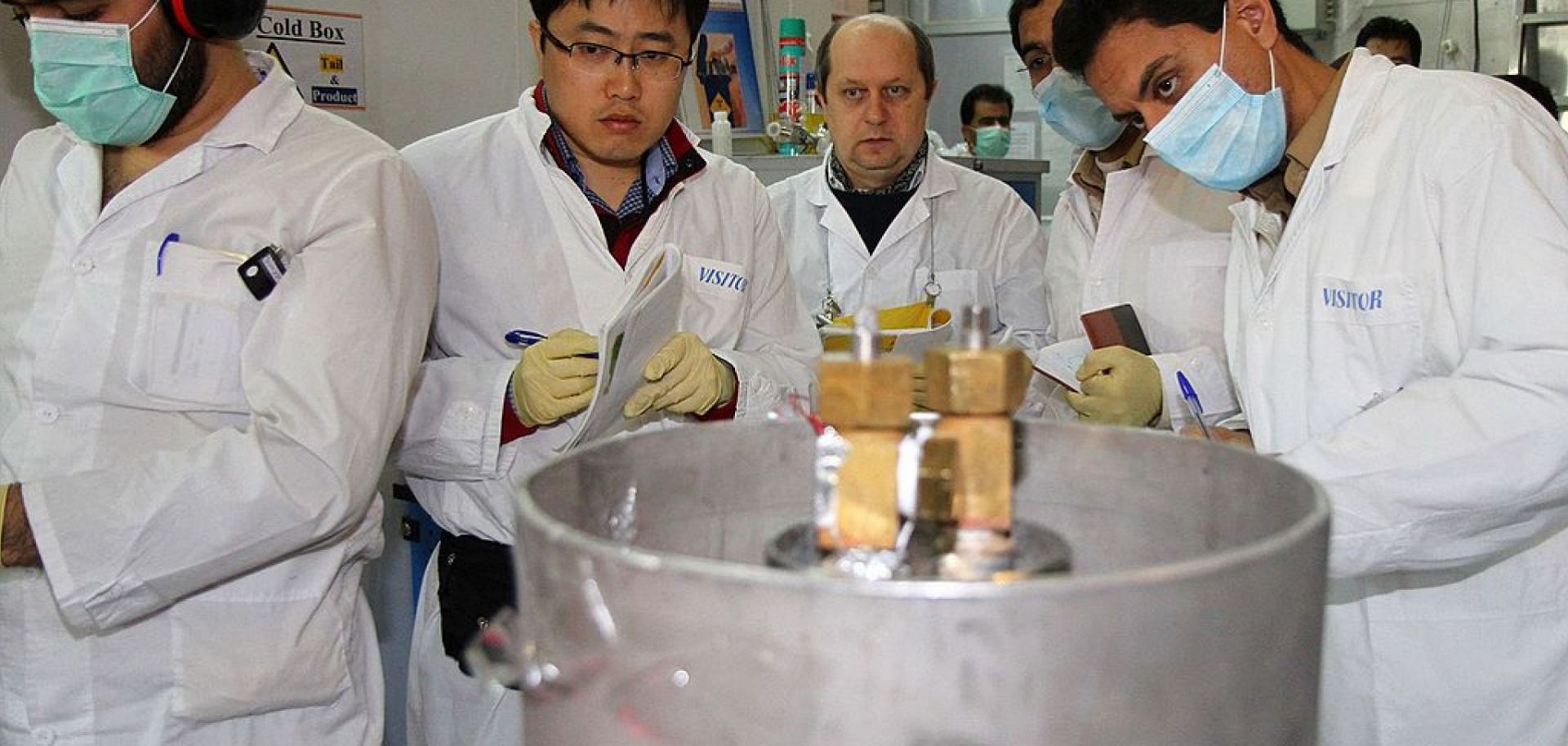
IAEA inspectors (2nd, 3rd L) and Iranian technicians disconnect the connections between the twin cascades for 20 percent uranium production at nuclear power plant of Natanz, Iran, on Jan., 20, 2014.
The assassination of Iranian nuclear scientist Mohsen Fakhrizadeh will not materially impact Iran's nuclear program, but the killing is a sign that the United States and Israel are accelerating their covert strategy against Iran in the waning days of the Trump administration. Iran will respond in some form, although it will probably refrain from a hasty response that could transform the covert war with Israel and the United States on Iranian soil into an overt one. Iran's Defense Ministry and its Supreme National Security Council confirmed Fakhrizadeh's assassination, saying unknown assailants attacked his car Nov. 27 in Damavand, outside of Tehran. Fakhrizadeh, a former Islamic Revolutionary Guard Corp officer, has been compared to Robert Oppenheimer — the father of the U.S. atomic bomb — for his role in leading Iran's AMAD Project that carried out research on developing an Iranian nuclear bomb.
