
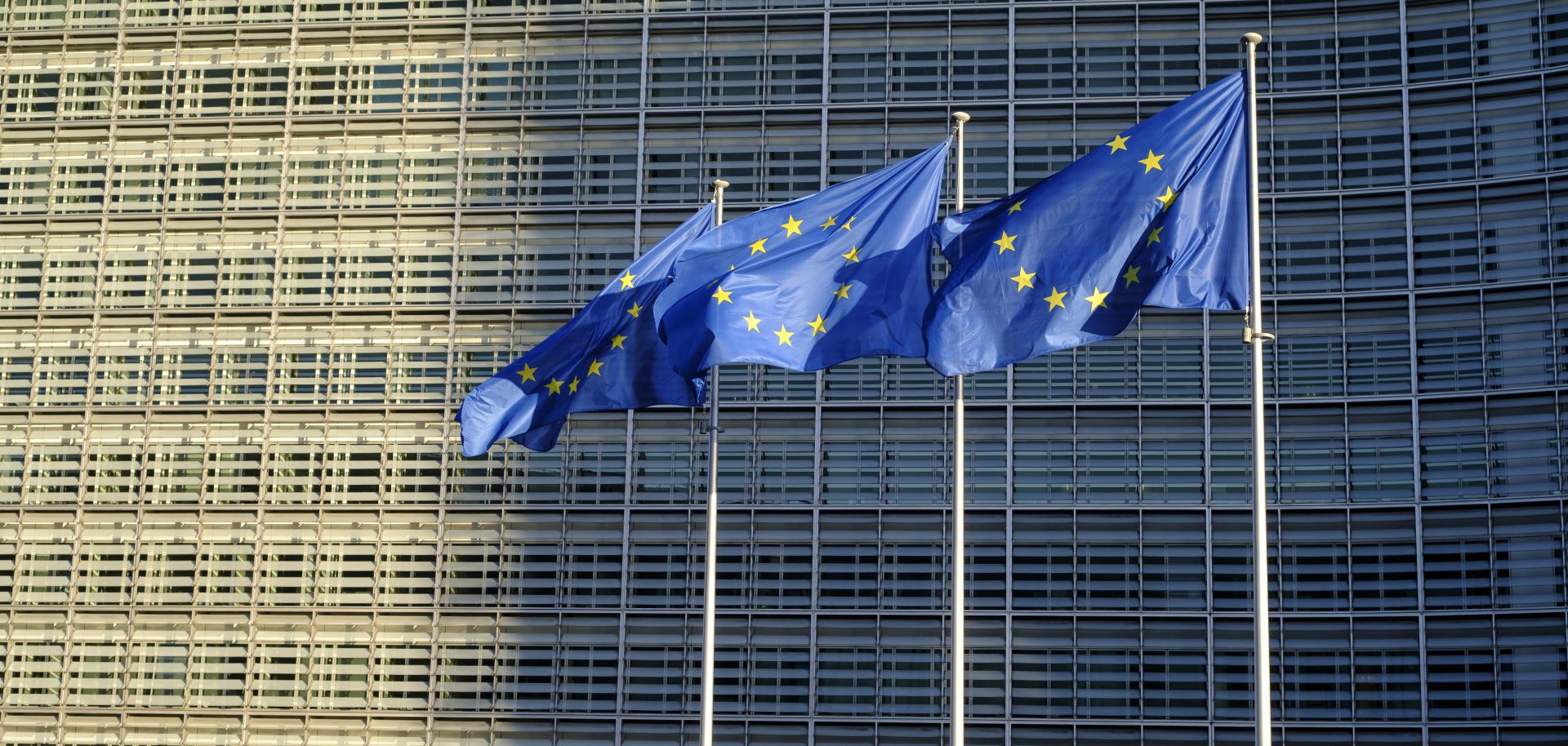
EU flags fly outside the headquarters of the European Commission on Feb. 23, 2022, in Brussels, Belgium.
Between 2020 and 2022, three heavily disruptive geopolitical events altered the balance of power within the European Union, increasing the influence of countries in the south and the east of the bloc to the detriment of traditionally more influential countries in the north. These new power dynamics will not only shape EU domestic and foreign policy in the coming years, but likely lead to internal conflict further down the line that will once more test the bloc's internal unity. A Turbulent Three Years The first of the three disruptive events was Brexit. The United Kingdom left the bloc in January 2020 after years of negotiations that began with the June 2016 referendum. Britain had previously been one of the bloc's strongest supporters of free trade, deregulation and limited social, economic and political integration in the continent.
