
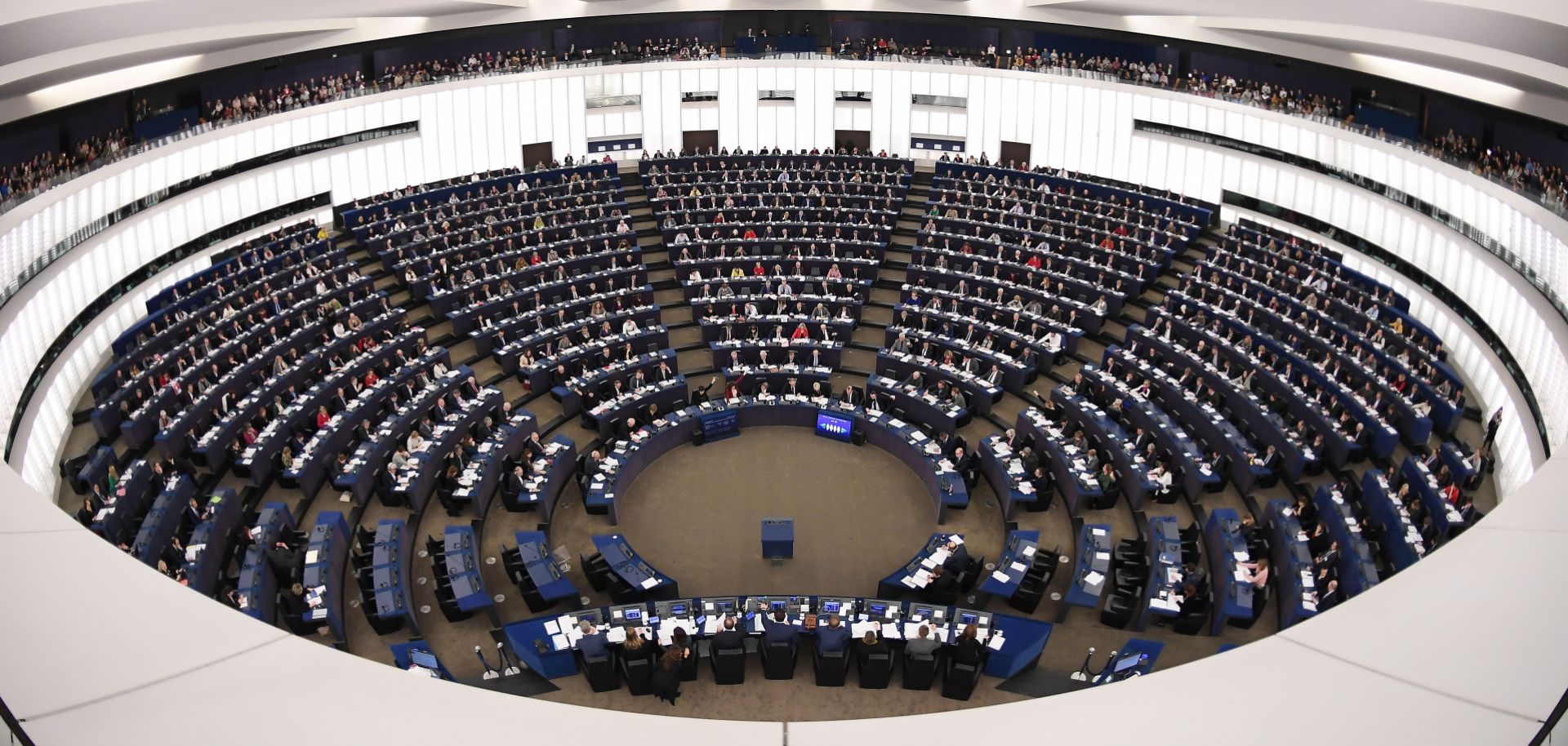
Members of the European Parliament vote during a plenary session at the European Parliament on Dec. 11, 2018, in Strasbourg. From concerns about the German government's stability to worries about Russia's energy politics, the bloc has many things to think about in 2019.
2019 is just over a week old, but it's already shaping up to be a busy one for Europe, which has a long to-do list to address as it grapples with political turbulence, slowing economic growth and tense relations with the world's superpowers. European leaders will contend with a host of issues, including Germany's unstable political coalition, the staying power of populism, Italy's economic woes, and concerns about China and Russia's looming presence over the European Union. Here are four trends that will shape Europe's political, economic and social agenda this year. Trend 1: Trouble in the EU's Top Four In 2019, the governments of the eurozone's four largest economies will encounter a raft of political troubles that will limit their room to maneuver at home, as well as their ability to offer cohesive leadership in the bloc as a whole.
