
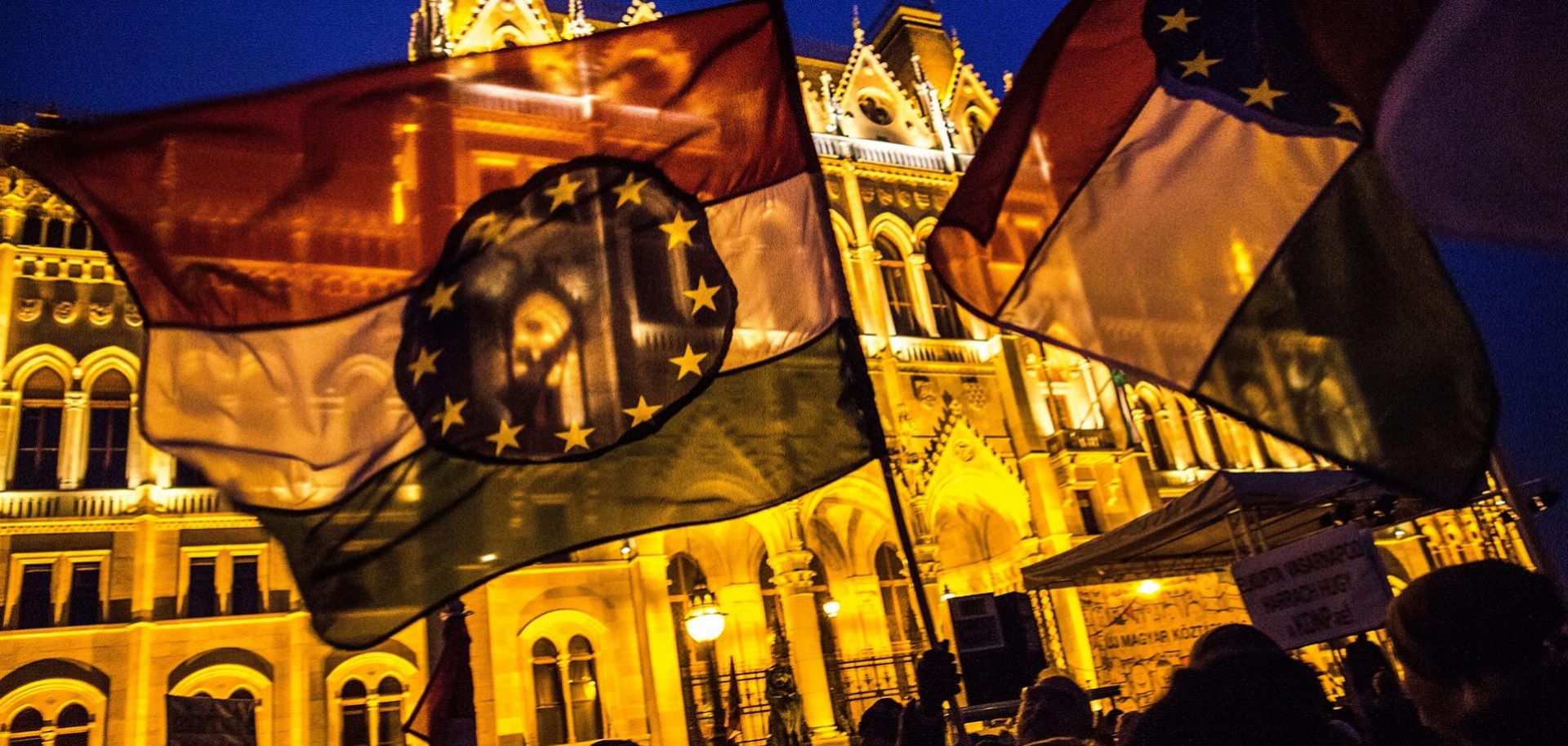
Europe's crises are bringing it ever closer to the brink of dissolution. While it is not yet possible to say exactly how the European Union will fail, it is possible to foresee what will emerge when it does. New blocs will form, with the center of gravity remaining a core bloc comprising France, Germany and the Benelux countries. To the north, a highly integrated Scandinavian bloc will form, while to the east, countries will coalesce around different shared interests, with some prioritizing trade and others seeking security.
The European project was always bound to fail. Europe is a continent riven by geographic barriers. It has spent two millennia not only indulging in massive and constant internal wars, but also keeping written records of them, informing each generation of all the times their forebears were wronged. Over the centuries, great empires have risen and fallen, leaving behind distinct groups of people with different histories, languages and cultures. Any project attempting to fuse these disparate cultures into one monolithic state over the course of just 70 years was by its very nature doomed. It would inevitably encounter insurmountable levels of nationalistic resistance, and eventually the project would stall. That is the point at which we now find ourselves. Crises abound, and though they all have different facades, each stems from the same underlying issue: Citizens ultimately prize their national and regional identities over the supranational dream.
