
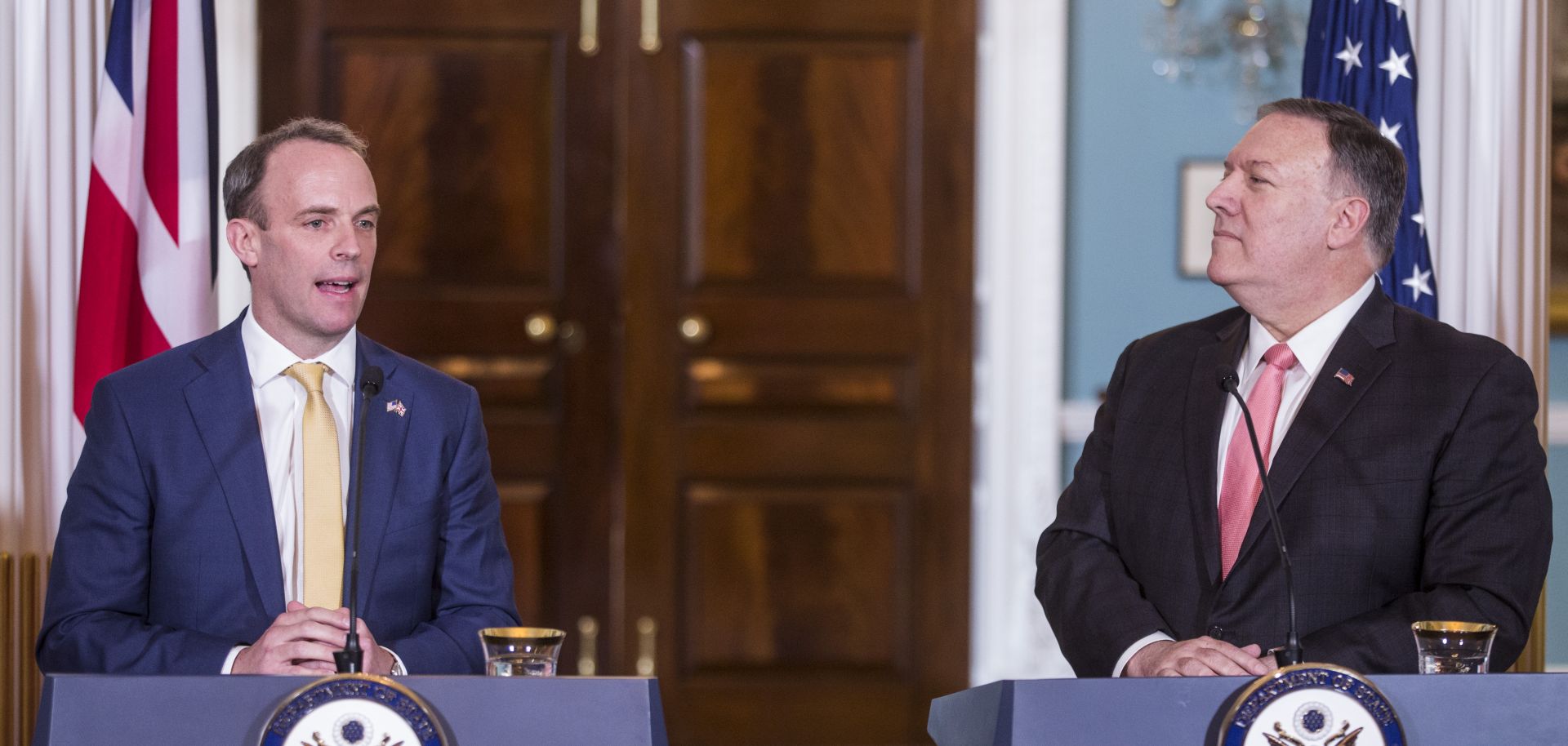
British Foreign Secretary Dominic Raab speaks with U.S. Secretary of State Mike Pompeo. As the global great power competition intensifies, the interests of individual Western states will increasingly diverge, threatening the West's ability to present a unified front on certain issues.
Whether in an arms race with a resurgent Russia , economic arm wrestling with China, or even attempts to contain the ambitions of rogue actors like North Korea or Iran, the states that make up the so-called West have regularly found themselves allied together since the end of World War II. But the West is no monolith. The Western world, so central to the narrative of global power and codified in several treaties, organizations and alliances over the course of a century, is incredibly diverse in ideology, identity and goals. So far, the relative alignment of interests among Western countries, governments and non-state actors has made this diversity manageable. But as the global great power competition intensifies, the interests of individual Western states will increasingly diverge, threatening the West's ability to present a unified front on certain issues.
