
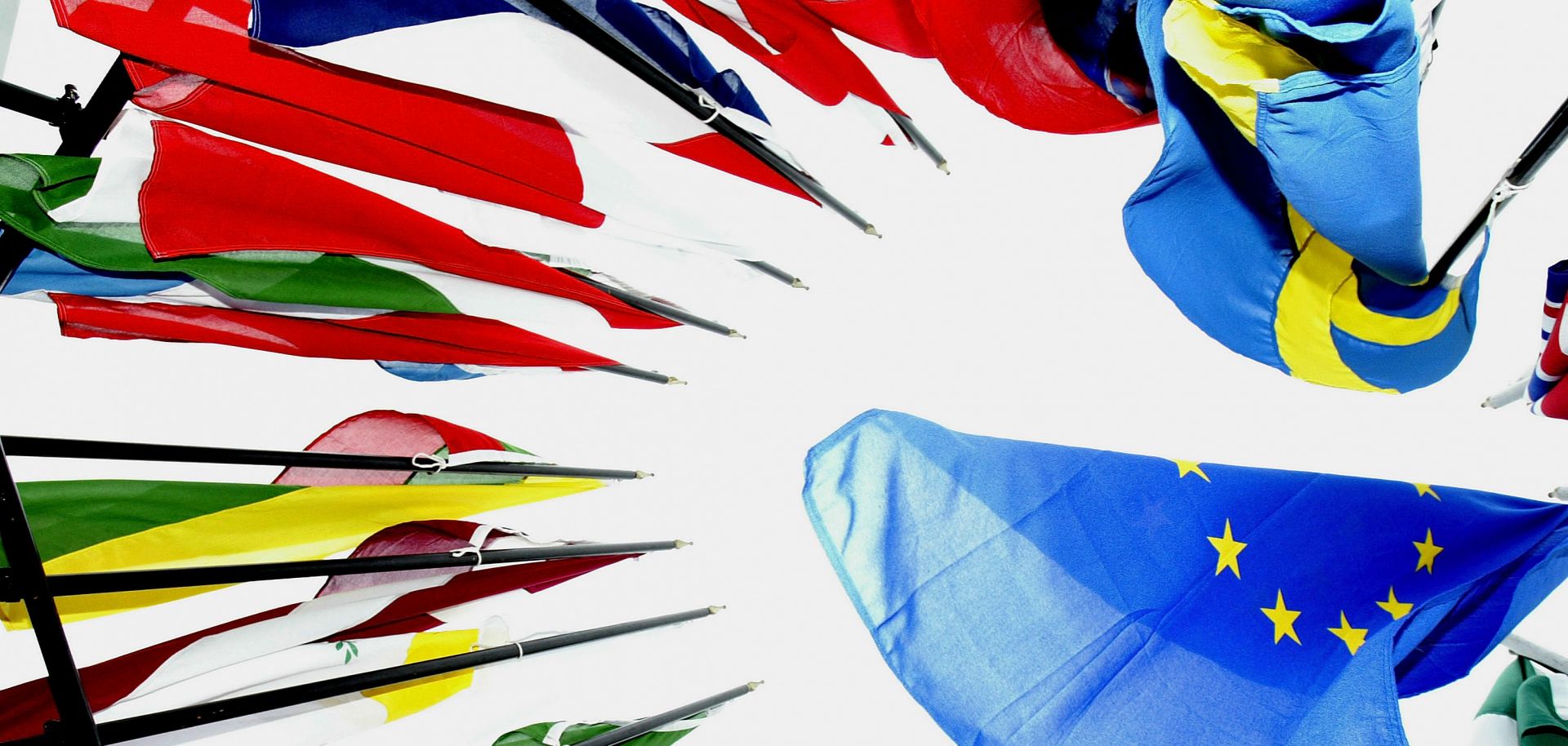
After a tumultuous year, the European Union's member states are set to begin a long dialogue about reforming the bloc.
By the end of the year, the political situation in Europe will look much clearer than it did at the start of 2017 . In March, the British government formally announced its plans to leave the European Union, triggering a two-year negotiation process. In June, French voters elected a president who, barring an unexpected crisis, will remain in office for the next five years. In September, Germany will hold general elections that will probably keep pro-EU forces in power. Afterward, with the political environment likely more conducive to reform than it has been over the past decade, EU member states will start working on the future of Continental integration. But as in the past, their different interests and priorities will shape the negotiations and their outcome.
