
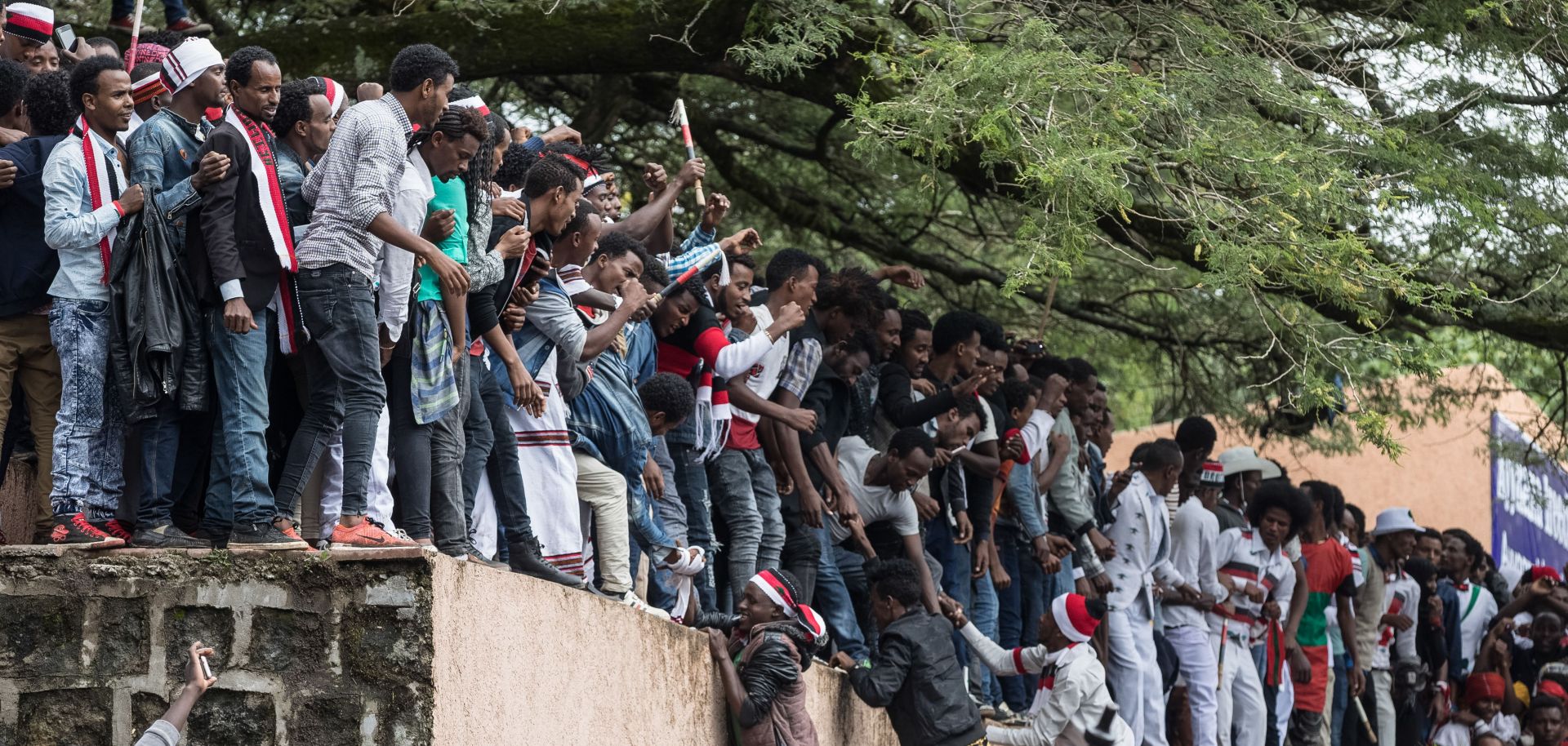
Ethiopians protest against the government in 2017 during the annual Oromo festival to celebrate the end of the rainy season. The Ethiopian religious festival transformed into a rare moment of open defiance. The Oromo people, Ethiopia's largest ethnic group, began months of anti-government protests in late 2015.
The unrest in Ethiopia can be boiled down to three numbers: 35, 27 and six. The first two represent the percentage of ethnic Oromo and Amhara, respectively, that make up the country's 100 million people. But neither of those groups controls the reins of government. The Tigrayans – 6 percent of the population – do, and for decades, the Oromo, the Amhara and others have been protesting and pushing for more power. On Feb. 15, after months of escalating protests in the regions outside the capital of Addis Ababa, Ethiopian Prime Minister Hailemariam Desalegn resigned. And a day later, the central government declared another state of emergency , only six months after ending the last one. But Desalegn's replacement will face the same ethnic divisions, and until the Tigrayans concede some control, turmoil will continue to threaten the stability of this East African giant.
