
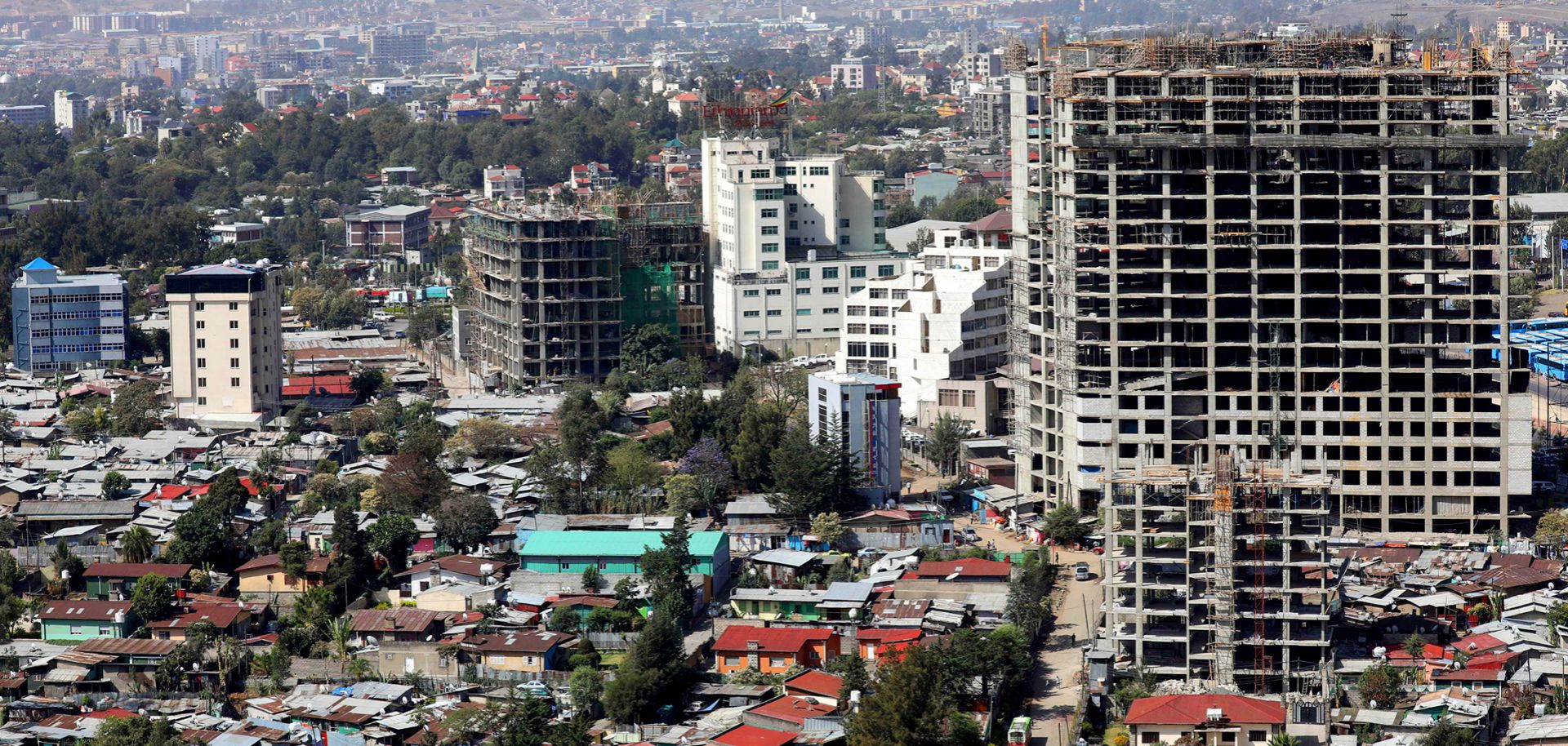
A picture taken on March 13, 2019, shows the construction of a number of new buildings in Addis Ababa. Ethiopia's developmental state strategy has brought the country's economy this far, but Prime Minister Abiy Ahmed will have to change tack if the nation is to push on to bigger and better things.
For the past decade, Ethiopia's economy has expanded rapidly, largely thanks to public spending on massive investment projects like the multibillion-dollar Grand Ethiopian Renaissance Dam , roads, industrial parks and other projects. It has all come as part of Addis Ababa's "democratic developmental state" model, the brainchild of late Prime Minister Meles Zenawi, who championed a state-led path to growth after witnessing the policies of Asian states like South Korea, China and Singapore. Using this model, Meles tried to prevent foreign companies from stripping Ethiopia of the resources Addis Ababa needed to construct a solid base of infrastructure to develop and grow the economy. But while many in Ethiopia have hailed the developmental state model as an overall economic success, it has not come without its costs . For starters, government spending has kept inflation rates high.
