
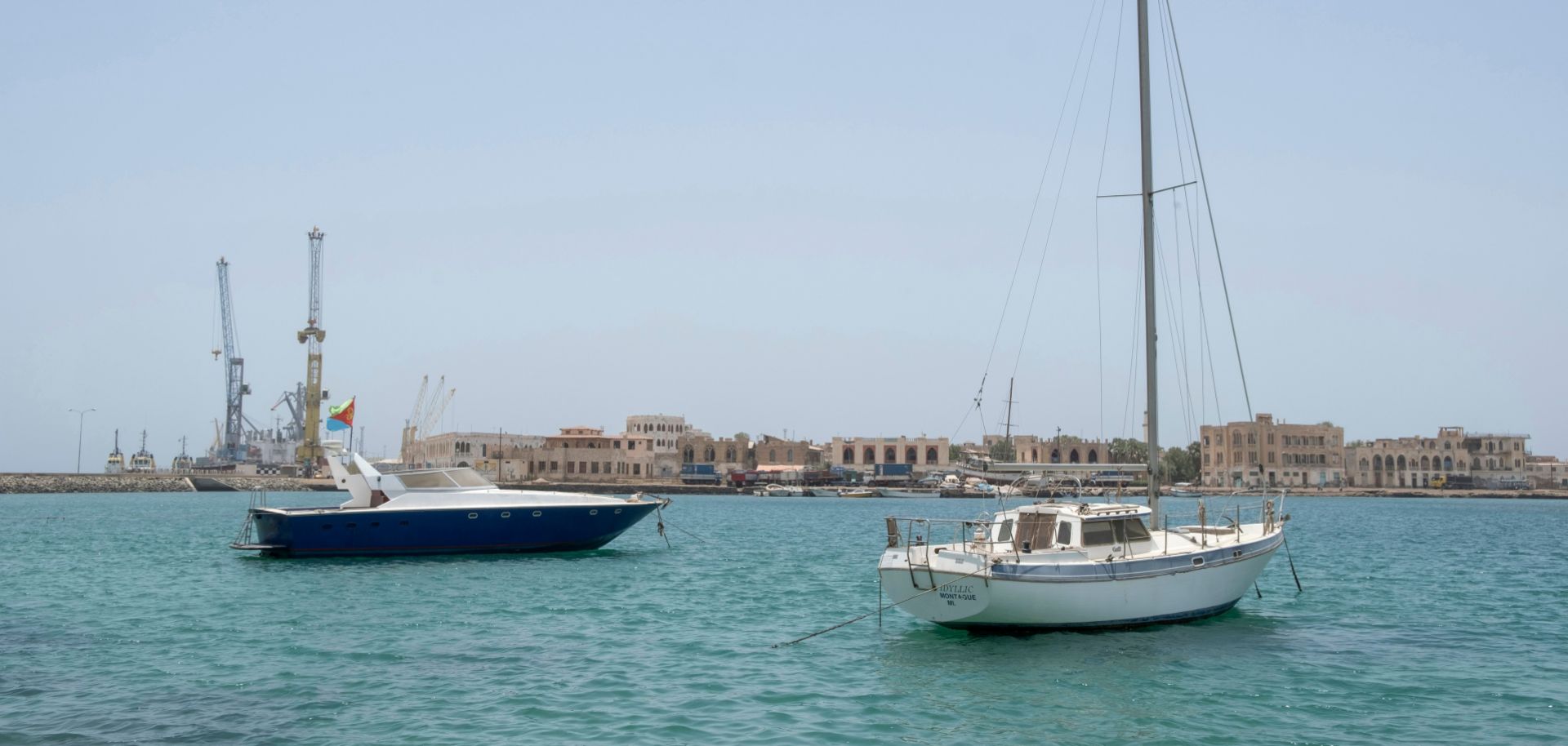
A picture taken on July 22, shows a private boat with the Eritrea flag in Old Massawa harbor, 60km of the Eritrean capital Asmara. - Eritrea's dormant port hopes for revival after Ethiopia and Eritrea in July 2018 declared an end to two decades of conflict, rapidly restoring diplomatic ties and flights between their capitals. Decades of conflict, sanctions and isolationist policies have seen trade shrivel up in the port city, whose harbor is still lined with bombed-out buildings from Eritrea's war of independence from Ethiopia, achieved in 1993.
Massive political and economic changes in Ethiopia are having an impact far beyond the regional heavyweight's borders. Nowhere have these changes been more evident than in Eritrea, Ethiopia's erstwhile nemesis. As renewed ties between the governments in the capitals of Addis Ababa and Asmara deepen, transportation arteries are open again, bilateral trade is up, and expensive-to-develop natural resources are in play. All of this prompts the question: Is Eritrea a frontier market worth digging into? Peace and Ports Rapprochement between Ethiopia and Eritrea has come rapidly. Over the course of a few months, their heavily militarized border has opened, facilitating cross-border trade and the flow of civilians. In addition, reports indicate that both sides are repairing an Ethiopian road leading to the Eritrean port of Assab, on the Red Sea near Djibouti and the geostrategically vital Bab el-Mandeb strait.
