
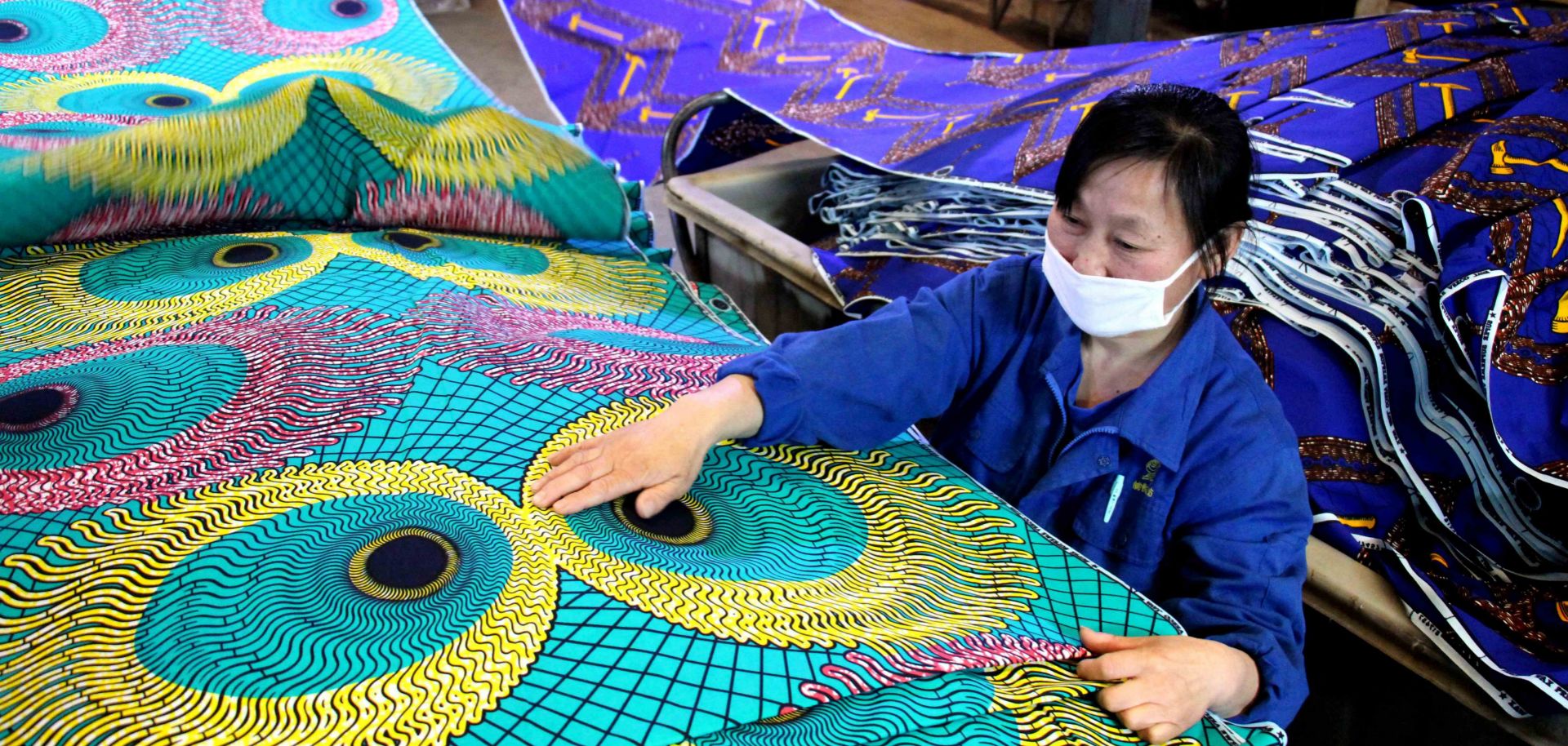
A worker produces fabric in a textile factory in Binzhou in China's eastern Shandong province. A trade war with the United States has restricted options for Chinese leaders looking to restructure its economy away from dependence on low-level manufacturing, which was once its backbone.
Editor's Note: This assessment is part of a series of analyses supporting Stratfor's upcoming 2019 Second-Quarter Forecast. These assessments are designed to provide more context and in-depth analysis on key developments over the next quarter. When Chinese President Xi Jinping declared his country's "era of national rejuvenation" at the 19th Communist Party Congress in 2017, he saw a historical mission awaiting him. China had gone from a "century of humiliation" into seven decades of rehabilitation through internal reconsolidation and economic growth. The country had developed a massive economy and was halfway to its goal of ascending into a global power; Xi saw it as his job to take it the rest of the way. But though Xi may have had a clear mission informed by his predecessors, the fact is that he presides over a China that sits at a major crossroads domestically, politically, economically and globally .
