
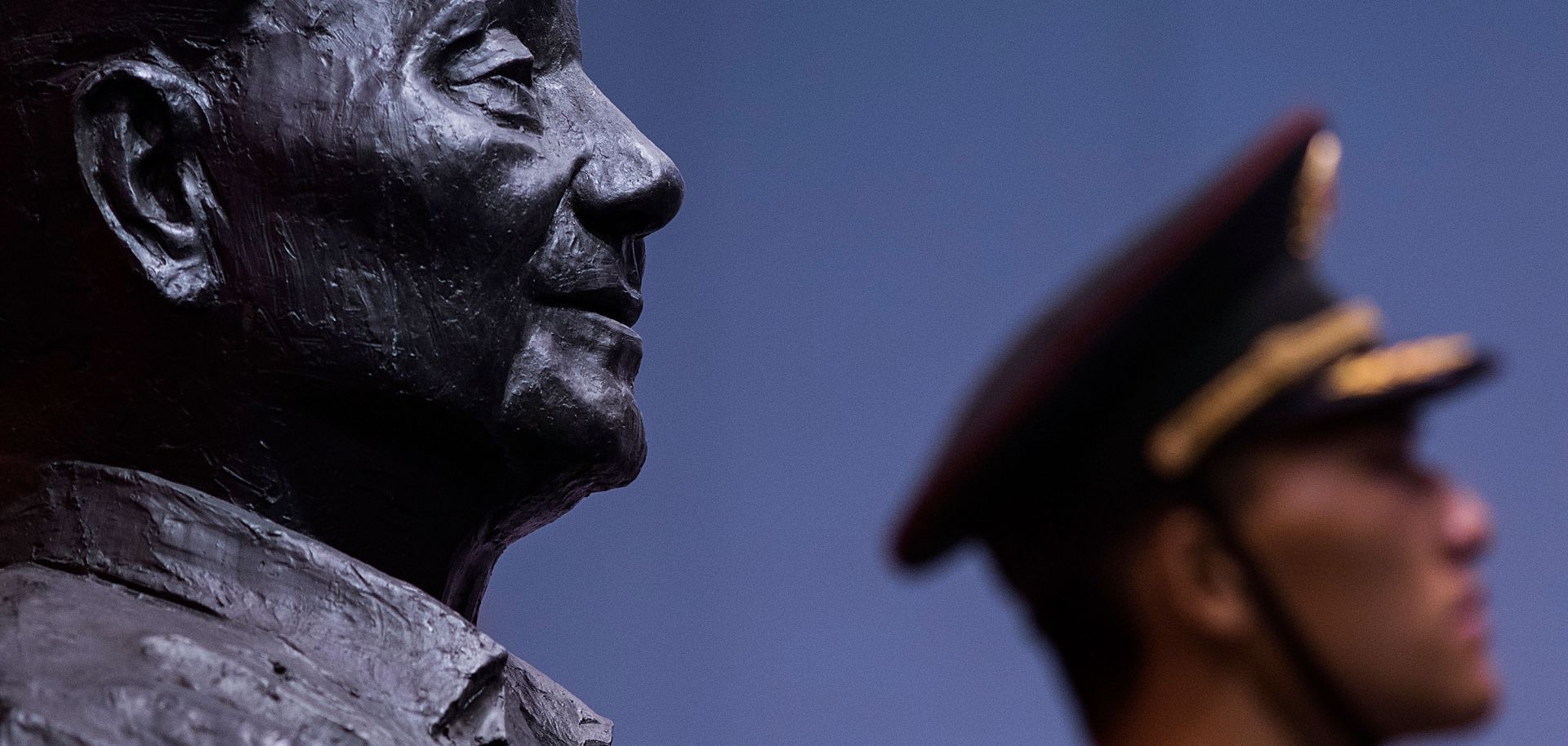
Directly engaging, picking sides or deploying troops in a conflict would mark the clear end of China's Dengist foreign policy and raise the country to the status of an interventionist power like Russia, the United States or the European states.
For some three decades, the words of Deng Xiaoping have guided Chinese foreign policy. "Observe calmly," he cautioned, "secure our position; cope with affairs calmly; hide our capacities and bide our time; be good at maintaining a low profile; and never claim leadership." The meaning of Deng's maxim has been the subject of wide debate inside and outside China. Was the Chinese leader describing a policy of deception with his instructions to conceal the country's abilities, or was he hoping to keep China out of major entanglements with his focus on keeping a low profile? Whatever the words' intention, their basic interpretation has long emphasized China's need to strengthen itself and to avoid following the European powers, or past Asian powers, down the path toward imperialism. Deng's was a "China first" policy, one that sought to avoid conflict and trouble while building up the country's domestic capacity and strength.
