
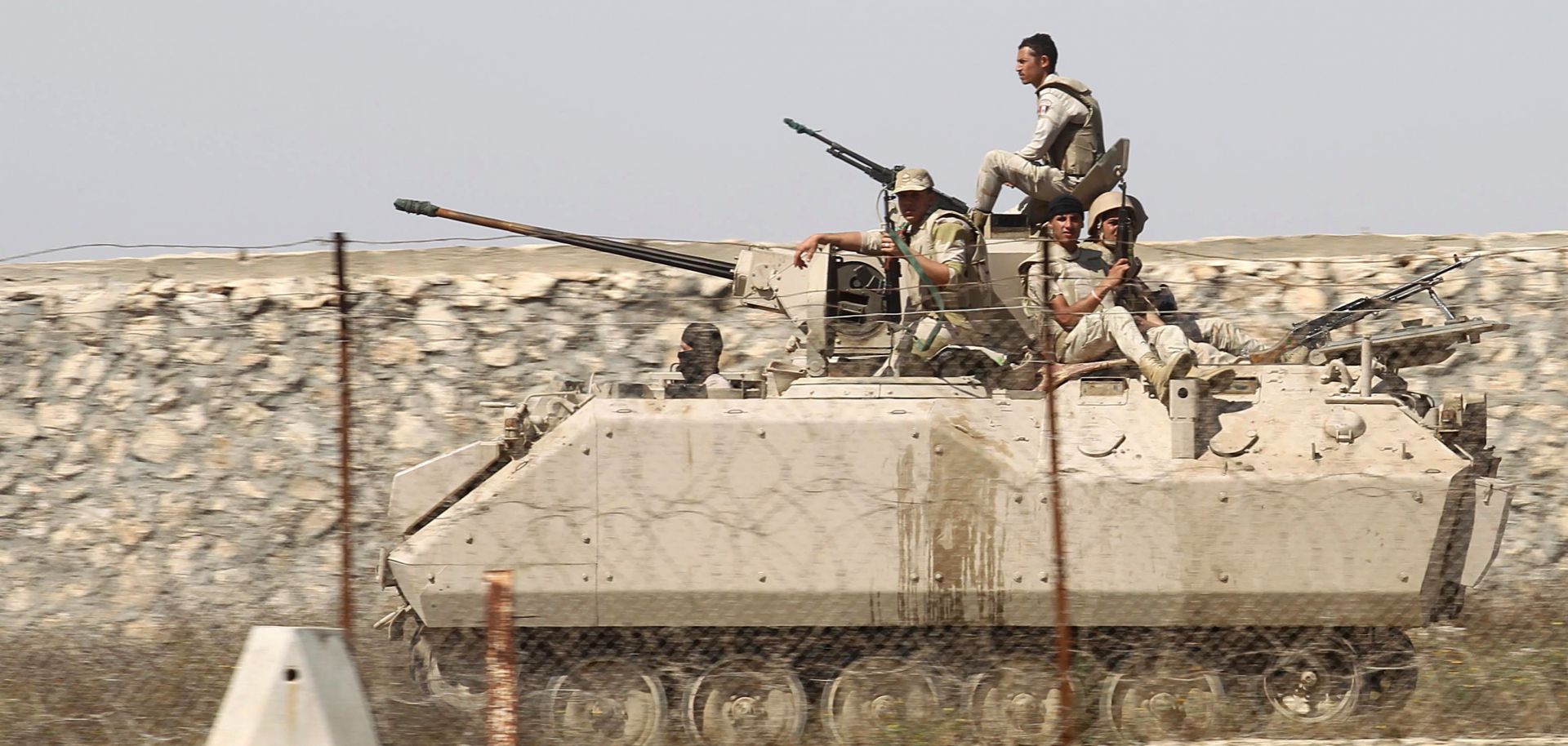
Egyptian troops patrol the border between the Gaza Strip and Egypt as they keep an eye on Hamas forces in 2016. Members of the Palestinian Islamist movement Hamas' security forces are gathering, as Hamas began increasing its forces, in Rafah, in the southern Gaza Strip, on April 21, 2016. Hamas began deploying additional forces on the Gaza border with Egypt, the interior ministry said, in an apparent effort to ease Cairo's concerns about security.
Over the past few years, Egypt has opened the checkbook, embarking on an arms purchasing program that has quickly made it one of the biggest importers of weapons in the world. The outlay of cash, however, is all the more remarkable given Egypt's fragile economic situation and its lack of a major conventional adversary. Its motivations stem not so much from a military need but from a desire to regain the influence of a country that is used to throwing its weight around the region. Ultimately, though, simple economics might curtail the spending spree. Opening the Checkbook According to a Stockholm International Peace Research Institute report released in March, Egypt is now the third largest arms importer in the world (after India and Saudi Arabia). Indeed, in the five years since Abdel Fattah al-Sisi became president, the country's arms imports have increased by a whopping 215 percent.
