
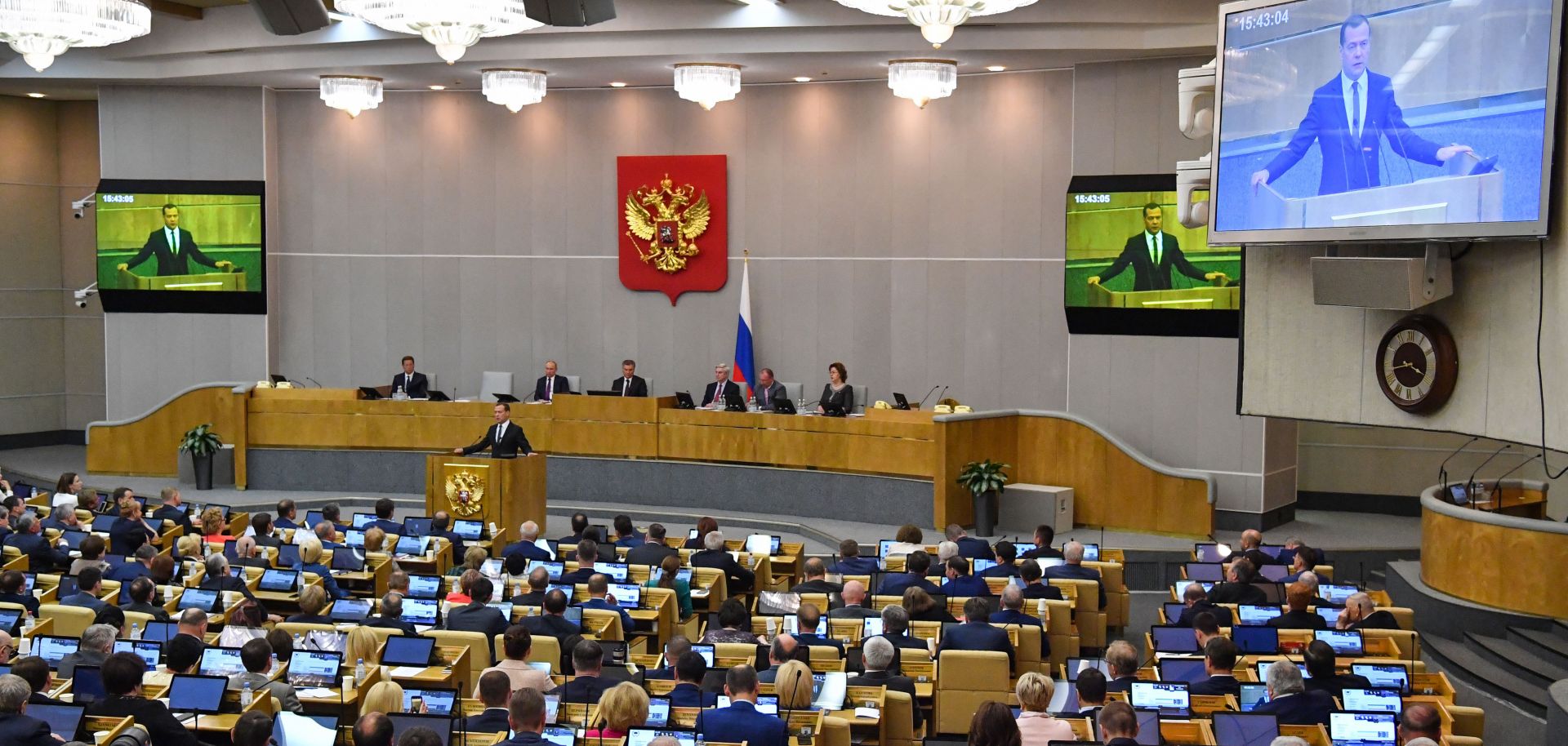
With Russian President Vladimir Putin seated on the dais behind him, Dmitri Medvedev addresses the State Duma in Moscow on May 8, 2018, as Russia's lower house of parliament prepares to confirm him as prime minister.
Discontent over proposed pension reforms is still showing up at the ballot box in Russia. While the ruling United Russia party won most of the gubernatorial elections on Sept. 9 as expected, a record four races were forced into runoffs. And, so far, United Russia has lost two of those regional elections and pulled out of a third. (The fourth is set for December.) Though President Vladimir Putin's party is likely to remain the largest and most influential political party for the foreseeable future, the latest elections could indicate that important political shifts are taking place at the regional and national levels. The Politics of Elections Russia has 85 regions, consisting of territorial units known as oblasts, republics, krais and autonomous okrugs, and regional elections are held every year on a rotating geographic basis.
