
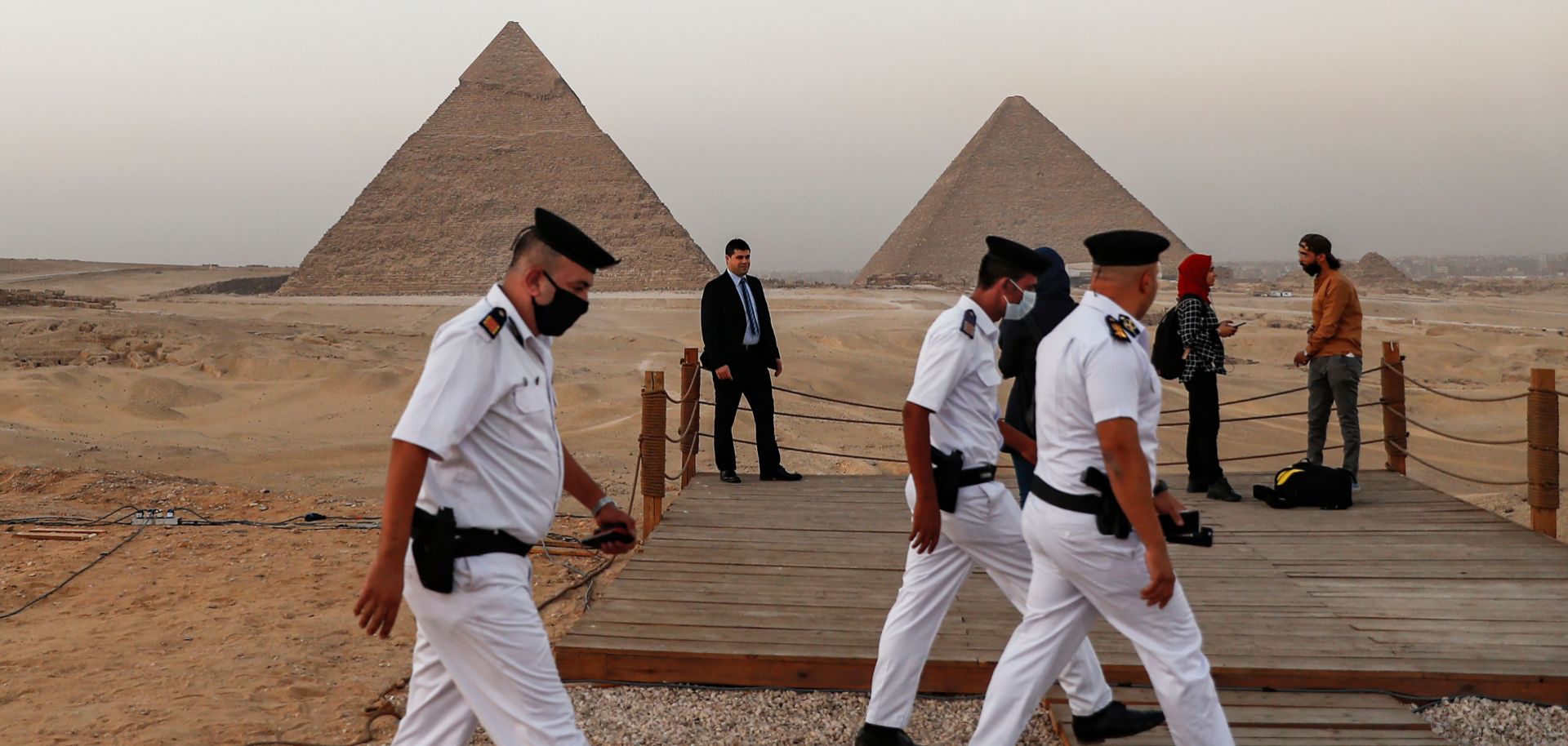
Policemen walk near an overlook at the Giza Pyramids in Egypt ahead of a ceremony commemorating the launch of the site's first environmentally-friendly bus and restaurant on Oct. 20, 2020.
Egypt’s strong macroeconomic performance amid the COVID-19 pandemic and continued appeal to foreign investors hold promise for Cairo’s near-term financial stability. But it does not resolve the country’s stubbornly high poverty levels, which will eventually become a political liability by stoking anti-government sentiment. In an address on Oct. 18, Egypt’s finance minister said economic growth has exceeded even the finance ministry’s previous projections for 2020. This confidence reflects recent positive adjustments to Egypt’s economic outlook projections by Fitch Ratings, Deutsche Bank and the International Monetary Fund — all of which now see Egypt’s economy growing at 3.5 percent of GDP in this year, exceeding the performance of most of its regional peers. According to the European Bank for Reconstruction and Development (EBRD), Egypt is now the only economy receiving funds from the EBRD that’s expected to avoid a recession in 2020.
