
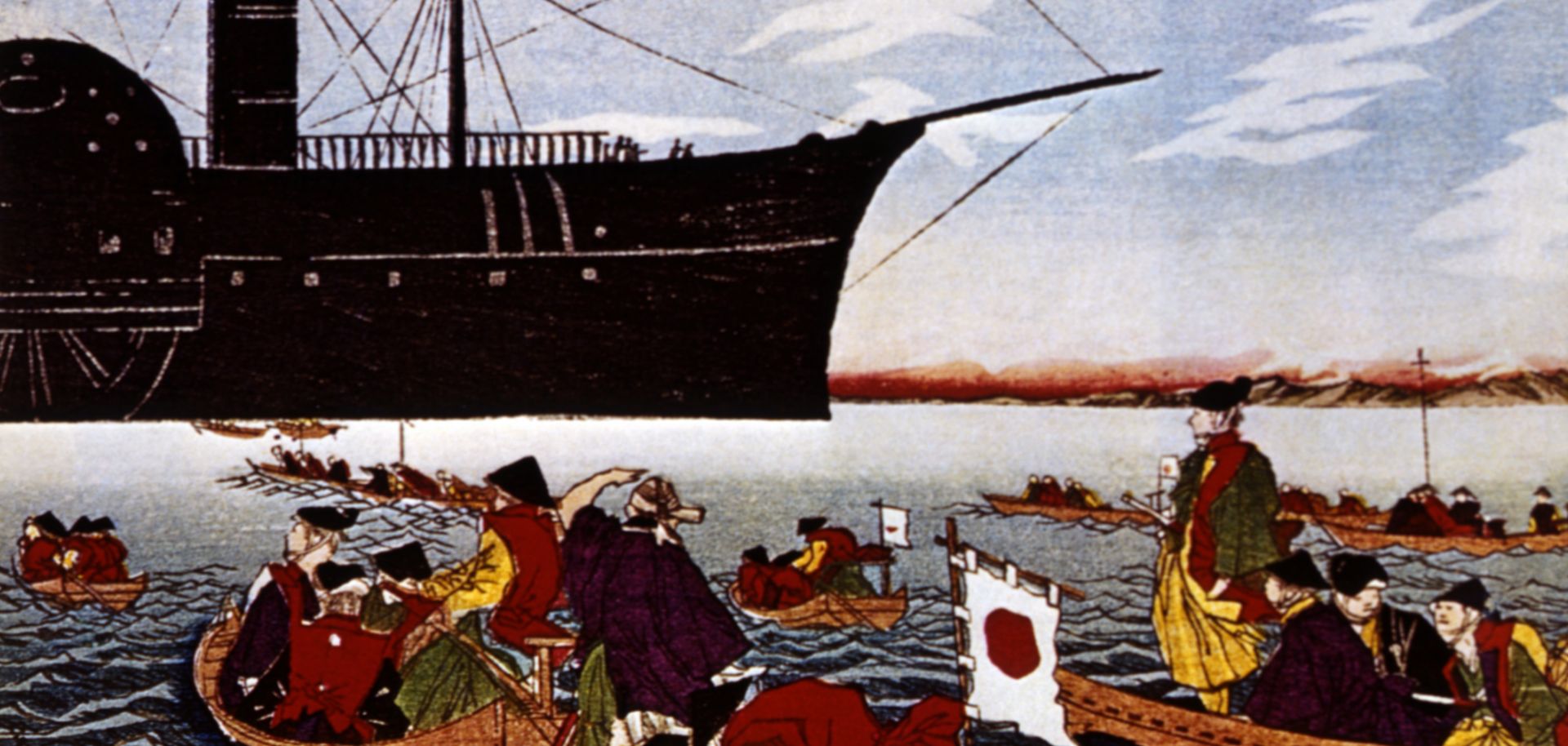
A print depicting U.S. Commodore Matthew Perry arriving in Japan in 1853. Japan is a critical component of U.S. defense architecture in the Indo-Pacific, but it is also a strategic economic competitor with the United States.
U.S. President Donald Trump's Memorial Day weekend visit to Japan serves as a reminder of the complex relationship between the United States and Japan. In addition to ceremonial events, meeting the new emperor and visiting U.S. military personnel, President Trump held discussions with Prime Minister Shinzo Abe about trade frictions (driven by the United States' nearly $68 billion trade deficit with Japan) and regional security concerns ranging from North Korea to China to Iran. This contrast between bilateral trade competition and mutual security cooperation in many ways exemplifies the modern U.S.-Japan relationship. Mutual and Conflicting Interests U.S.-Japanese security and economic interests have been intertwined and often at odds with one another.
