
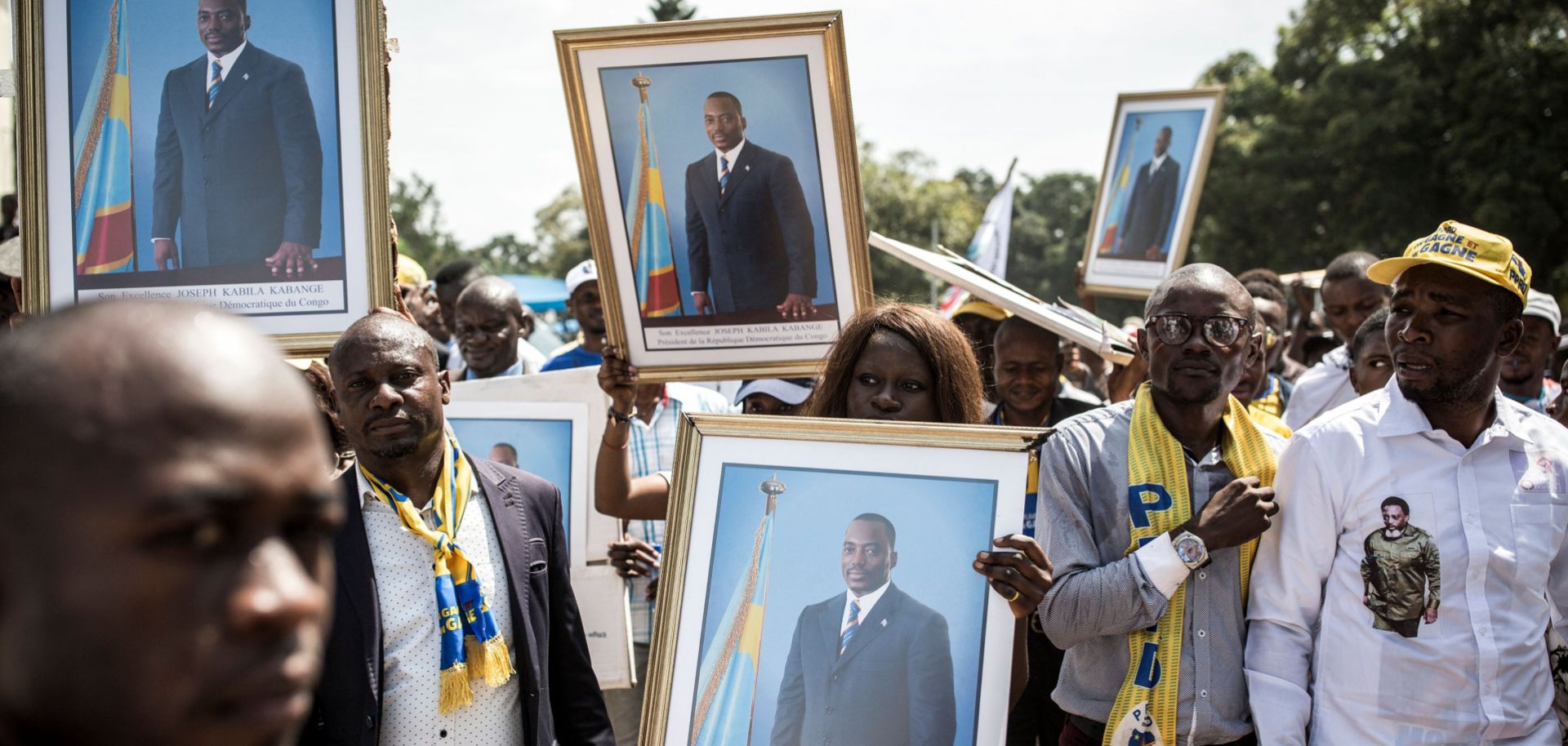
In the Congolese capital of Kinshasa, portraits of the former president are on display at the inauguration of the country’s new president in January 2018.
Editor's Note: This assessment is part of a series of analyses supporting Stratfor's upcoming 2019 Second-Quarter Forecast. These assessments are designed to provide more context and in-depth analysis on key developments over the next quarter. The surprise victory by presidential candidate Felix Tshisekedi in January 2019 was initially hailed as a huge step forward for the Democratic Republic of the Congo. But despite hopes for a first democratic transfer of power since the country's independence, in the following weeks evidence has continued to emerge strongly suggesting the election was thrown to Tshisekedi by former Congolese President Joseph Kabila after term limits forced him to end his 18 years in office. On the surface, handing over the presidency to a political opponent may seem counterintuitive.
