
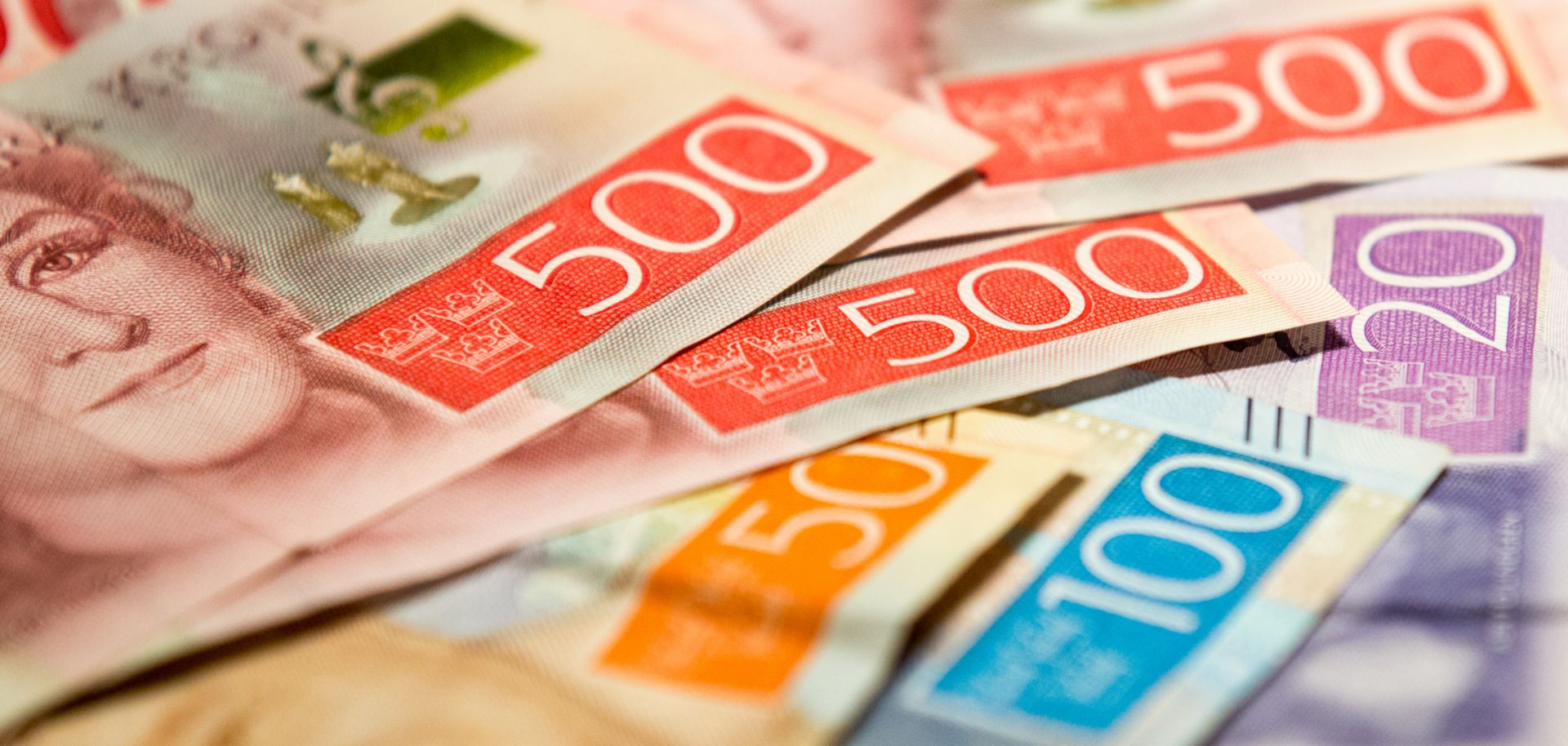
Swedish krona banknotes. Sweden's central bank is set to end its five-year experiment with negative interest rates. Other central banks interested in returning monetary policy to "normal" will be watching the results closely.
What Happened Global central banks have had little success using quantitative easing, or the large-scale purchase of domestic financial assets, and low or negative interest rates to raise inflation and pull economies out of slow-growth traps. Sweden is bucking the global trend in a limited way as its central bank, the Riksbank, is expected to raise its main policy rate from −0.25 percent to zero on Dec. 19. The move would end Sweden's five-year experiment with negative interest rates, although the zero rate will remain for at least two years. Concerns in Sweden over increased financial vulnerabilities and asset price bubbles, especially in housing, outweigh worries about the impact of even small monetary tightening in the face of economic slack. Indeed, there is no data-driven reason for Sweden to raise interest rates now with growth lower than expected and inflation below target.
