
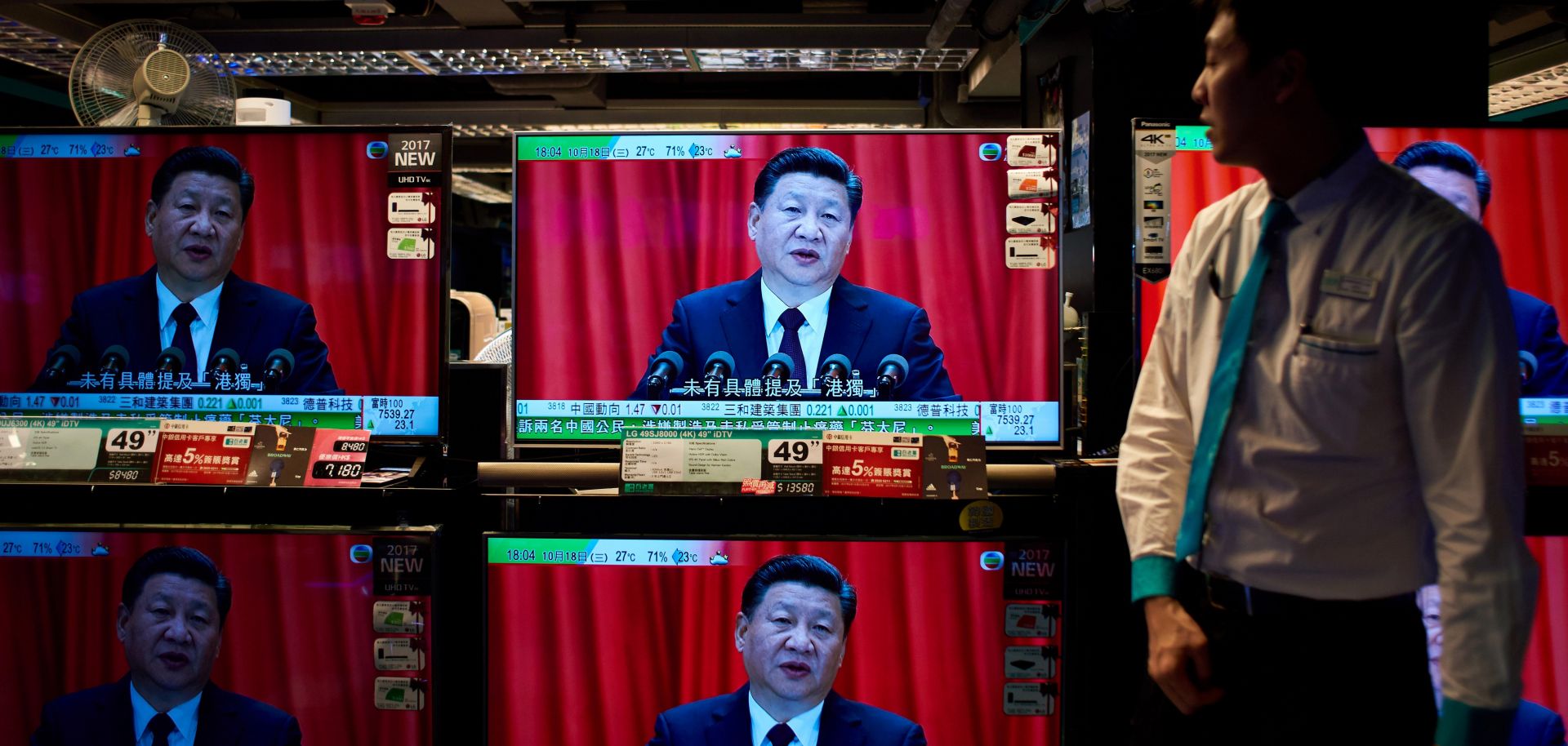
In his address to the 19th Chinese Communist Party Congress on Oct. 18, President Xi Jinping said China had "entered a new era." Keeping its hold on power for the duration of this new chapter will be a familiar challenge for the Party.
Perhaps the most defining feature of China's political history has been the cyclical expansion and collapse of its dynasties . The country's first unified dynasty, which emerged more than 2,000 years ago, set what would come to be a familiar pattern: A central power rises and expands its rule until a challenge — be it a corruption scandal or a natural disaster — erodes its authority. The imperial court steps in to remove or reinforce the dynasty, and the process repeats. Each subsequent dynasty followed the same trajectory, struggling against China's geopolitical diversity , as well as the competing forces it produces, to justify their continued rule and fight internal weakness. The Communist Party is no exception. Though modern China has changed considerably from its imperial origins, it retains an authoritarian system of governance reminiscent of an earlier era.
