
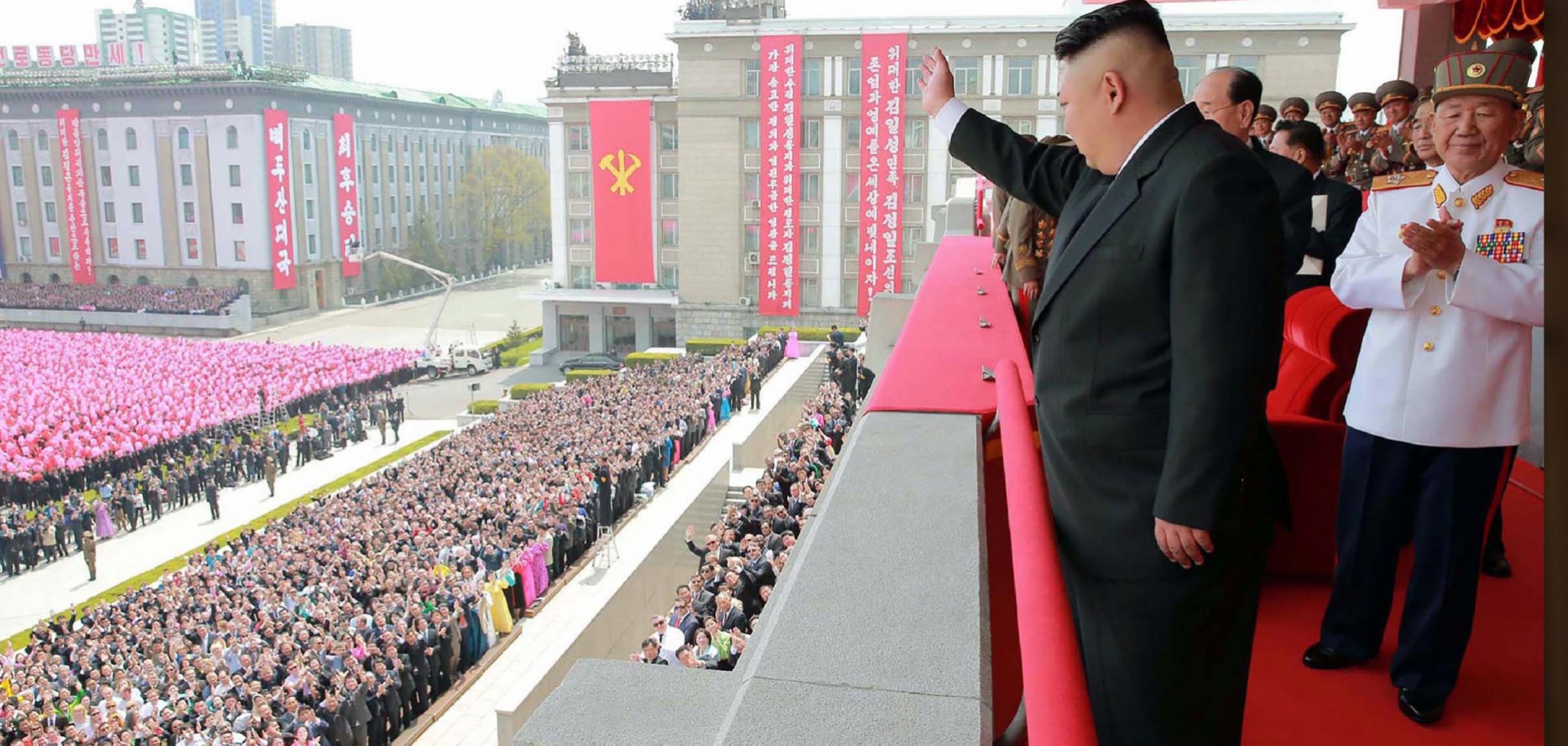
As diplomacy breaks down on the Korean Peninsula, all eyes are fixed on a pair of events that stand to either worsen or ease the tension mounting between the United States and North Korea. On April 25, North Korea celebrated the 85th anniversary of its military's establishment, an occasion that has been accompanied by missile tests in the past and that now comes as expectations of a sixth nuclear test by Pyongyang rise. Then, three days after the North Korean military's birthday, the U.N. Security Council will convene to discuss the country's persistent march toward a demonstrable long-range nuclear weapons capability. And as the threat emanating from North Korea grows, Washington will be more and more likely to use the summit to call for heavier sanctions against its belligerent adversary.
Based on the completed review of Washington's North Korea policy, the U.S. administration has no plan to respond to Pyongyang's next nuclear test with military might. But U.S. President Donald Trump has taken every opportunity to show that he still considers all options — including a military strike — to be on the table. This won't, however, do much to change North Korea's own calculations. Pyongyang no longer sees its nuclear weapons program as a chip to be bargained away for economic and security concessions from Washington. Instead, developing a credible nuclear deterrent has become a matter of national security, and a crucial one at that. North Korea will forge ahead with its nuclear program undeterred, bringing it one step closer to its final stage — and bringing the country closer to a clash with regional powers intent on stopping it.
