
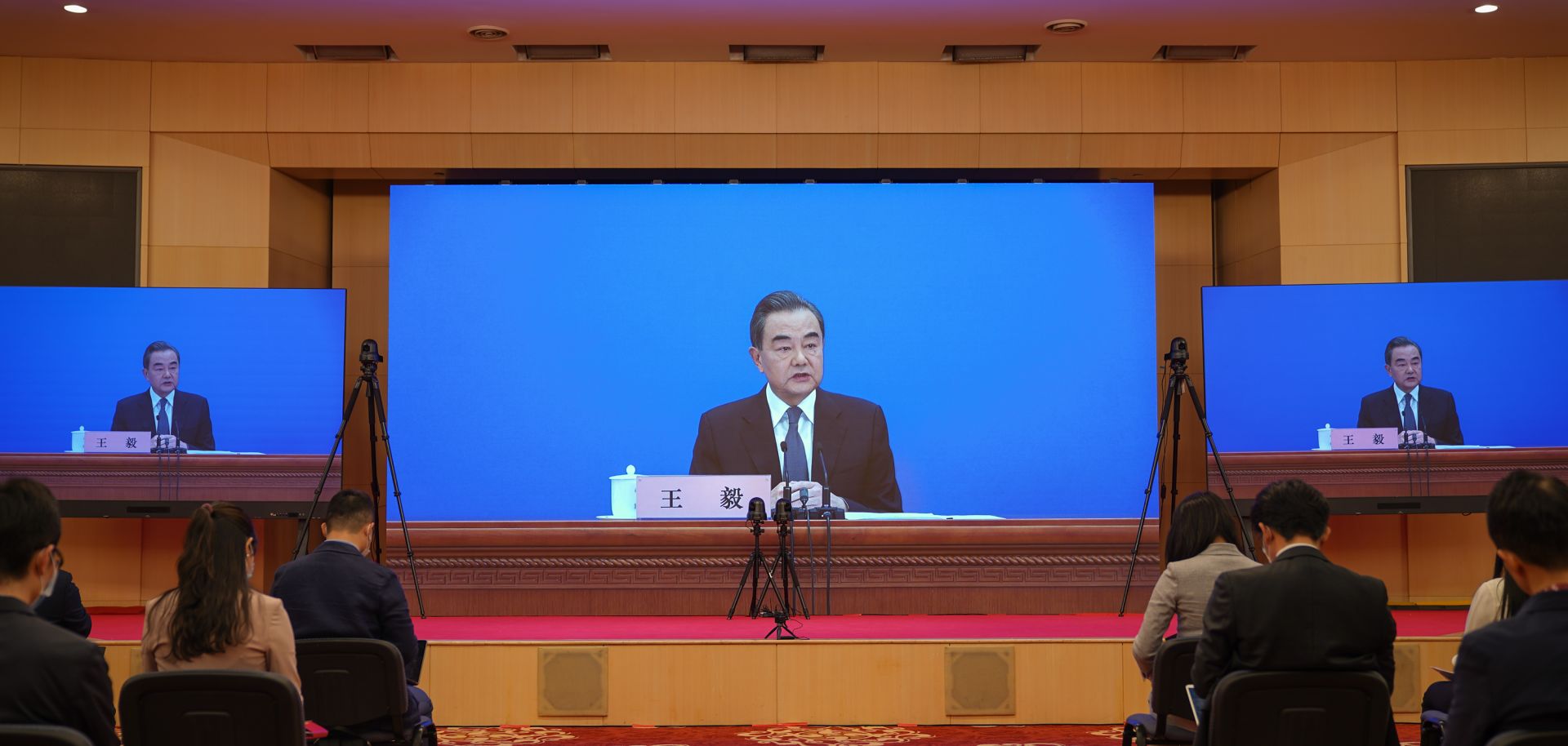
Chinese Foreign Minister Wang Yi answers questions during a video press conference on May 24, 2020, in Beijing, China.
The growing global backlash against China's involvement in both the COVID-19 pandemic and Hong Kong's political crisis is fueling a new brand of "wolf warrior" diplomacy in Beijing, aptly named after a nationalistic Chinese action movie. This more aggressive stance abroad exposes a sense of vulnerability in Beijing, and poses two potential risks for the regime — the first is that the tactic backfires overseas, and the second, and perhaps more problematic, is that Beijing loses control of the nationalistic narrative. China's Wolf Warriors Chinese diplomats and officials have become much more vocal in recent months amid increasing pressure regarding the origins and management of the COVID-19 pandemic, as well as renewed attention on China's Hong Kong policies. Just a few recent cases include: China's ambassador to Australia, Cheng Jingye, threatened trade action in response to Australia's calls for an international investigation into Beijing's involvement in the COVID-19 crisis.
