
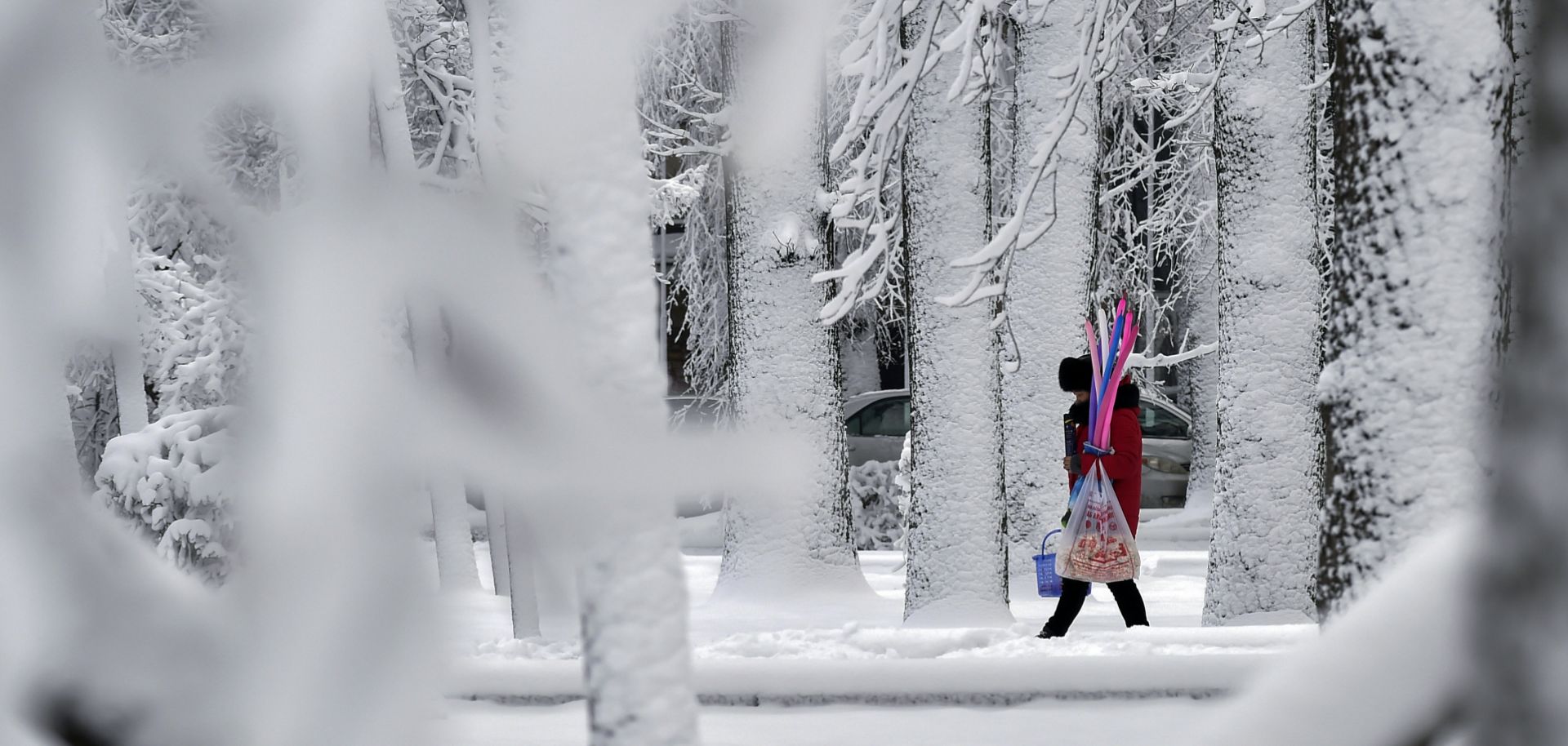
Snow covers a street in Bishkek, the capital of Kyrgyzstan, on Dec. 27, 2017.
Central Asia has undergone a significant economic transformation in recent years as trade and investment in the region have shifted away from Russia and toward China. Russia remains a major economic force in Central Asia, and China's rise in the region complements its interests in many ways — or at least doesn't directly contradict them. But Central Asia's growing economic dependence on China and Beijing's increasing political and security influence in the region could foster increased tensions between the two powers. The Traditional Player: Russia Russia has been the dominant external player in Central Asia since the 19th century, when the Russian Empire conquered the region to protect itself from foreign rivals and establish a defensive anchor in the Tian Shan mountain range and Karakum desert. After the Russian Revolution in 1917, Central Asia became part of the Soviet Union, which dramatically reshaped the region .
