
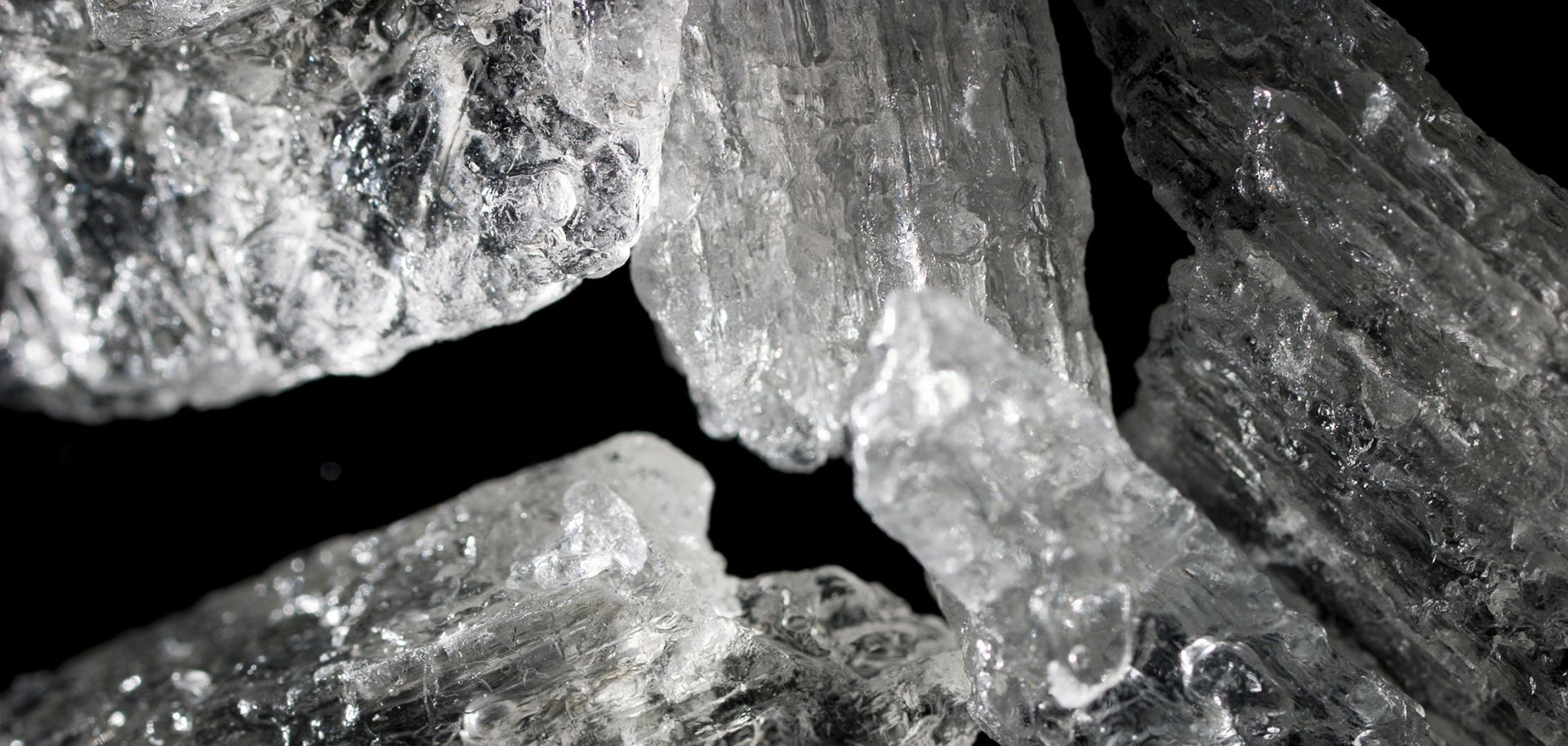
The ease of producing methamphetamine makes it a profitable venture for Mexican cartels. Until the U.S. demand for drugs diminishes, the country will be awash in Mexican-made meth.
On its own, it was an impressive haul, but in the wider picture, it was just a drop in the bucket: On Sept. 26 at a checkpoint in Sarita, Texas, U.S. Border Patrol agents seized 64 kilograms (142 pounds) of methamphetamine with a street value of $4.5 million. A methamphetamine seizure of this size is not surprising or unusual, especially in this location, given that criminal cartels manufacture the drug in Mexico before smuggling it into the United States. Indeed, 97 percent of the methamphetamine seized by Customs and Border Protection (CBP) occurs along the U.S.-Mexican border, according to the Drug Enforcement Administration's 2018 National Drug Threat Assessment. So what exactly is driving this record-setting production of methamphetamine? For me, two main factors are responsible: economics and cartel dynamics.
