
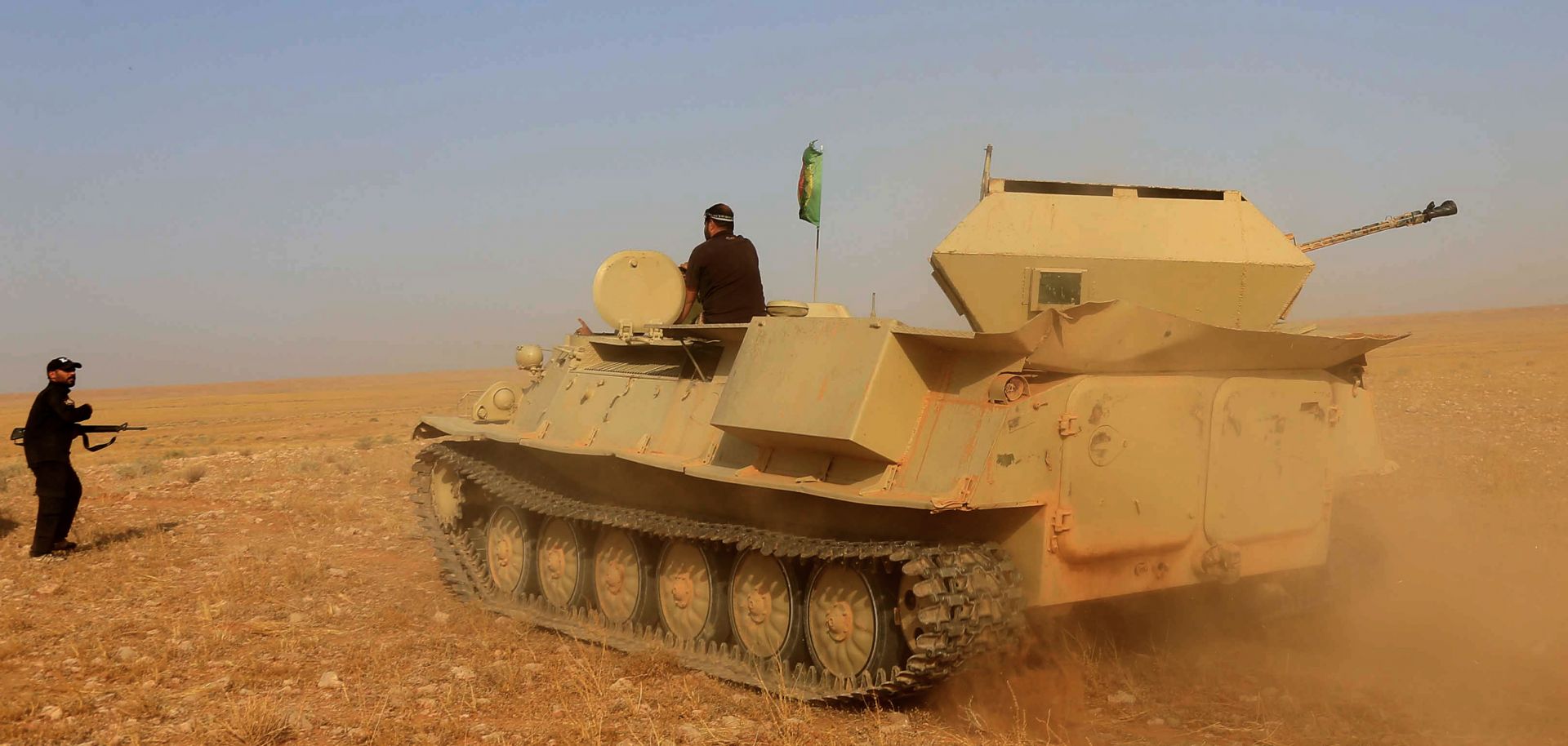
An infantry fighting vehicle of Iraq's Hashed al-Shaabi paramilitaries is seen during a military operation in a desert area near the village of Nukhayb in Iraq's western Anbar province on Sept. 16, 2019.
Even under ideal conditions, the inherent political and structural weaknesses of Iraq's central government leave it fragile and allow non-state actors and external powers to wield a significant level of influence over what should be purely Iraqi affairs. Its baseline instability means that any new stressors that surface — such as the deterioration in the relationship between the United States and Iran, both major Iraqi patrons, which accelerated in the wake of the Sept. 14 Iranian attacks on Saudi oil infrastructure — could cause the Iraqi government to fall apart. The situation Iraq finds itself in today is certainly less than ideal. Since his appointment in late 2018, months after May elections concluded, Iraqi Prime Minister Adel Abdul-Mahdi has struggled to match the domestic popularity that his predecessor enjoyed, let alone govern effectively or even form a complete Cabinet.
