
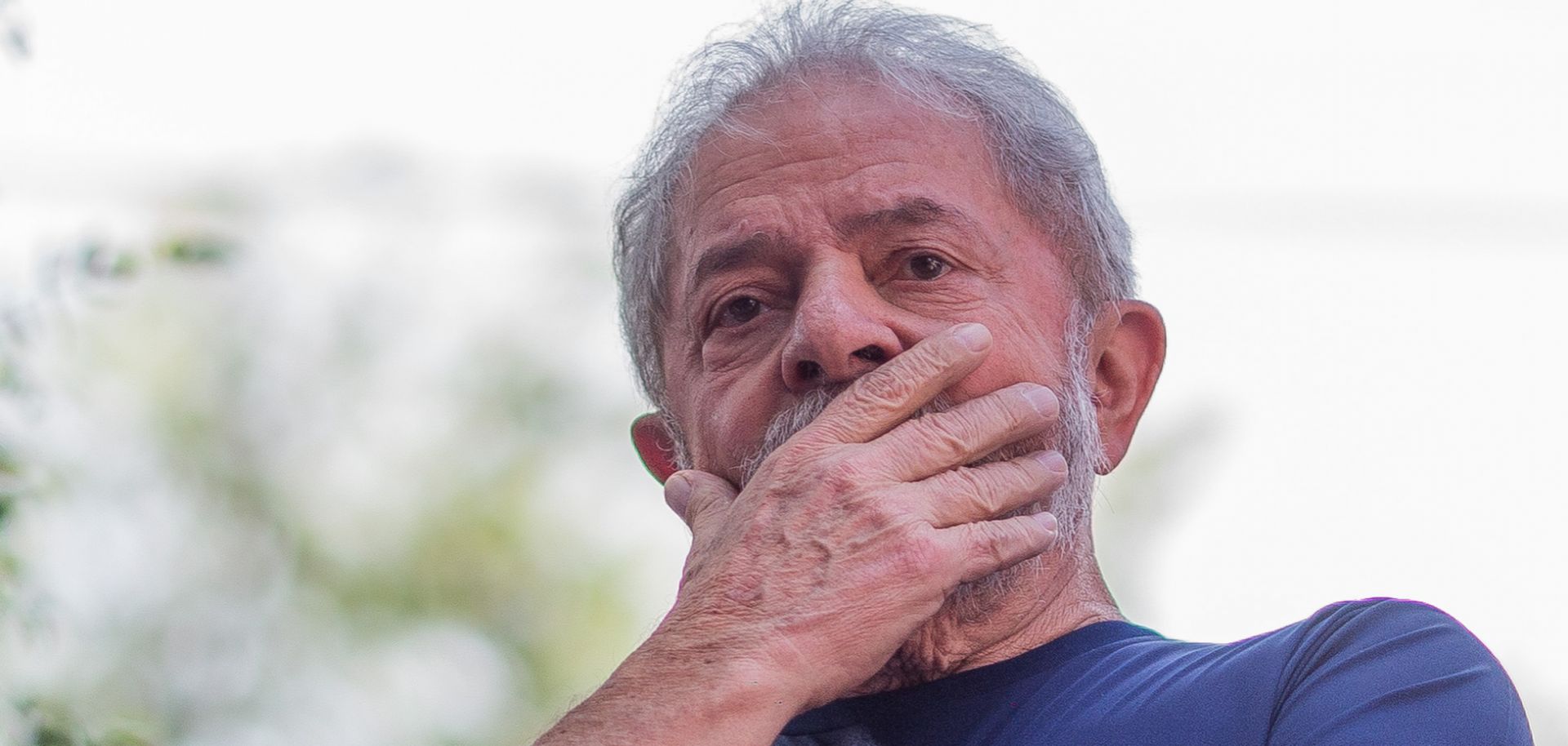
Former Brazilian President Luiz Inacio Lula da Silva surrendered to police on April 7, 2018, to begin serving a 12-year prison sentence for corruption. His imprisonment has injected a large degree of uncertainty into Brazil's presidential race.
The world's fifth largest country is set to head to the ballot box later this year for elections unlike any other. After more than two decades of the Brazilian Social Democracy Party and the Workers' Party largely alternating being in power, Brazil's presidential elections in October appear certain to catapult an outsider into power after a monumental corruption probe brought the country's traditional political parties to their knees. Parties that otherwise wield little power in the National Congress are racing to nominate their own candidates for the country's top job. But given the fractured nature of Brazil's Congress, winning the polls might prove to be a lot easier than actually governing the country. Filling the Da Silva-Shaped Hole The April 7 arrest of former center-left President Luiz Inacio Lula da Silva has injected a large degree of uncertainty into Brazil's presidential race.
