
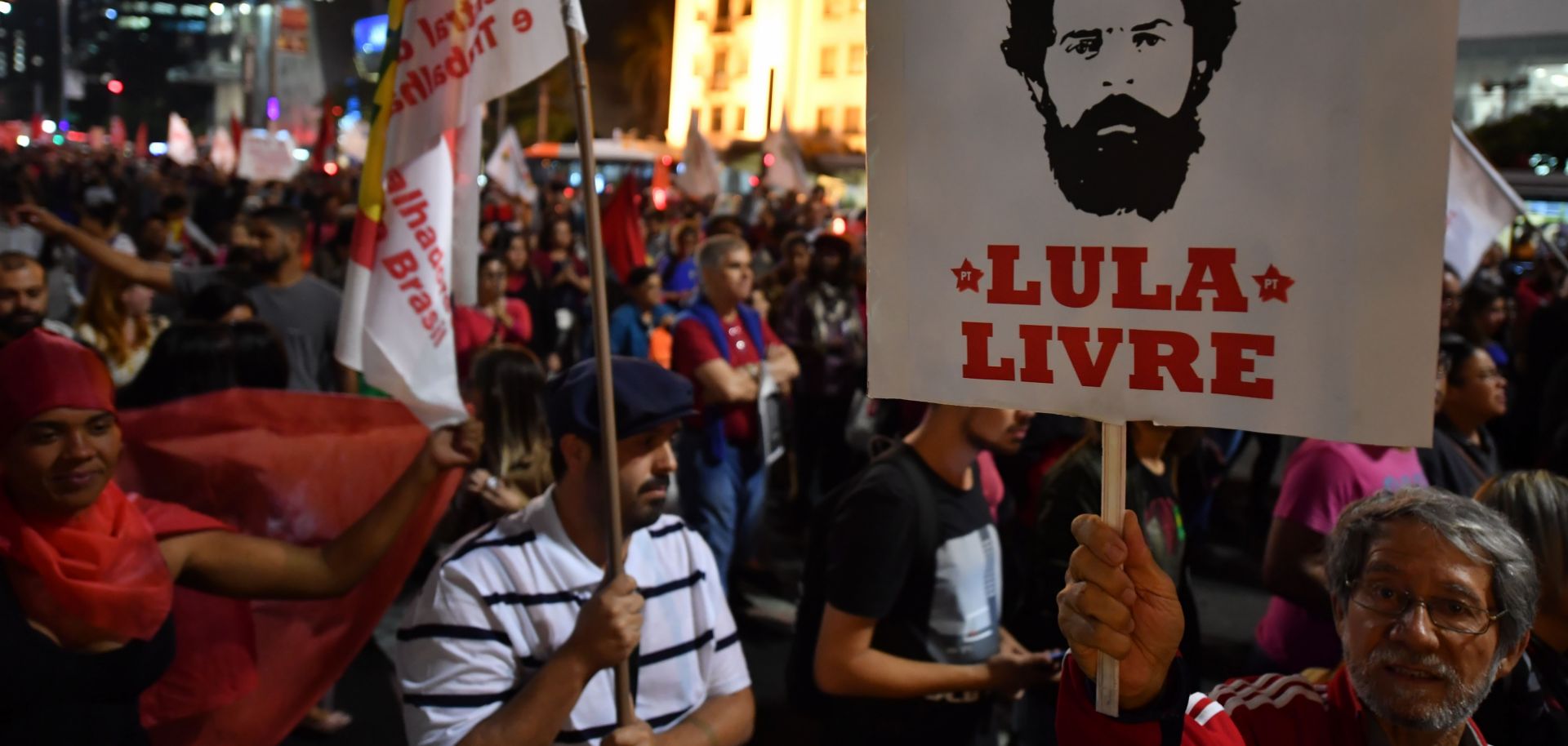
A demonstrator holding a "Free Lula" sign shows his support for imprisoned former Brazilian President Luiz Inacio Lula da Silva during a May 30, 2018, protest in Sao Paulo. The pace of economic reform in Brazil is set to slow amid social unrest and the run-up to elections in October.
Brazilian President Michel Temer was already deeply unpopular on the street, but now it seems even his congressional support for reforms is vanishing. Rising global oil prices and resultant fuel price increases have created social upheaval across Brazil in the last two weeks as strikes by truck drivers and oil workers have cornered the government ahead of general elections in October, exposing the discontent with the government's economic liberalization measures. With problems on the street and on the campaign trail, the pace of economic liberalization in Brazil might soon slow to a crawl as Temer's erstwhile backers in Congress spend more time considering the upcoming polls than fulfilling the president's agenda. A Farewell to Subsidies For years, the administration of former President Dilma Rousseff controlled the price of fuel in Brazil and maintained regulatory restrictions on foreign oil companies wishing to develop Brazil’s vast pre-salt oil reserves.
