
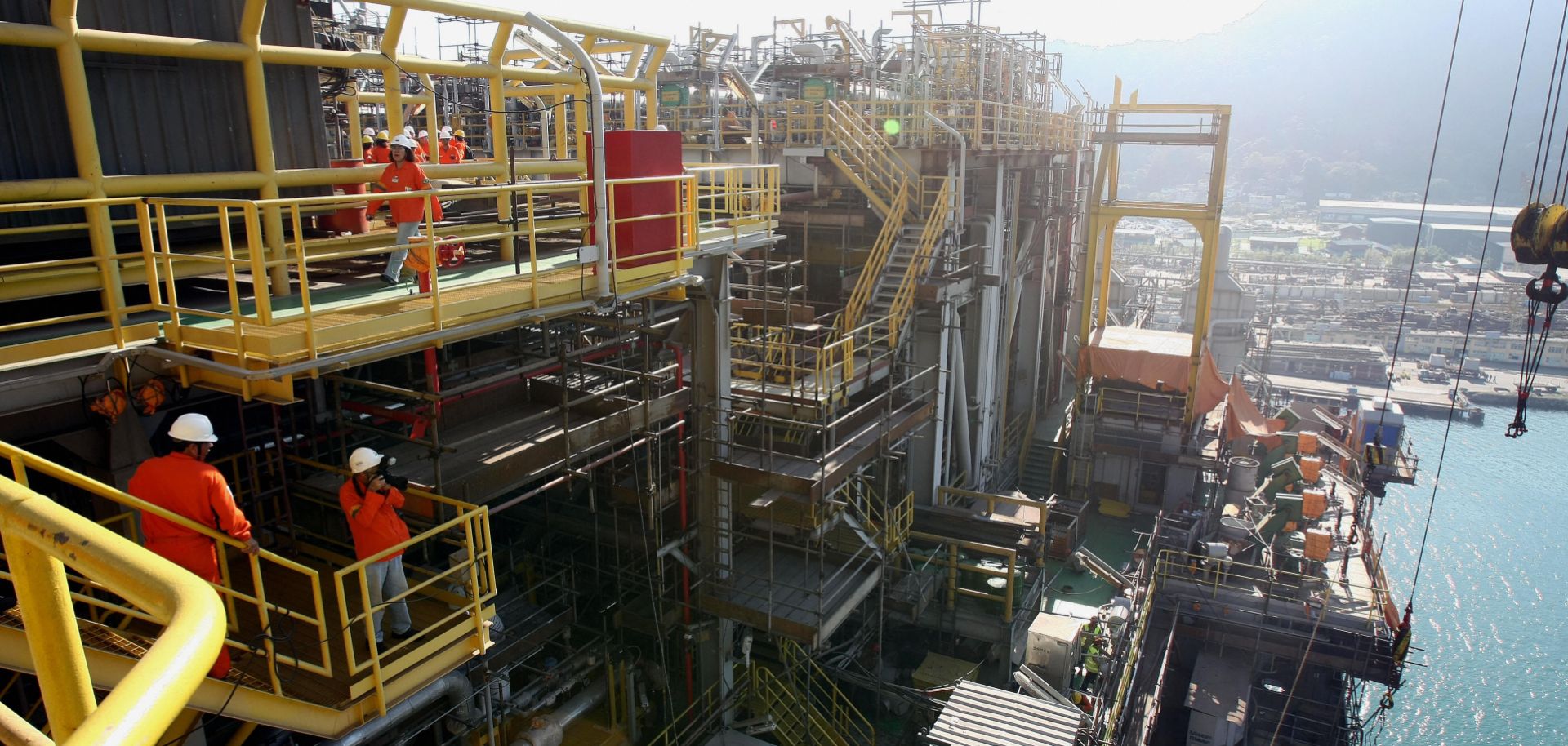
Brazil's P-51 semisubmersible offshore oil platform was built to produce up to 180,000 barrels of oil per day. The country's energy industry is one of the main targets of the government's move toward economic liberalization.
After two years of recession and continued political instability, Brazil seems to be headed toward economic recovery. President Michel Temer, though currently under investigation for corruption , has been steadfast in his efforts to implement financial reform and lead his country down a path toward economic liberalization. And though the Brazilian government's leadership woes will only grow, Latin America's largest economy seems to have become somewhat capable of decoupling itself from political issues. The Necessity of Reform Brazil's economic growth has long been constrained by strict regulations across almost every industry. And the recent recession, which caused the country's gross domestic product (GDP) to plunge by more than 7 percent, only further showcased the limitations of the government's restrictive approach.
