
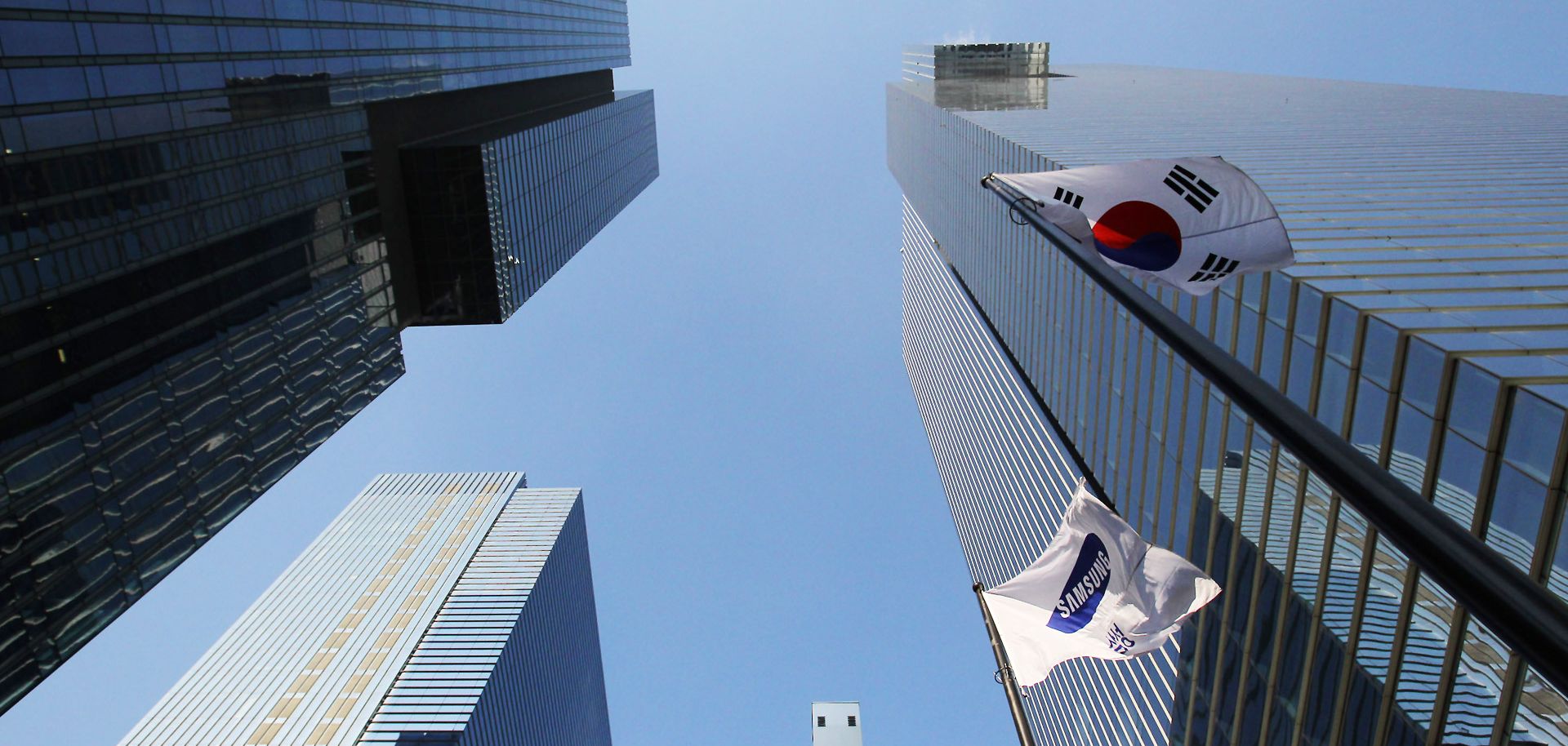
For better or worse, the story of modern South Korea is inseparable from that of the chaebols. Since their emergence under military strongman Park Chung Hee, who took power in 1961, South Korea's enormous, family-controlled conglomerates have formed the backbone of the country's export-dependent economy, driving and sustaining what came to be known as the "Miracle on the Han River." Today, the sales revenue of the five largest chaebols constitutes almost 60 percent of South Korea's gross domestic product, and their brands — Samsung, Hyundai and LG, among others — are household names. But perhaps even more important, the chaebols that dominate South Korea's political, economic and social life will also dictate the country's fortunes ahead. Given their overwhelming importance to South Korea, chaebols have long been targets of criticism at home and abroad, and the calls for their reform are nearly as old as the conglomerates themselves.
