
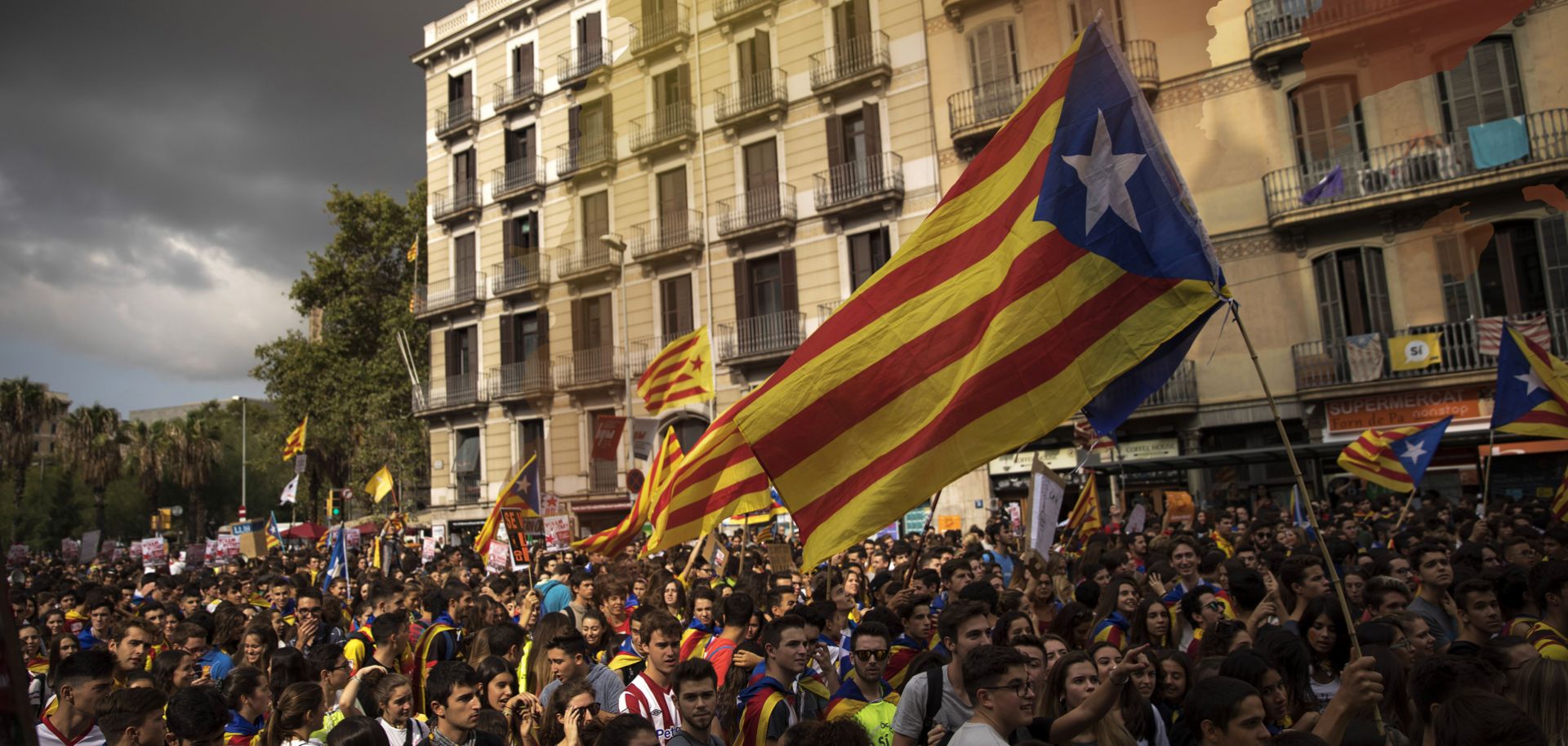
Students gather in Barcelona in support of the Catalonian independence movement, Sept. 28. While the Catalan cause resonates with other European self-determination movements, they are unlikely to follow suit just yet.
It's no secret that the geography of Europe invites fragmentation. Its mountain chains, peninsulas and unconnected rivers led to hundreds of cultural pockets with unique languages and identities. Centuries of war, invasion and forced migration further redefined political and ethnic borders, resulting in a Continent overcrowded with sovereign states. About a quarter of all the countries in the world are in Europe, and within almost every one are smaller groups demanding greater political, economic and cultural rights. That is why Catalonia's push for secession from Spain makes the European Union nervous. In the past few decades, not many self-determination movements within Europe have reached the magnitude of Catalonia's. And other nations are closely watching the region's instability, fearing that it might ignite their own separatist forces.
