
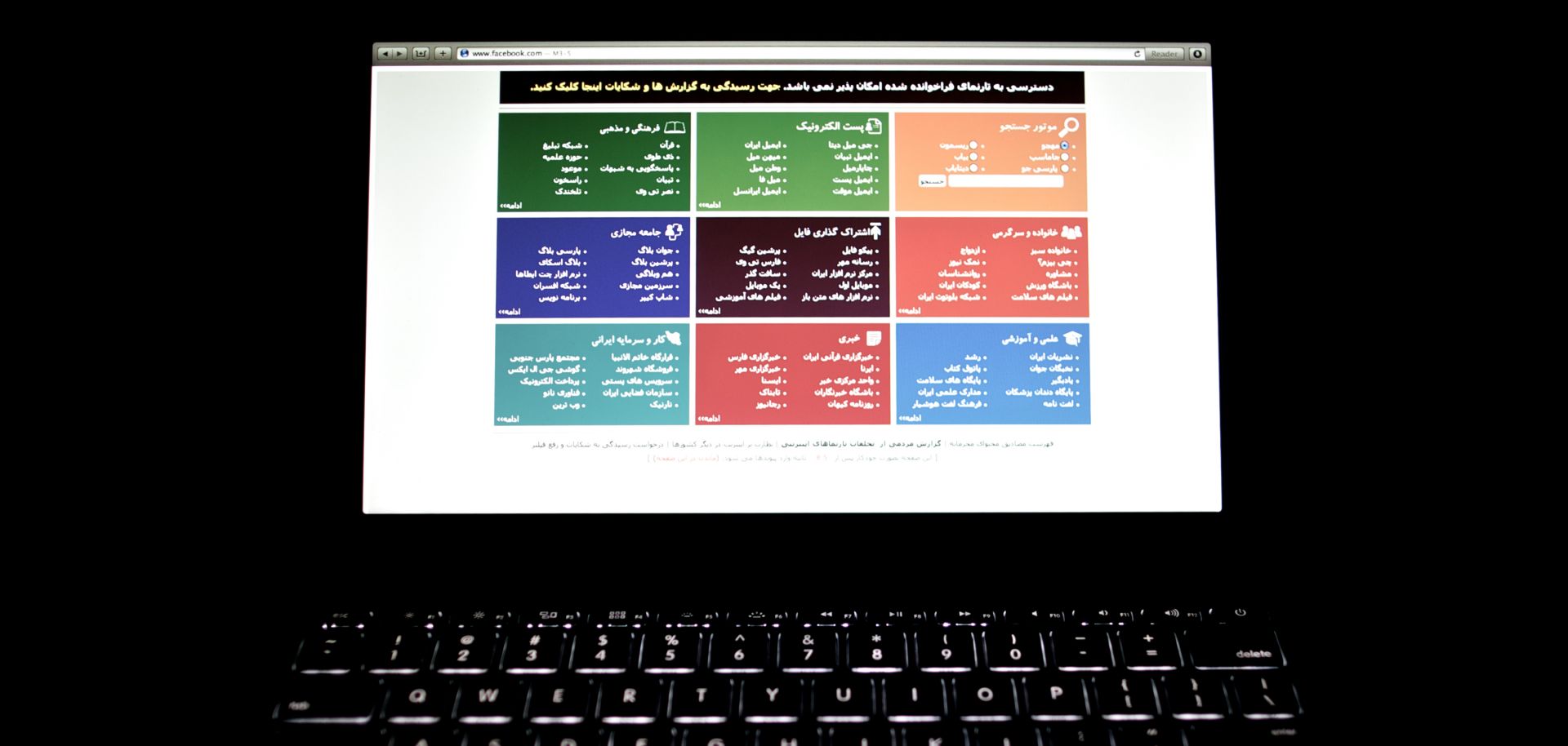
A laptop screen displays the message that pops up when users try to access Facebook, a blocked website in Iran.
For as long as Iran has had cyberspace, the Iranian government has been trying to control it. The spate of color revolutions in the 2000s, followed by the Green Movement in Iran in 2009, further illustrated the dangers of electronic communication, prompting the Islamic republic's hard-line factions to push for more stringent oversight online. And since the United States has begun backing a policy akin to regime change and supporting domestic opposition movements, the need to control the internet is greater now for Tehran than perhaps ever before. Iran has long employed internet filtering to weed out content deemed ideologically inappropriate, to block foreign apps and information, and to stifle opposition movements at home. At the same time, however, its technologically proficient population demands connectivity. The messaging app Telegram, in particular, has become a critical line of communication in business and political life.
