
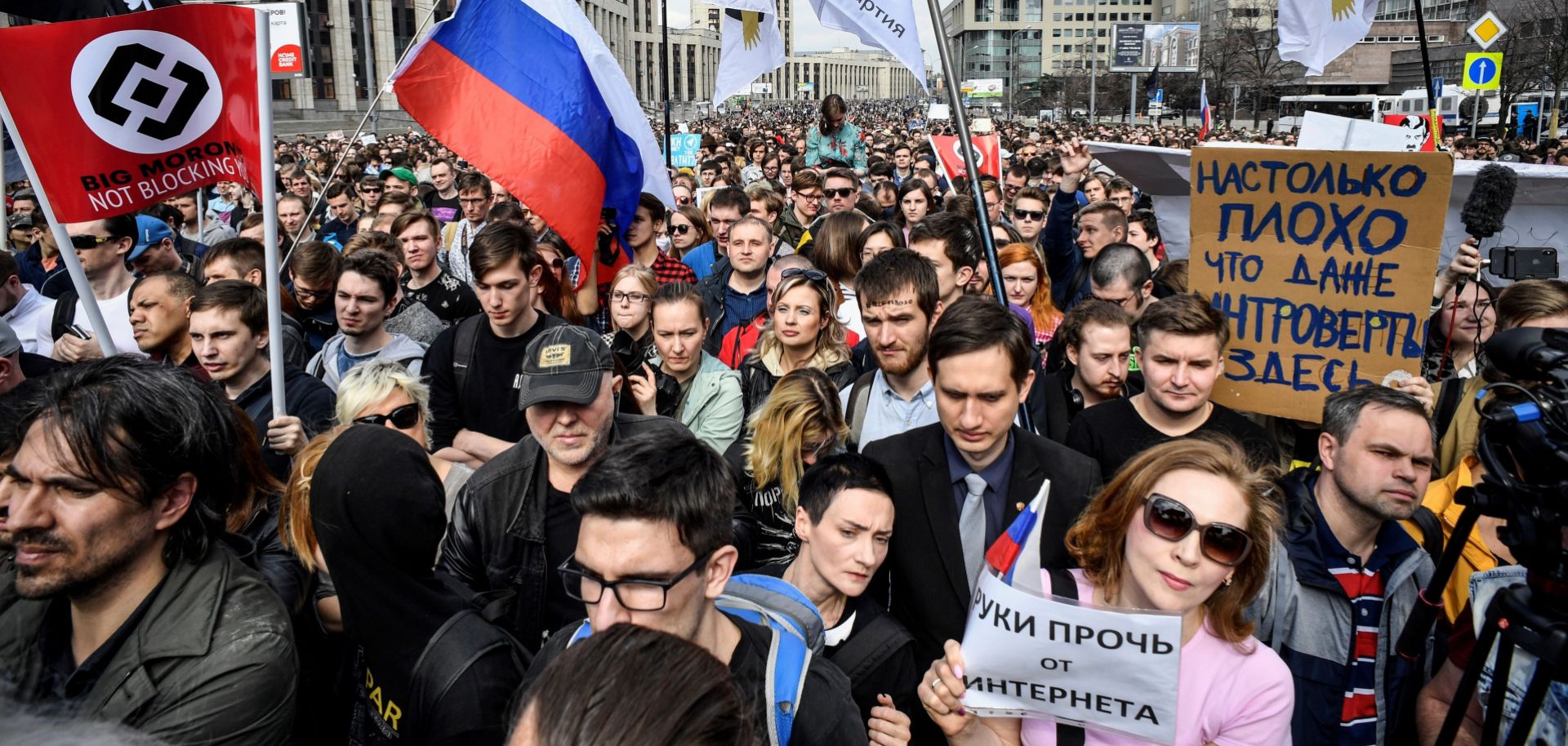
People attend an opposition rally in central Moscow on April 30, 2018, to demand internet freedom in Russia. Authorities tried to block access to the popular messaging app Telegram in the latest onslaught against dissent under President Vladimir Putin. At least 8,000 people, including top opposition leader Alexei Navalny, turned up in the center of the Russian capital.
Knowledge is power. For centuries leaders have tried to control the flow of information to preserve their rule. Today, the internet is a key part of this strategy. To carry it out, governments have plenty of options, including filtering and blocking content — tried-and-true methods for controlling the flow of information online. The rise of social media has given leaders yet another tool for keeping a lid on the opposition, managing unrest and tailoring the news of the day to fit their agenda. Every government — be it autocratic, democratic or somewhere in between — wants to exploit the internet to its advantage. Administrations even in liberal countries such as the United States have attempted to direct online discourse and to sway public opinion toward some outlets and away from others. And in more authoritarian states, manipulating internet use has become a critical aspect of domestic policy.
