
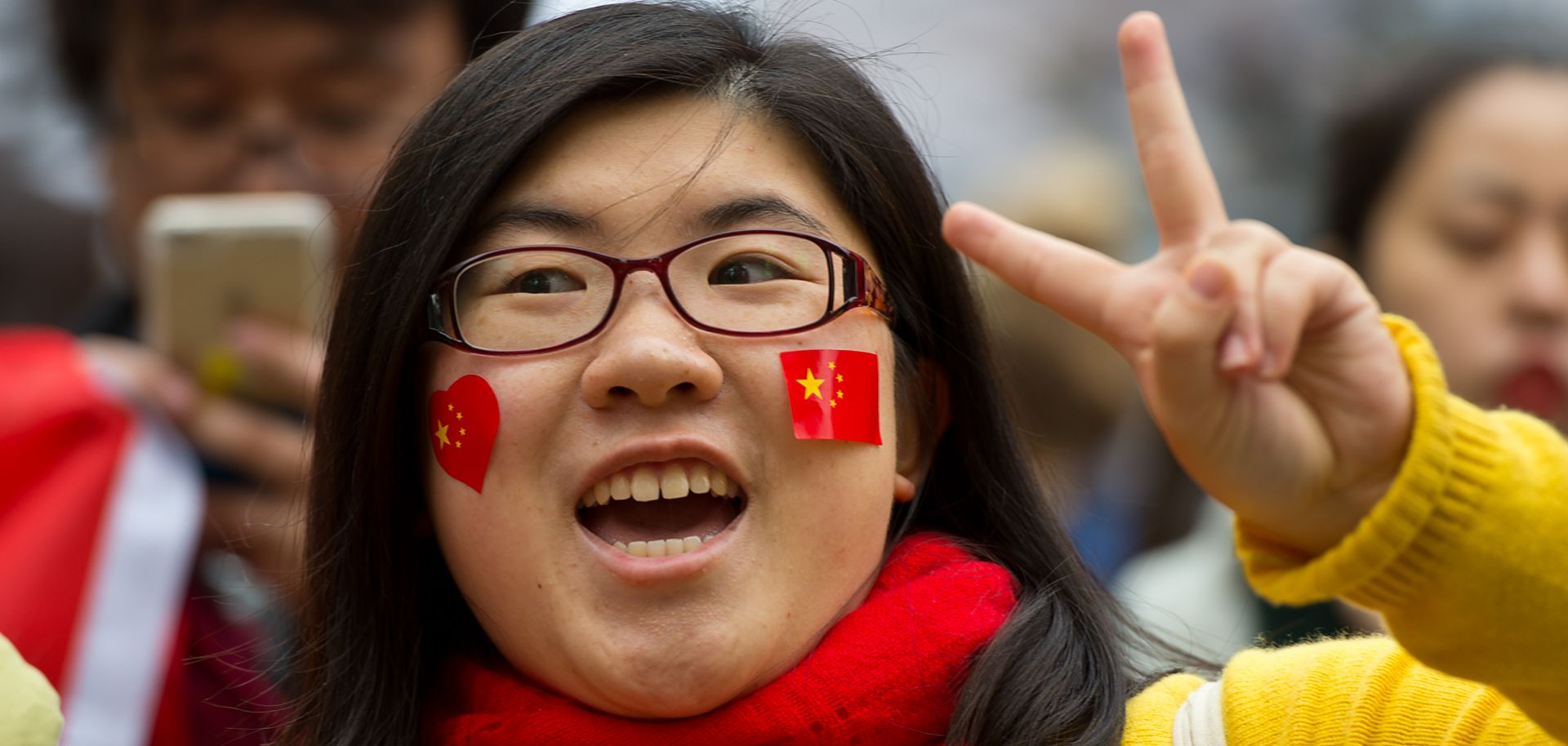
A demonstrator shows support for the Chinese government at a counterprotest in London in 2015. The rally was in response to an Amnesty International demonstration over human rights abuses and online censorship in China.
From a Western perspective, the internet in China is as locked-down as it gets. The country's massive firewall has been filtering global content for decades, and the Communist Party is as committed as ever to centralizing control of the internet and the information it transmits. To achieve that end, the Chinese government uses every trick in the book, deploying bots on social media platform Weibo — where the automated accounts make up an estimated 40 percent of the user base — devising rules to govern internet use and arresting violators. Yet Beijing considers the internet an opportunity as much as a threat. The economic incentive to keep it free enough to foster innovation is huge for China. Some of the world's most technologically proficient internet and tech firms, in fact, operate behind the "Great Firewall.
