
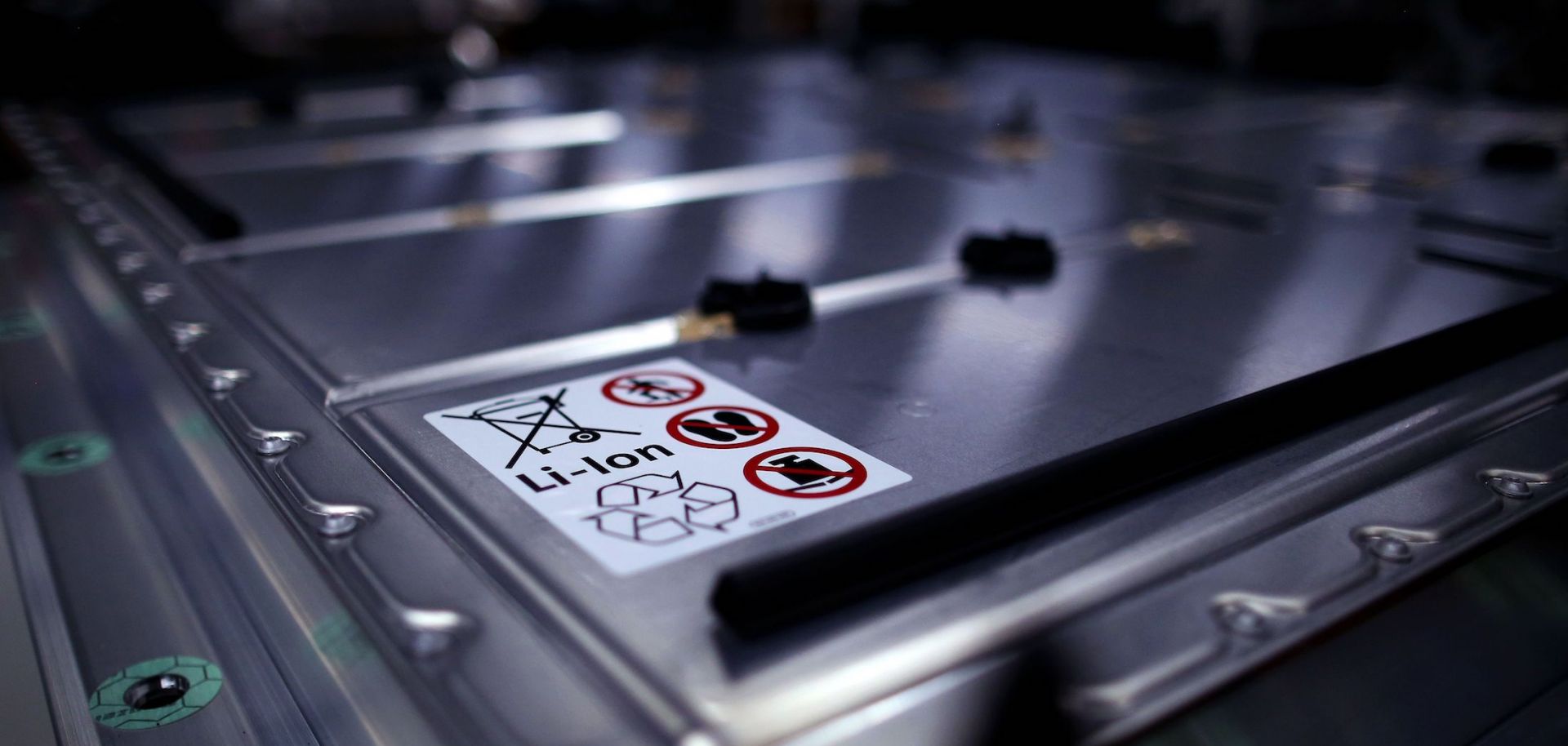
A rechargeable Lithium-ion battery for the Volkswagen ID.3 electric car is pictured Feb. 25, 2020, at the Volkswagen car factory in Zwickau, Germany.
The U.S. International Trade Commission's Feb. 10 ruling that South Korean battery maker SK Innovation had stolen trade secrets from another South Korean battery maker complicates ongoing Biden administration efforts to accelerate the domestic adoption of electric vehicles and U.S. efforts to ensure the accessibility and security of critical resources and technologies like lithium-ion batteries. The ITC, an independent agency, sided with LG Energy Solution backing its accusation that SK Innovation hired dozens of LG Chem's employees to illegally steal trade secrets. The commission also banned SK Innovation from importing certain lithium-ion batteries, battery cells, battery modules, battery packs and components for 10 years.
- SK Innovation is constructing two battery manufacturing plants in Georgia to supply batteries for Volkswagen and Ford. The ITC granted a temporary exclusion that will allow SK Innovation to supply batteries to Volkswagen for two years and Ford for four years.
- Ford and Volkswagen argued a full ban would delay their EV plans, and the temporary exclusion is likely meant to dampen the blow to the two companies as they look for alternative suppliers, including LG Energy.
- U.S. President Joe Biden has a 60-day window during which he can veto the import ban. Such intervention is uncommon, but has occurred five times. If Biden declines to veto the import ban, SK Innovation can appeal.
- LG Energy said Feb. 11 that it expects to meet with SK Innovation on a possible settlement for the case, which could make a veto from Biden more palatable or even moot.
With a small pool of players in the EV battery market and the potential size of the U.S. market, uncertainty over SK Innovation's plans to expand in the United States will curb South Korea's overall position as a major global battery manufacturer. Eighty-six percent of the world's battery shipments in 2020 were made by just six companies — China's Contemporary Amperex Technology (CATL) and BYD; South Korea's LG Energy, Samsung and SK Innovation; and Japan's Panasonic. SK Innovation more than doubled its market share in 2020 and had been planning to increase its output further thanks in part to the plants under construction in the United States. Even with the temporary reprieve to supply Ford and Volkswagen, it remains unclear whether SK Innovation will remain in the United States in the long term to manufacture without a settlement or a veto. Volkswagen and Ford are scrambling to find alternatives and could even switch to alternatives before a reprieve ends because automakers prefer to maintain similar supply chains and component manufacturers for every model year until a new generation of a specific vehicle is designed. Ford, which plans to use SK Innovation for the F-150, introduced a new generation of the F-series in the 2021 model year. The ban could also impact the import of electric vehicles manufactured outside the United States that plan to use SK Innovation's batteries manufactured elsewhere.
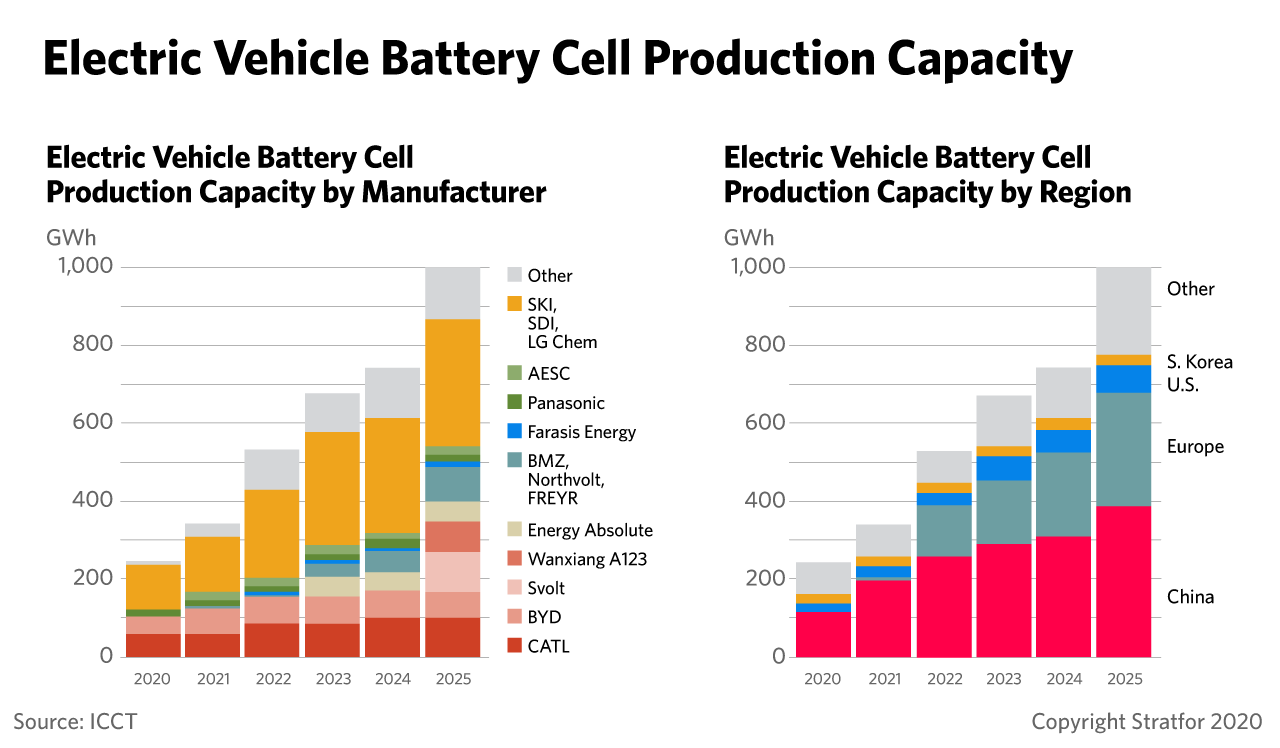
Any slowdown to the build-out of battery production plants in the United States and delays to EV production will constrain U.S. efforts to increase the adoption of electric vehicles and hamper its overall efforts to break down China's stranglehold on the lithium battery supply chains. Biden campaigned on electrifying the federal government's fleet and creating 1 million new auto sector jobs across the entire supply chain, including battery manufacturing. At the same time, China's dominance of the battery supply chain is a strategic concern for the United States. Earlier this month, Biden signed an executive order to review critical U.S. supply chains in order to secure them. China's strategy to ensure security across the entirety of the battery supply chain positions Beijing to continue to keep a stranglehold on a majority of the market for the next several years, with more than 100 EV battery manufacturing plants either in operation or under construction in China. The United States and South Korea are unlikely to match China's total battery cell capacity over the next five years, as even with a quick scale-up, the magnitude of China's efforts will be difficult to match. Matching the breadth of China's efforts isn't necessary in order to ensure security for the U.S. domestic market. But diversifying away from Chinese-linked supply chains will require the United States to scale up its manufacturing capacity quickly and in partnership with plants built by foreign companies like LG Energy and SK Innovation. The ITC ruling will put significant pressure on Biden to intervene, even as the reprieve deadens the blow, marking a critical point early on in Biden's administration where he will have to decide to intervene in a commercial case over national security justifications. An intervention by Biden would send a strong signal that he — like his predecessor — will take a more expansive view on the intersection of national security and industrial policy even though his specific policy prescriptions designed to address concerns may differ from former U.S. President Donald Trump — who, for example, made use of the expansive definition to try to implement tariffs on imported steel and aluminum. For Biden, such a policy would be unlikely to stop at electric vehicles, expanding to include semiconductors, green technology at large and other emerging technologies.
- China has significant control of raw materials for the industry: Chinese companies control or are involved in roughly two-thirds of the Democratic Republic of the Congo's cobalt resources and two-thirds of Australia and Chile's lithium supplies.
- China also processes over 95% of the world's rare earth minerals and produces around three-quarters of the world's permanent magnets.
- In 2019, China controlled over 70% of the world's lithium-ion cell production and over 60% of the production of cathodes and anodes.
