
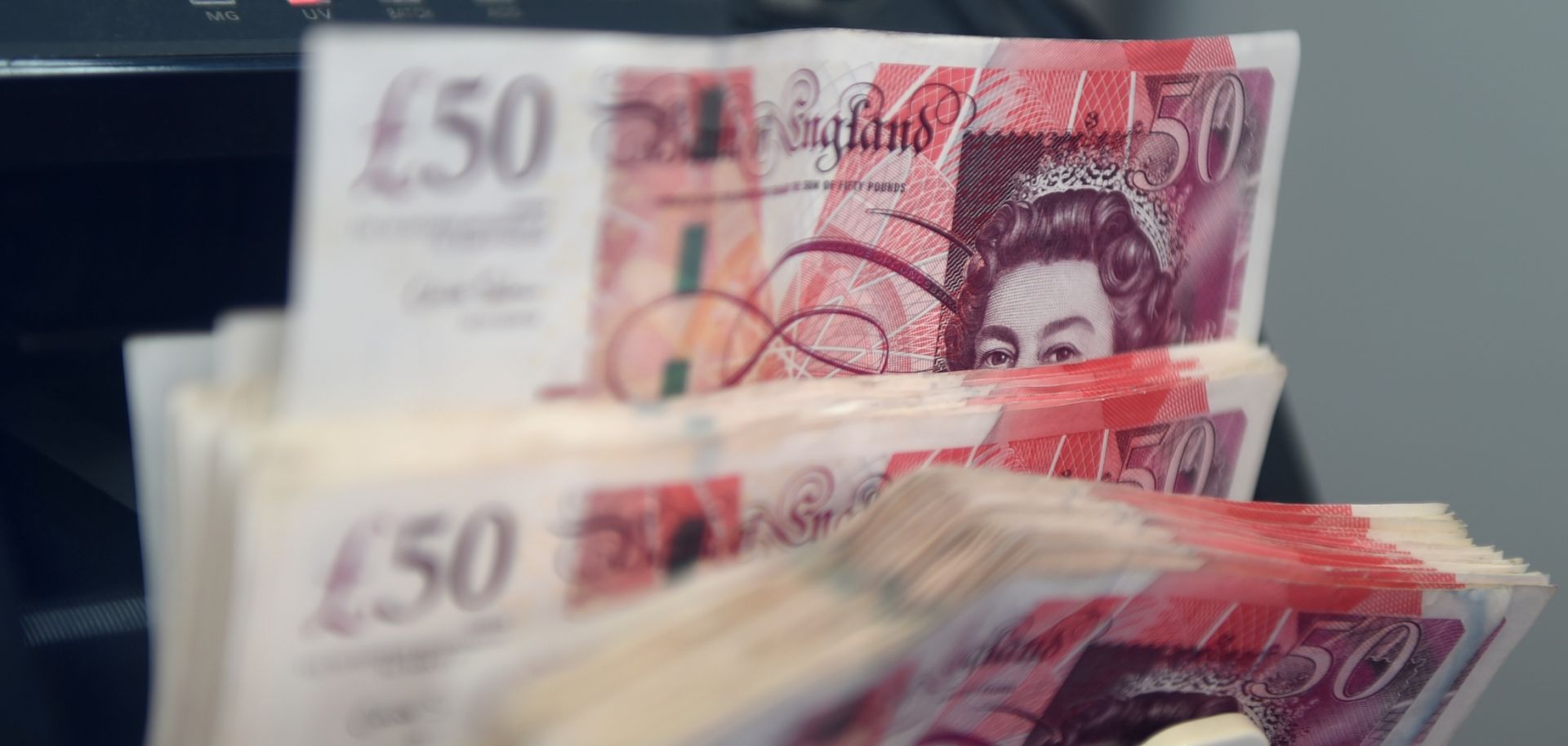
A counting machine tallies British pound notes Jan. 16, 2017, at a currency exchange in Kuala Lumpur, Malaysia.
Editor's Note: The following is part two of a two-part series on money laundering; part one may be accessed here . Part one detailed how money launderers use a variety of tactics to place, layer and integrate illicit funds into the formal economy. In the process, they invariably intersect with legitimate companies and services, ultimately seeking to obfuscate the origin of illicit funds by converting them into legal assets such as cars, properties and investments. Part two will outline recent case studies that illustrate how money launderers use their tactics in real-world situations. It will also explore how technology could change money laundering in the near future and how regulators could expand beyond the financial sector when it comes to penalizing companies for facilitating money laundering operations.
