
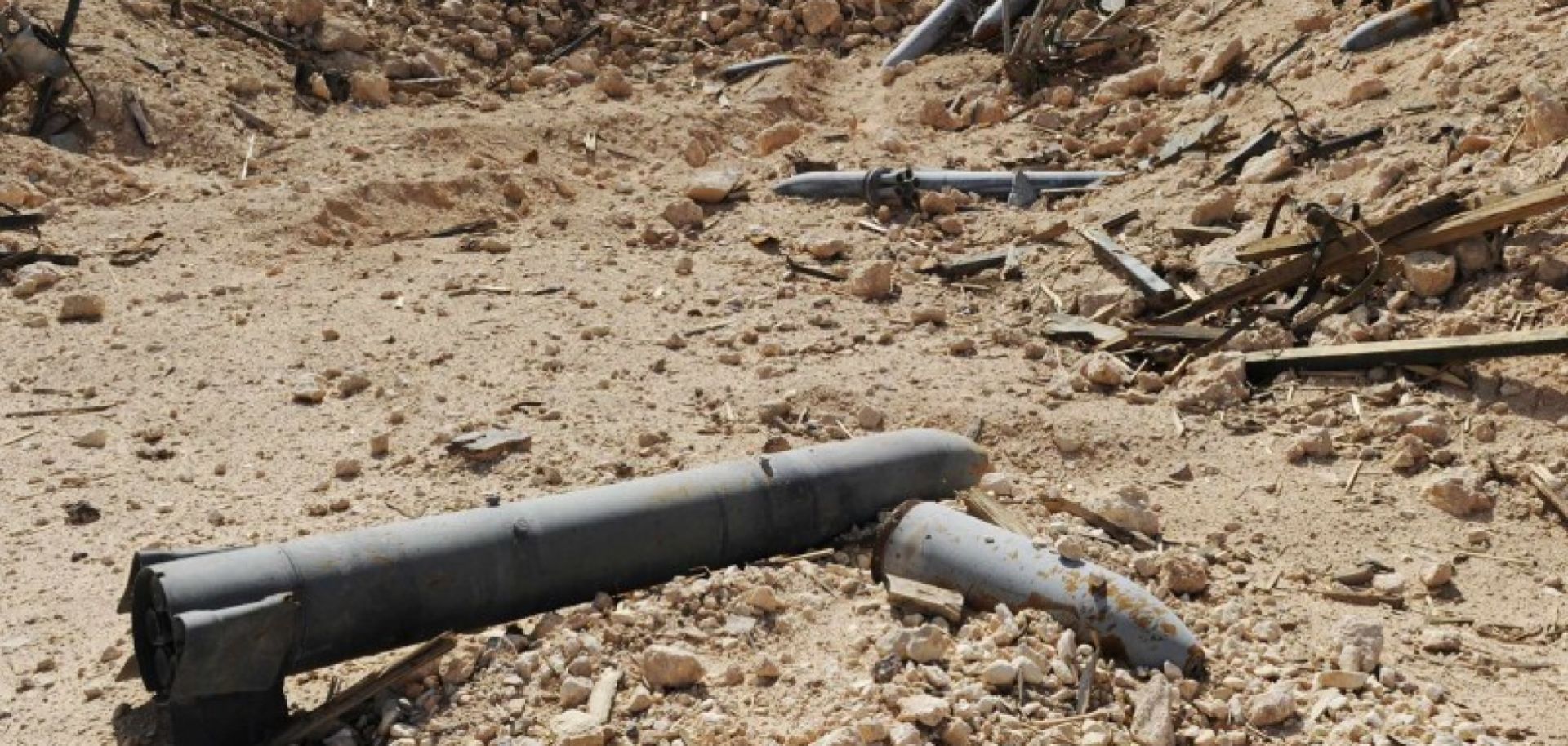
Missiles and shells lie among the stones outside the town of Waddan, in southern Libya. The fall of Libya's government in 2011 left various weapons, potentially including chemical agents, available for the taking by rebel and jihadist groups.
Jihadist groups have long fixated on chemical and biological weapons, from al Qaeda's pre-9/11 programs , in places such as the Deronta training camp in Afghanistan, to its 2003 plot to deploy improvised cyanide weapons on subways. Now there are growing fears that Islamic State militants in Libya have access to such weapons and could use them in battle or in terrorist attacks in the West. However, these fears are overblown. Chemical weapons have been an ineffective tool for terrorists in the past, and the challenges of transporting large quantities of chemical materials — though surmountable — nearly always outweigh the benefits for terrorist groups. Recent concern over Libya's chemical weapons stems from the Islamic State's capture of several sites where former Libyan leader Moammar Gadhafi reportedly produced and stockpiled chemical agents.
