
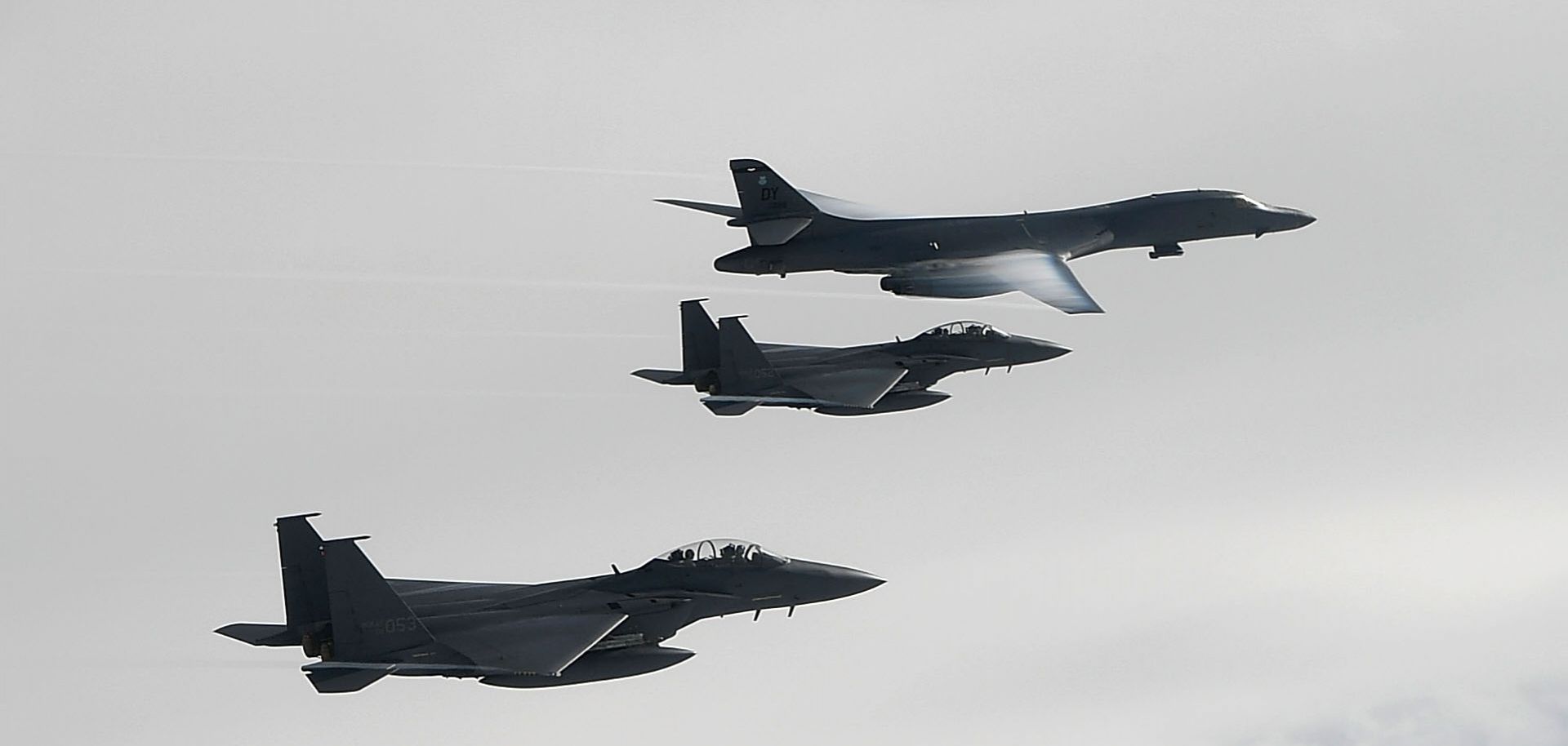
The Pentagon has released a series of documents emphasizing the importance of beefing up the U.S. defensive capabilities to address those of Russia and China.
Editor's Note: In response to Russian President Vladimir Putin's annual address to the Federal State on March 1, we are re-featuring this column. Putin spent a quarter of the two-hour speech talking about a renewed global arms race, revealing a series of videos showcasing Russia's new nuclear-powered cruise missile capabilities. The United States is gearing up once more for a struggle between giants. On Jan. 19, the Pentagon released a new National Defense Strategy, the first in 10 years, in which it called strategic competition the "central challenge to U.S. prosperity and security" as Russian and Chinese military capabilities expand. U.S. Secretary of Defense James Mattis echoed that concern Feb. 2 in the preface of the Nuclear Posture Review, arguing that the United States could no longer afford to pursue a policy of nuclear arms reduction given the steady growth of the Chinese and Russian nuclear arsenals.
