
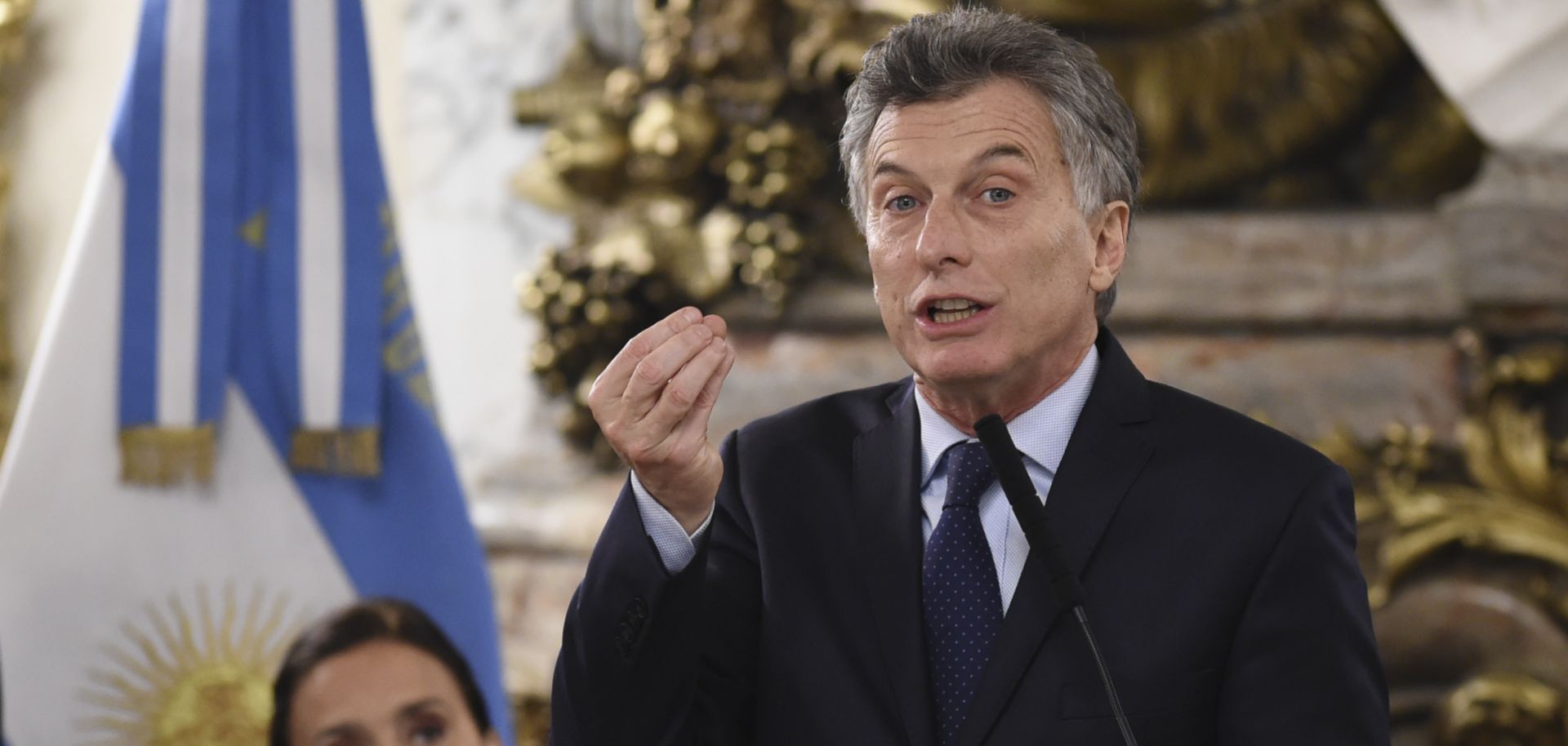
How well Argentine President Mauricio Macri's ruling coalition does in legislative elections in October will determine the future of his economic reform plans.
Great expectations accompanied Argentine President Mauricio Macri into office in December 2015. It was hoped that he would liberalize the country's economic and trade policies, and to his merit, he quickly met some of those expectations with action. During Macri's first months in power, his administration reached a deal with bondholders that retained defaulted Argentine debt, lifted restrictions on the purchase of foreign currency, removed bureaucratic red tape on some foreign trade, and reduced energy and public transportation subsidies as a way to bring down Argentina's fiscal deficit. But Macri's initial successes may prove illusory moving forward . With the exception of the agreement with bondholders, Macri was able to implement most of his reforms rather quickly because they did not require congressional approval. There lies the challenge as Macri embarks on the second part of his agenda to liberalize Argentina's economy before his presidential term ends in 2019.
