
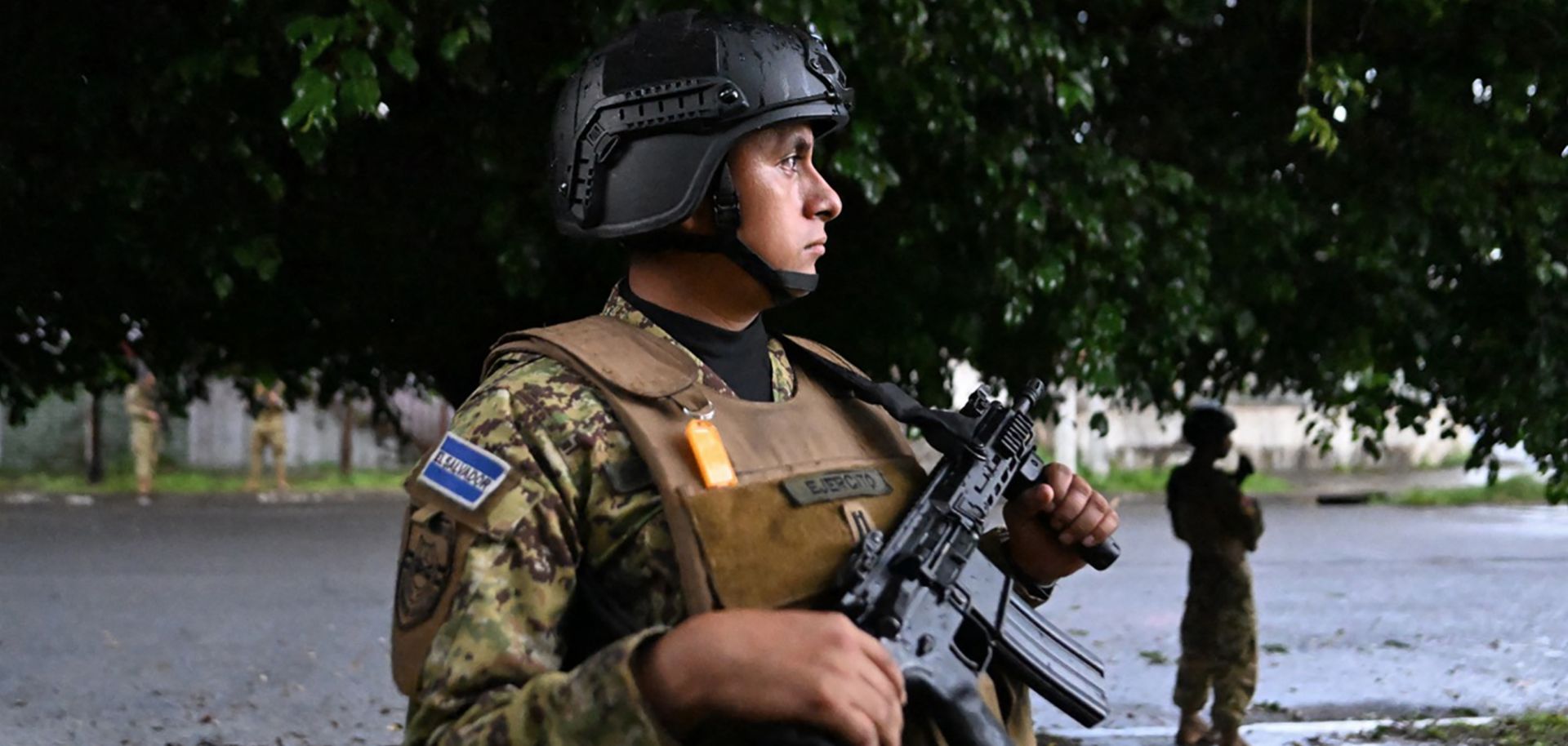
Editor's Note: This is the first of a two-part series that looks at El Salvador's fight against crime and why it's been so successful, as well as the implications and risks of other Latin American countries exploring similar strategies. With the success of El Salvador's counter-crime state of emergency in decreasing the country's homicide rate to its lowest in history, similar measures have become attractive throughout Latin America, though extensive implementation would likely see only limited success, instead creating operational, safety and reputational risks for the region. In March 2022, Salvadoran President Nayib Bukele imposed a state of emergency to combat violent crime, with a focus on the country's two largest criminal groups, Mara Salvatrucha (MS-13) and Barrio 18. A massive crackdown on organized crime under the state of emergency led to a dramatic drop in the country's homicide rate, making it one of the safest countries in the region.
