
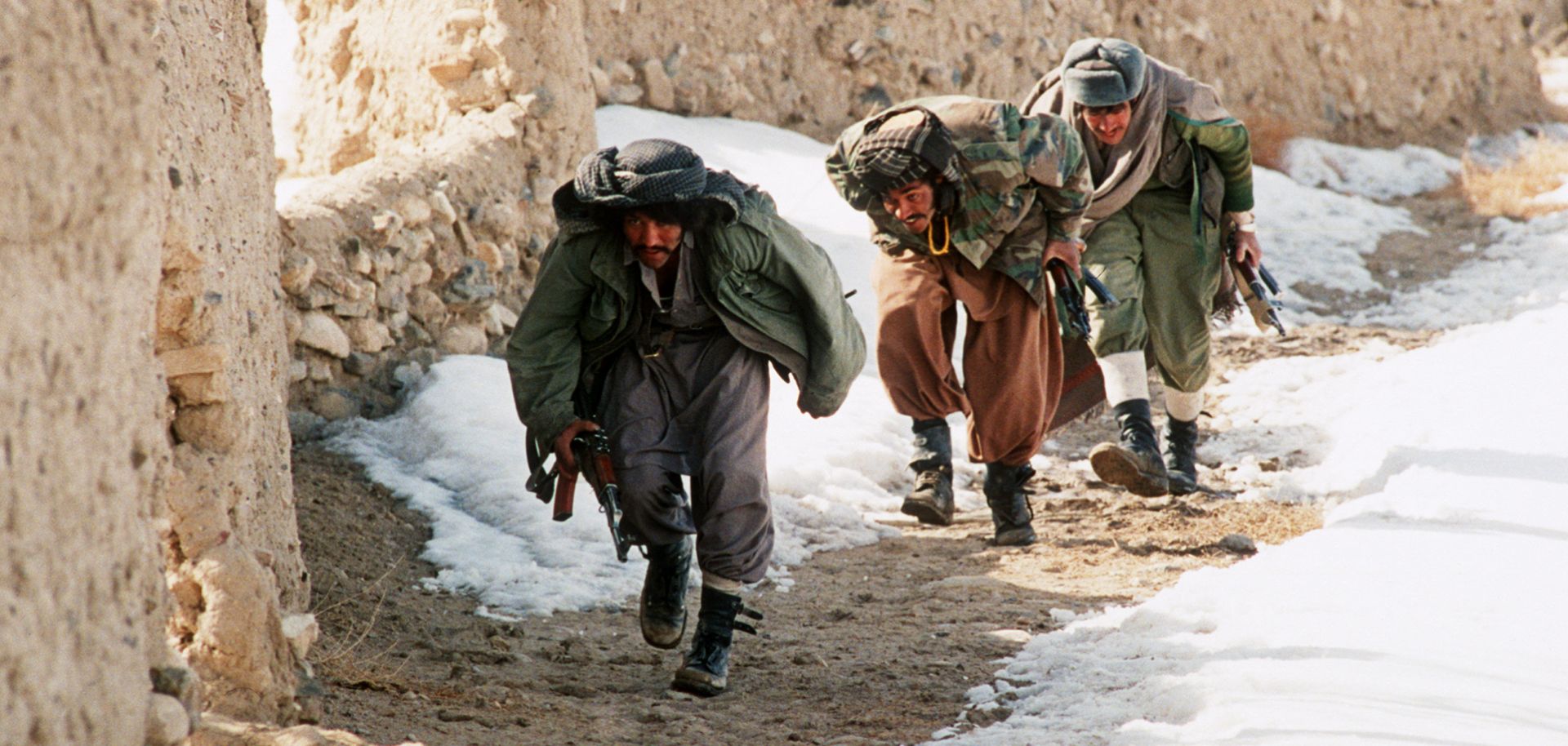
A group of Afghan mujahideen progress behind a wall in a village of Ghazni in southern Afghanistan as they fight Soviet-backed government forces in March 1989. Al Qaeda, which was formed the previous year, continues to fight against the United States 30 years later.
Today marks the 17th anniversary of the 9/11 attacks on the World Trade Center and the Pentagon. Some 3,000 perished in the attack, representing an unprecedented death toll in the history of terrorism — to the extent that the figure far exceeded even the wildest hopes of al Qaeda planners behind the attack. The loss of life and the scale of the destruction woke the United States from its slumber on the jihadist threat, spurring it to finally respond to al Qaeda's provocations in a powerful manner. The country first invaded Afghanistan, which had given al Qaeda refuge, and later Iraq. 9/11, however, was not the first salvo in the jihadist war, but merely a turning point. Seventeen years on, the war drags on — and will continue to do so until jihadists are defeated not only on the physical battlefield but also on the ideological one.
