
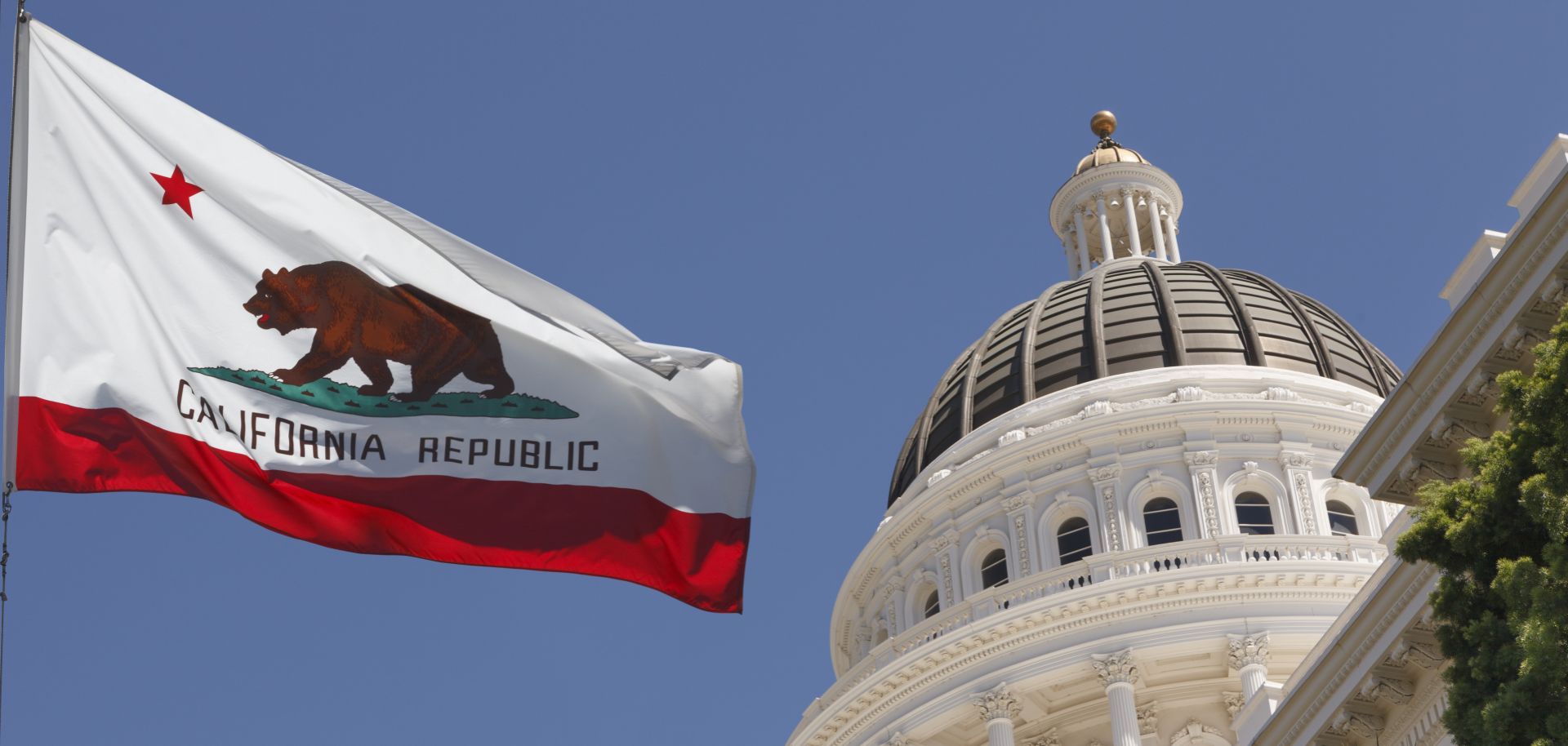
States like California hold political stances that are much different than those of Trump's constituents in the American Midwest, particularly on matters related to the environment, energy, immigration and the tech sector.
For nearly a year the world has worked to adapt to recent changes, both real and perceived, in U.S. foreign policy. But as the globe responds to the new priorities of its only superpower, Americans themselves remain divided over how best to engage with their surroundings. Much like the members of the European Union, each of America's states has its own needs to fulfill. Technological progress has given some states an edge in pursuing their goals, but it has also left behind regions that were once among the most prominent forces in U.S. politics — including the country's flourishing breadbasket, the American Midwest. And as the socio-economic gap between different parts of the country has widened, so have their policy preferences. By design, political discourse and debate are woven into the very fabric of American governance.
