
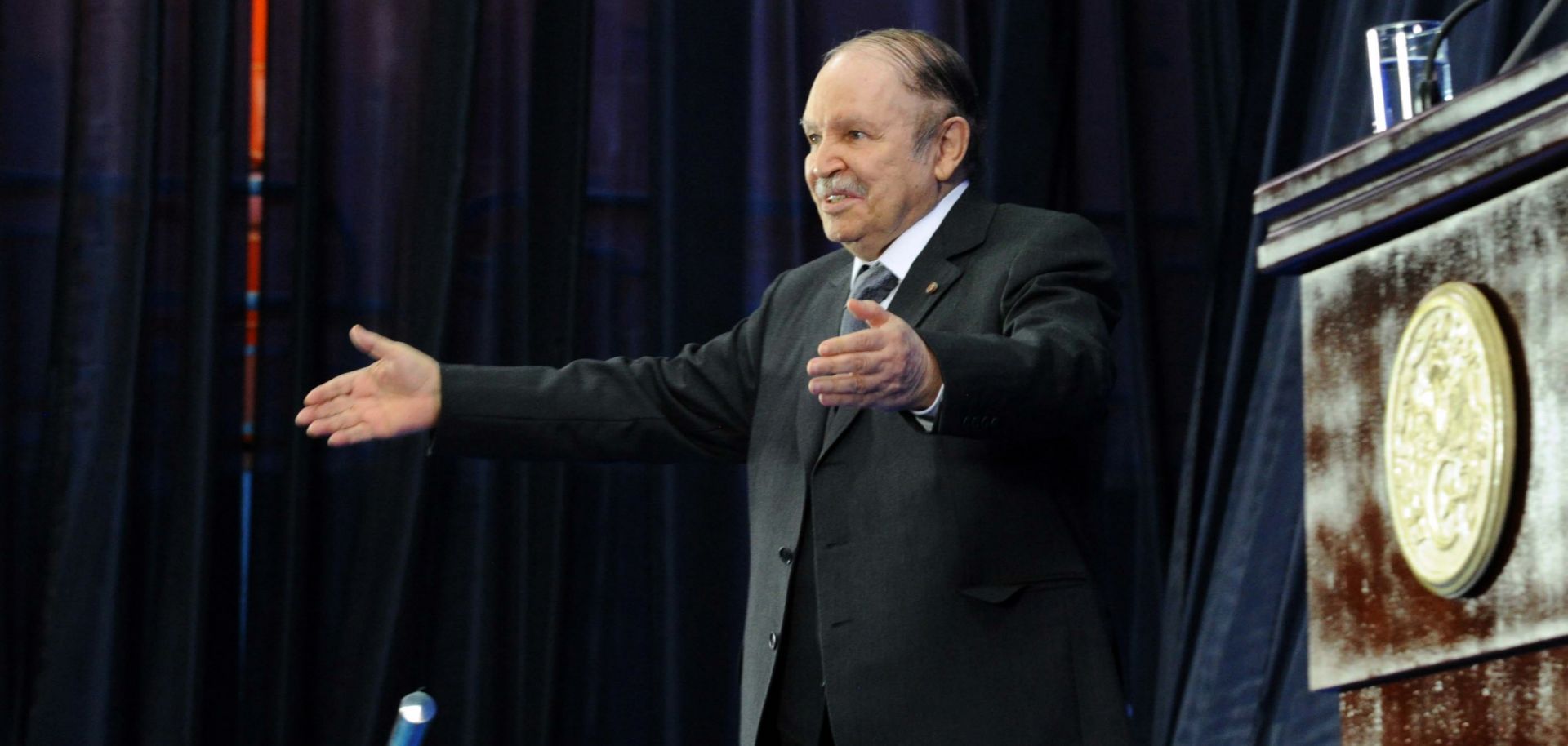
Algerian President Abdelaziz Bouteflika gestures on May 8, 2012, during a ceremony commemorating the 67th anniversary of a French massacre in Setif.
Internal unrest was commonplace in Algerian society even before the Arab Spring. The country was in civil war from 1991-2002 in addition to fighting regional Islamist insurgency and calls for greater political recognition from the Kabyle Berber ethnic minority group. Since the unrest in February and March 2011, there have been several pockets of unrest throughout the country. Algerian media also have reported dozens of self-immolations, all of which had the same consequences: immediate, unorganized low-scale protests quickly put down by a coordinated response by the country's security apparatus. Several different groups have participated in protests, including Islamists, students and political groups such as leftists and ethnic minorities. Moreover, Algeria's trade unions, a group of highly secular public and private sector employees that have formed a significant political bloc since Algerian independence, have organized several peaceful demonstrations in Algiers demanding increased pay and benefits.
