
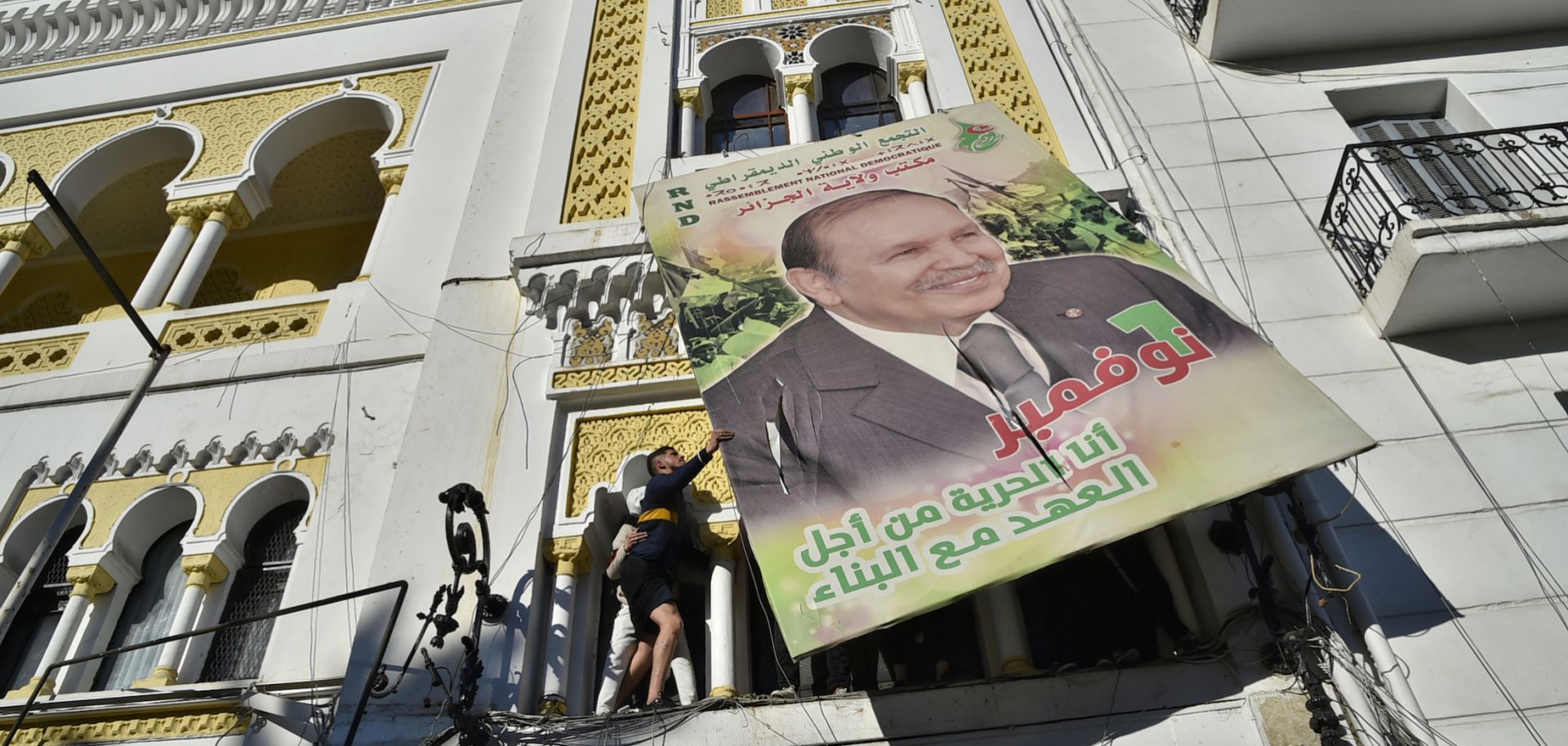
Algerians tear down a large billboard with a picture of their current President Abdel Aziz Bouteflika during a demonstration against his candidacy for a fifth term in the country’s capital of Algiers.
Editor's Note: This assessment is part of a series of analyses supporting Stratfor's upcoming 2019 Second-Quarter Forecast. These assessments are designed to provide more context and in-depth analysis on key developments over the next quarter. On April 18, Algerians will head to the polls to either re-elect incumbent President Abdel Aziz Bouteflika, or replace him with one of a raft of opposition candidates who have entered the race. But unlike in past elections, there is a small chance that the next presidential contest — and the social unrest that surrounds it — could spur lasting change in Algeria. A weak economy and a political system that is seemingly unable (or unwilling) to strengthen it, have driven a wave of opposition support, increasing the likelihood of unprecedented turnout at the polls and potentially, the streets.
