
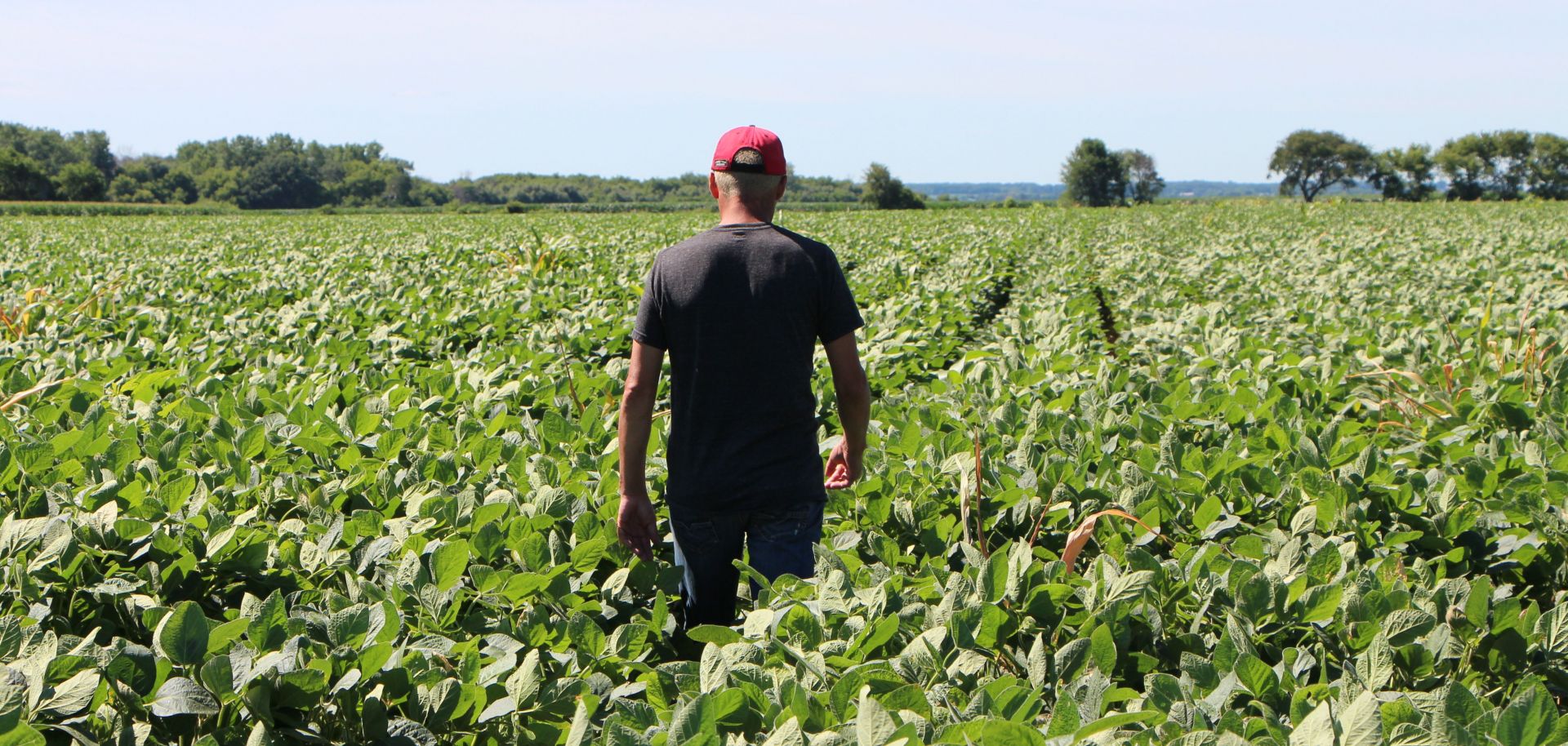
A farmer walks through his soy fields in Harvard, Illinois, on July 6, 2018, the same day that China hit the U.S. soybean market with retaliatory tariffs.
As members of the U.S. Congress debate the 2018 Farm Bill, which outlines funding for the agriculture industry and food supplement programs, they are focusing less on the needs of U.S. farmers and more on the work requirements for the Supplemental Nutrition Assistance Program (SNAP). And though Secretary of Agriculture Sonny Perdue announced $12 billion in emergency aid for U.S. farmers hit by retaliatory tariffs, producers are struggling more and more to succeed financially and to influence politicians on policies that directly affect the industry. The overshadowing of traditional support mechanisms in the Farm Bill, which controls government aid for U.S. producers, is one sign of the agriculture lobby's waning influence. U.S. farmers have historically been the beneficiaries of protectionist policies, but due to consolidation and mechanization in the industry, they are increasingly unable to sway the political conversation on topics that would benefit them.
