
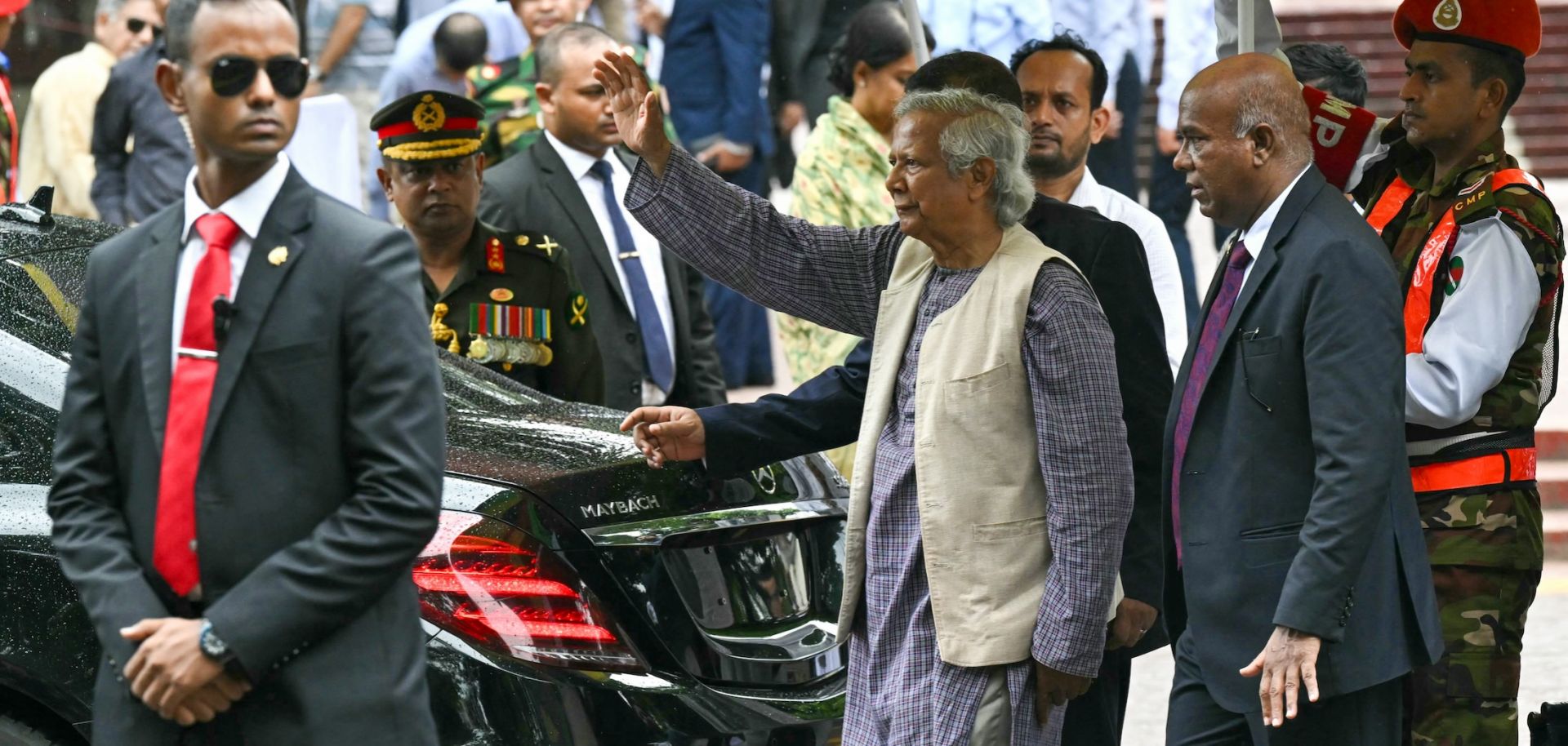
While Bangladesh's interim government is unlikely to make drastic changes in foreign policy, the government that emerges after new elections could seek closer ties with China and distance from India. This would delay bilateral projects with India, increase security challenges for India and lead to greater Chinese influence in the region. On Aug. 8, Nobel laureate Muhammad Yunus was sworn in as chief minister of Bangladesh’s interim government. This came after Prime Minister Sheikh Hasina resigned and fled to India on Aug. 5 following weeks of deadly anti-government protests. In the aftermath, the army chief in collaboration with Shahabuddin announced plans to form an interim government with opposition parties (excluding Hasina's Awami League). The president dissolved Parliament on Aug. 6, paving the way for fresh elections. Although the constitution requires these elections to take place within 90 days, no timeline has been confirmed.
