
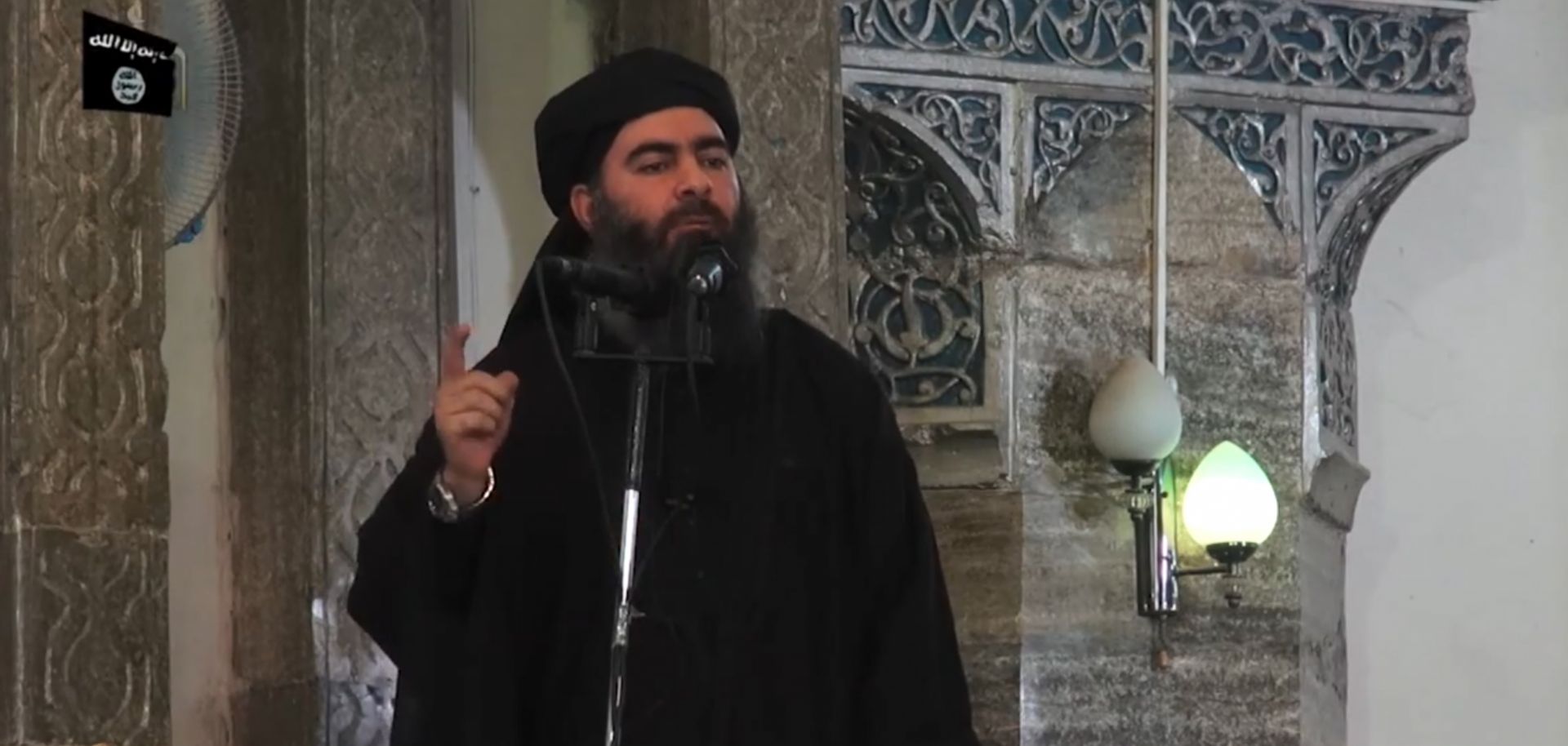
This July 5, 2014, photo shows an image grab taken from a propaganda video released by al-Furqan Media showing Islamic State leader Abu Bakr al-Baghdadi as he declares himself caliph in Mosul. Now that he is dead, al-Baghdadi has left behind a legacy of supreme violence and other barbarity.
When a black-clad figure strode to the dais in the great al-Nuri Mosque in Mosul on June 29, 2014, few probably expected such a momentous, if hubristic , declaration — namely, that the man had reestablished the Islamic caliphate and that the world's Muslims owed him allegiance as "Caliph Ibrahim." The statement from the self-appointed leader — better known as Abu Bakr al-Baghdadi — represented the first serious attempt at reconstituting the caliphate since 1924, when the secularizing Turkish Republic abolished the institution following the Ottoman Empire's dissolution. When al-Baghdadi elevated himself to the high office following his Islamic State group's stunning battlefield successes in Syria and Iraq, he envisioned a legacy in which all Muslims would fall in line and help him establish sovereignty over all the Earth.
