
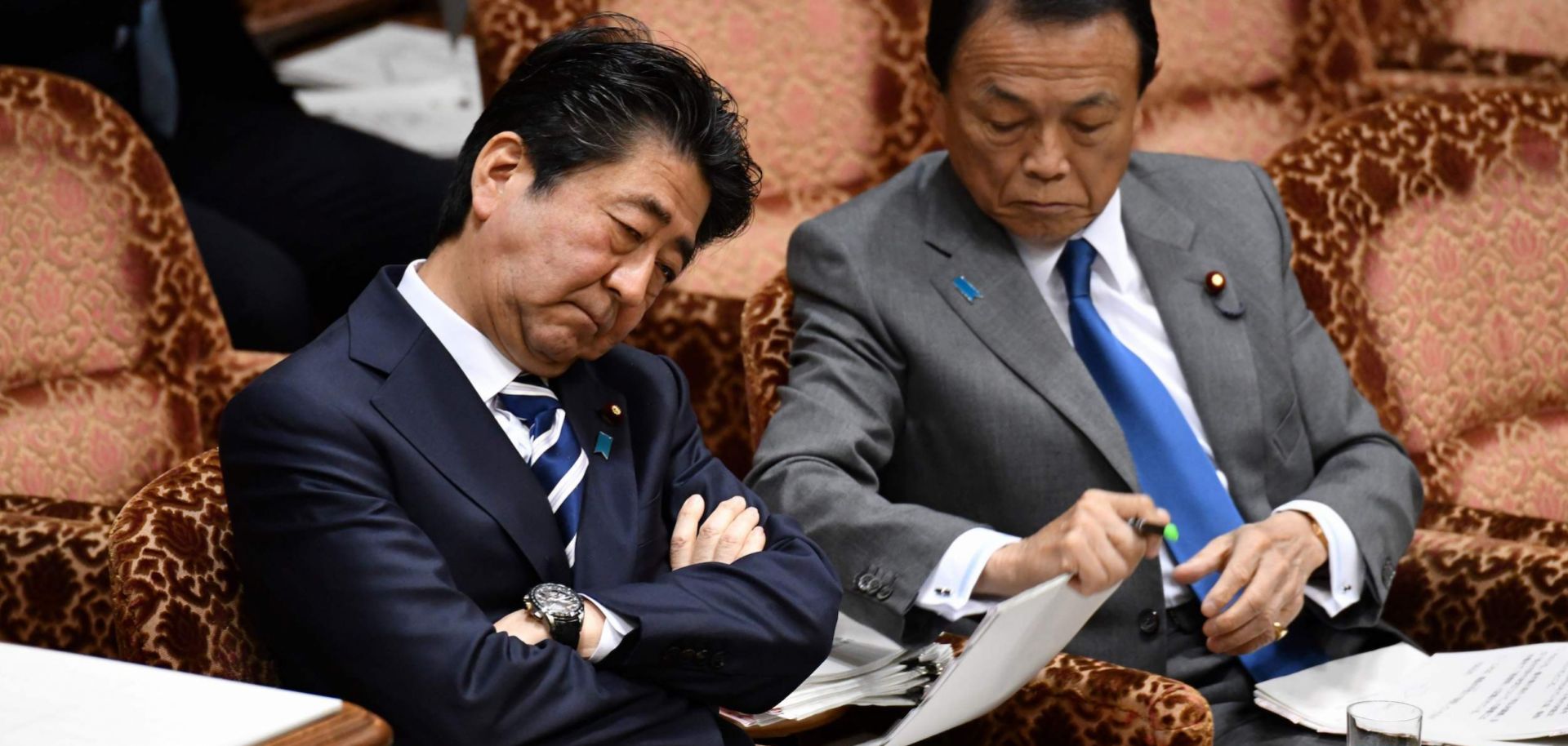
Shinzo Abe (left), prime minister of Japan, and Taro Aso, finance minister, attend a budget committee meeting in the upper house of parliament in Tokyo on March 19, 2018. Abe has hit back at critics accusing him of favoritism and a cover-up. The accusations have hurt his popularity and weakened his grip on power.
In the diplomatic thaw over North Korea, Japan finds itself out in the cold. The United States and North Korea have suddenly signaled a potential shift in their relations, the ice has broken between Pyongyang and Beijing, and the two Koreas are set to hold a summit for the first time in 11 years — all of which leave Japan struggling to reassert itself in the changing Northeast Asian landscape. This week, Japanese Prime Minister Shinzo Abe will meet U.S. President Donald Trump at Mar-a-Lago in Florida, hot on the heels of Japan's first foreign ministerial visit to South Korea in three years, the resumption of economic dialogue with China after eight years and unsuccessful attempts to broker a bilateral dialogue with North Korea. But Abe will visit the United States amid dire political fortunes at home.
