
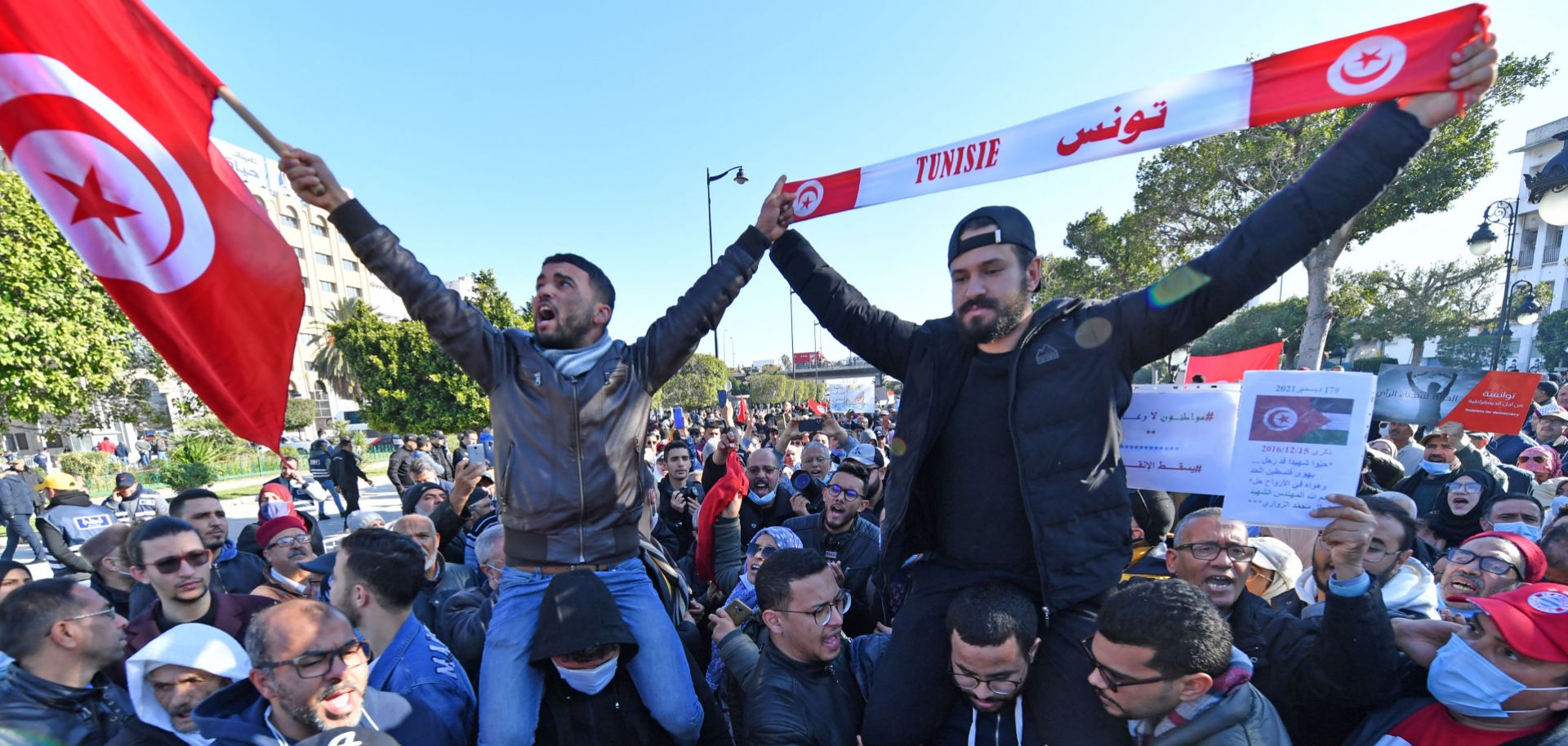
Protesters demonstrate against Tunisian President Kais Saied in the country’s capital of Tunis on Dec. 17, 2021 -- the 11th anniversary of the start of the 2011 revolution.
Institutional reforms in 2022 will increase political and economic instability in Tunisia and will likely influence other governments in the region to slow down their own democratic transitions. On Dec. 13, Tunisian President Kais Saied announced that a constitutional referendum would be held in July 2022 and that the country's legislature would remain suspended until new elections are held that following December. While these announcements establish a roadmap for institutional reforms over the next year, they also generate significant uncertainty about the country’s political and economic future. Saied’s long-awaited announcement follows the surprise executive authority decrees he issued on July 25 , which froze parliament, beefed up presidential authority, and kicked off a number of anti-corruption trials focused on politicians and businessmen — all in the name of stabilizing Tunisia’s economy and improving the government’s performance.
